



Food for thought: are pairing dishes the key to success for Hong Kong wine bars?
Are food pairings the meal ticket to success for Hong Kong’s growing number of wine bars? Joyce Yip finds out how venues across the city are catering to local tastes.
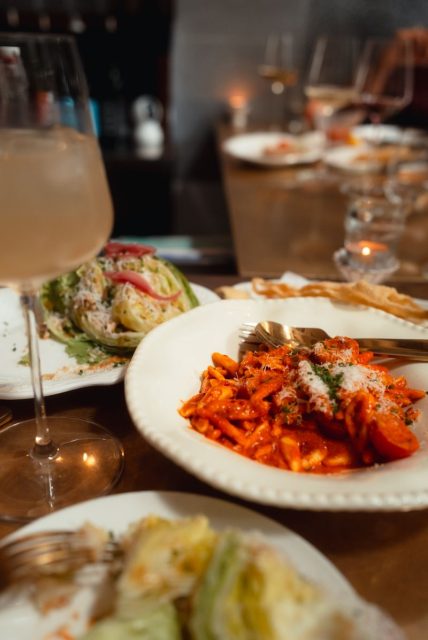
Camille Glass and Leigh-Ann Luckett, co-founder of Hong Kong’s Crushed Wines, were sure their duck fat tamale and gourmet tinned fish would be a smash at their bar when it opened back in August 2023. In theory, as their establishment focuses on lesser known, small-batch grape producers, patrons should be visiting with a more adventurous attitude, right?
Wrong.
“People didn’t understand what we were doing [with our food],” says Luckett. “They expected a restaurant-level of clarity in terms of whether something is a starter, main or dessert, and the exact cuisine we’re offering.”
The duck fat tamale was removed after only six months.
After a period of trial and error, Crushed Wines rolled out a pasta-forward menu in January 2025, “frankly out of desperation”, says Glass.
“We stopped trying to overcomplicate the food menu; and we kept hearing that our guests want a hot, cheap and full meal.” Tighter purse strings are increasing demand for a one-stop-shop experience, as opposed to seeking dinner and drinks at separate venues. But Glass speculates a second reason, arguing that it could be a “thing of efficiency especially in Hong Kong: people don’t just want to come here for one activity”.
A simpler food menu, adds Luckett, also means the focus remains on the wine. Currently, she says the food reaps in 65% of total revenue.
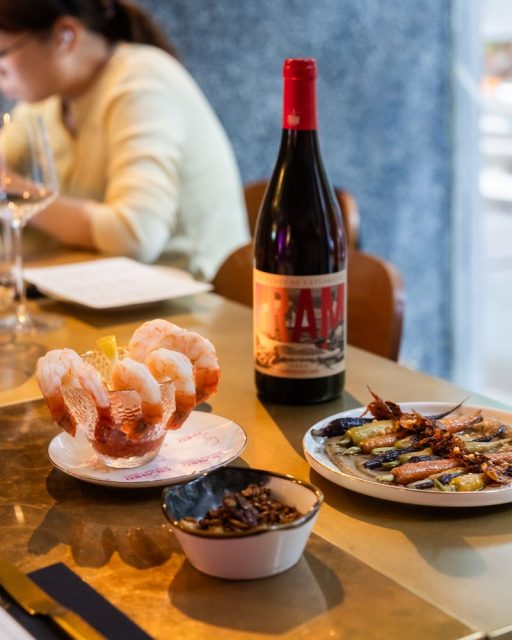
In Hong Kong, wine bars are relatively new concepts, and most borrow European practices with food, serving up charcuterie boards and finger snacks. But for a city with a radically different culinary background, what exactly works – or doesn’t – in a wine bar during today’s trying economy?
Aurélien Guédès, co-founder and managing director of Silène, shares Luckett’s philosophy of food’s necessity in wine appreciation. Since last August, he has employed a chef devoted to crafting European spreads from simple cold cuts and cheese to decadent duck leg confits at his 2024-born bar. While almost all his customers come in exclusively for alcohol, he hopes the food options will boost spending on quieter days.
“In the beginning of the week, we have people coming in for a glass of wine before or after dinner; the patrons who come for a full meal usually happen at the end of the week,” he says.
Currently, Guédès says food is only a quarter of total revenue; his aim is for it to top 30% with the introduction of more seasonal offerings – such as oysters and mussels flown in fresh weekly from France.
Partner Content

Anty Fung, co-founder of cafe-cum-gastro wine bar Mato Coffee Wine, has also tapped into the growing demand for food and wine pairings. Early this year, Fung implemented All You Can Taste and Drink programmes – two-hour-long free flows of wines and food curated to a region, grape variety or geographical altitude. For November and December, the menus focus on the Ribera del Duero region in northern Spain, paired with dishes like gambas al ajillo, iberico meatballs and octopus orzo pasta.
Fung says Asia’s wine drinkers take on a more “purist attitude”. She explains: “They just sit and drink and perhaps nibble on small bites,” attributing this to the demographic’s acquired knowledge of wine rather than something ingrained in its culinary culture.
Rotating every two to three months, Fung’s All You Can Taste and Drink programmes encourage wine “purists” to step out of their comfort zones.
“The two free-flow menus are essentially food pairings but done in a much more casual way,” says Fung. “It’s simple consumer psychology. The customers who opt for the All You Can Taste and Drink menus are inclined to try everything.
“Drinkers in Hong Kong are very price-sensitive; and wine prices are very transparent. A venue that prioritises food first might work better in our market, but Hong Kong doesn’t lack restaurants with good wine programmes: the value of a wine bar is a big by-the-glass programme that lets patrons be adventurous. So the food isn’t just nice to have, it drives that conversation forward.”
Related news


