



Chef Q&A: Niko Romito
Niko Romito, chef behind three-Michelin-starred Reale, talks Italian cuisine, pineapple on pizza and why Cerasuolo d’Abruzzo and Chinese dim sum are the perfect match. Amelie Maurice-Jones reports.
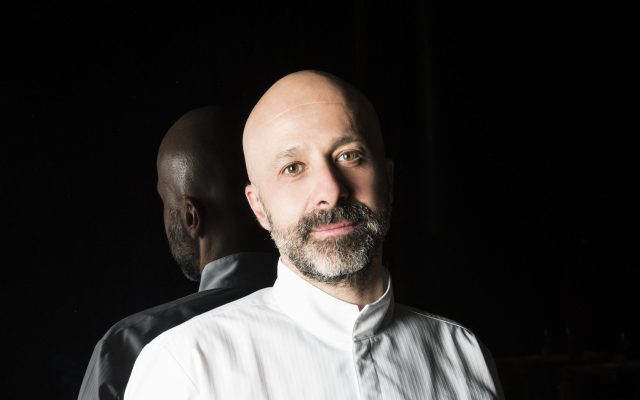
You studied economics before even considering cooking. What initially put you off being a chef?
I’ve always loved food, but I was not attracted to cooking. I was dreaming about a career as a financial broker. I didn’t realise how creative and challenging cooking could be.
What changed?
When my father got sick, I went back to my home town, where he had recently
transformed the family pastry shop into a trattoria. I wanted to find a buyer and I had to
run it in the meanwhile. It quickly turned into a passion. I was fascinated by the idea of transforming raw materials into something new – a powerful vehicle for research, content and beauty. When my father died, I decided to keep it with my sister Cristiana and fully dedicate myself to this new path.
How do you honour your father through your cooking today?
My cuisine is very personal; it tells a lot about my whole journey. Even if it’s innovative, I’m still very connected to my roots, but the connection to my father is probably more
evident in my approach to entrepreneurship, my curiosity and my dedication to work.
In your book 10 Lezioni di Cucina, you write: “Not everybody understands my food; often people think it’s simplistic.” How do you balance simplicity with innovation?
It’s apparently simple, but actually very complex. Each of my dishes focuses on very
few ingredients – usually one main protagonist distilled in different preparations.
The innovation lies in the technique: I use sophisticated cooking methods that allow me
to reveal unknown facets of common ingredients, like an onion or a carrot, getting to unexpected flavours and textures. The simplicity is the result of that rigorous, complex process.
What does it take for a restaurant to jump from two to three Michelin stars?
Partner Content

A strong identity, coherence, consistency, a lot of hard and constant work, a great team, both at the service and in the kitchen. There’s not a magic formula; you have to find your own path.
Through the Bvlgari Hotels & Resorts restaurants, you’ve transported your cooking around the world. What’s the biggest challenge in translating Italian food to a global market?
Maintaining authenticity and identity of Italian cuisine, especially when we began and, in certain countries, there was a very limited knowledge about true Italian cuisine. It’s not just burrata and pizza. We also have to maintain consistency; since we want the guests to have the same experience all over the world, the spaghetti e pomodoro has to be the same in Shanghai or Paris. Our chefs do great research work to source the best ingredients everywhere and translate it into classic but contemporary dishes.
When would you say that Italian food stops being Italian?
The Italian cuisine we know has been shaped over the centuries by different influences, and it is natural that it keeps evolving with a society that changes. Tradition shouldn’t be
something static, untouchable; it can be innovated, but always with respect and awareness of the roots. Pizza has travelled a lot over different countries meeting different cultures, giving birth to new traditions like the pizza food trucks in Marseilles, the NYC slice, or the Argentinian pizza. They’re not Italian – they’re the product of two different cultures that meet in a dish.
What are your thoughts about pineapple on pizza?
It’s definitely not Italian. I personally don’t like it, but it has the right to exist as a global product.
Pick an Italian wine, and an unexpected cuisine it would pair well with.
Cerasuolo d’Abruzzo and Chinese dim sum. With Japanese ramen I could drink a Trebbiano d’Abruzzo. A Japanese dish I particularly like is unagi, and when working on the eel at Reale [Romito’s restaurant in the medieval town of Castel del Sangro in Abruzzo], my sommelier made me try it with a glass of pre-British Sicilian Marsala – it’s a great pairing.
Related news
Top table: how Prosecco seduced the on-trade


