



Can rosé be considered a fine wine?
At a recent panel debate hosted by Liberation Tardive and Elizabeth Gabay MW at London’s Royal Overseas Club, leading voices from across the trade explored whether rosé can ever be classed as a fine wine. The consensus: it can – but it demands a new way of thinking.
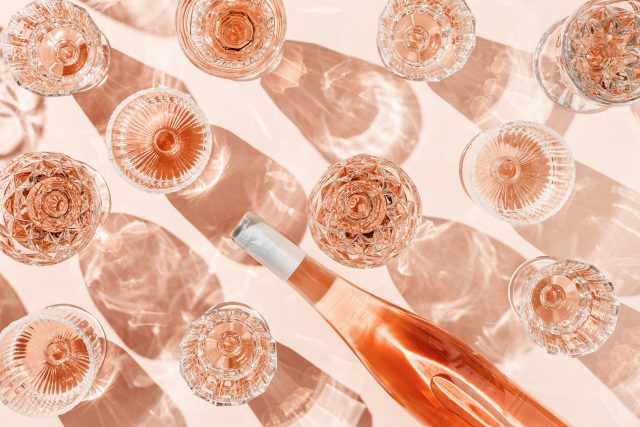
Liberation Tardive, a global non-profit promoting a sustainable market for ageworthy fine wines, partnered with Elizabeth Gabay MW to host the debate and tasting, joined by Rebecca Palmer (Corney & Barrow), Richard Bampfield MW, Siobhan Turner MW, and Pauline Vicard (ARENI Global). More than 20 wines were poured, from Provence and Bandol to Rioja and Lebanon, as the panel considered what defines a “fine” rosé.
Gabay opened the discussion by noting that the rosé category “is not yet defined”, calling it “a blank space” full of creative potential but also commercial challenge. “It’s extremely exciting because there’s so much freedom around this,” she said. “But that also means it’s going to be very commercially challenging. Why is this wine worth selling at a premium price?”
For Gabay, the future of rosé lies in producers’ willingness to believe in the category beyond its colour. “Too many producers are creating rosé because they feel they have to rather than because they really believe in it,” she said, a point echoed by Bampfield, who cited Bordeaux as being “very guilty” of this. “We really need rosé to be taken seriously by the producers,” he added. “And the trade also needs to take it seriously.”
Defining fine wine
Vicard of ARENI Global outlined the organisation’s framework for what constitutes a fine wine, based on international research across markets from France to Hong Kong. “For a wine to be considered fine by both the trade and consumers, it needs five things: objective quality, subjectivity, vision, sustainability and reputation,” she explained.
Fine wine, she said, “doesn’t happen by mistake”. It requires “vision” from the winemaker and the capacity to age. “Quality can be seen as the capacity to go through time,” she said. “Fine wine also has to stop time – it has to stop the drinker in their tracks.”
She added that fine wine is not just about intellectual appeal but about practical impact along the supply chain: “Knowing where you stand will impact how you manage visibility, desirability and purchase.”
The question of ageing
Much of the evening’s debate centred on rosé’s ability to age. Palmer, speaking from her experience in the secondary market, said: “You have to have an ability to age. Whether you’re investing for future profit or for future pleasure, you want to know the wine you buy now will be at least as pleasurable in ten years’ time.”
While Rioja’s López de Heredia Viña Tondonia remains one of the few rosés traded on the secondary market, Palmer argued that more examples could follow: “There are definitely wines here that, while they may not yet have a place on the secondary market, I could make a strong case for buying now and drinking in years to come.”
Partner Content



However, she also cautioned against equating “fine wine” solely with collectability. “There’s a difference between a fine wine and a wine destined for the secondary market,” she said. “I find finesse in many wines that aren’t destined for that market.”
Bampfield agreed, noting that age alone does not define quality. “I’m not a big believer that age is a good thing just for age’s sake,” he said. “The only wine I taste which is consistently fabulous at old ages is Madeira.”
Still, he acknowledged the value of age in revealing rosé’s potential complexity: “So often we see that what was a very simple rosé becomes more complex after a few years. Rosés do need age to reveal great complexity, not just vibrant acidity.”
Turner shared this view, observing that “a lot of very young rosés are very fresh and vibrant, but rarely complex.” She emphasised the need for producers to demonstrate their wines’ longevity: “If you’re saying your wine ages, you need to show us.”
Moving beyond colour and category
Turner also highlighted what she saw as a central flaw in how rosé is perceived: “We would not be having this conversation about whether white wine can age. Here we are talking about rosé as if it’s one thing – and that’s part of the issue. The category needs differentiation.”
She argued that consumer perception still revolves around a single style: “People go in and think, ‘I want a rosé,’ but what they probably want is a pale Provençal rosé. We need to start thinking about rosé in a more differentiated way.”
Branding, collectives and collaboration
The panel also addressed how fine rosé could establish greater visibility and prestige. Bampfield pointed to the importance of branding and export: “More of these wines are being sold around the world. You could argue that the brand name is more important than the appellation.”
Vicard added that collaboration will be key to the category’s success: “Most of the time in wine, we don’t have the marketing money that spirits have,” she said. “Until now, visibility and desirability have come through regional identity. Rosé could be the product that transcends that and creates an extra-regional fine wine representation. But it can’t just be one producer – it needs a collective effort.”
“Rosé can be fine on its own terms”
Ultimately, the panel agreed that rosé can indeed be considered a fine wine – when it is made with intent, quality and patience. As Gabay concluded: “We need to stop looking at rosé as one single category. Fine rosé deserves to be treated seriously – to be respected and appreciated for the subtleties it develops with age. Rosé doesn’t need to imitate anyone; it can be fine on its own terms.”
Related news
First 5,000 bottles produced from Pope's vineyard


