



‘100% natural fermentation’: Undurraga’s plan for Gualtallary at Doña Paula
Cristobal ‘Toti’ Undurraga believes the future of Doña Paula lies in letting the vineyards speak for themselves, beginning with Gualtallary, which he calls the Andean Grand Cru. His push towards natural fermentation, regenerative farming and micro-parcelling is redefining the Mendoza estate’s ambitions.
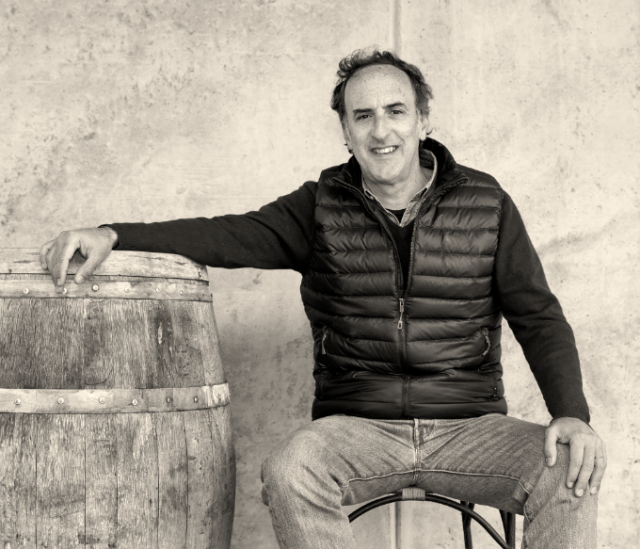
Cristobal Undurraga’s story begins not in Argentina but in Chile’s Maipo Valley. His family name is tied to the traditional Undurraga Winery, sold in 2006. He told db that growing up surrounded by wine led him to study agronomic engineering. His early career stretched across three continents. He worked first at Franciscan Estate in Napa, then Rosemount in the Hunter Valley, before a pivotal period at Château Margaux in 2002.
From France he moved to Argentina to work with Montes, helping build Kaiken from the ground up between late 2002 and 2007. Chile drew him home once more where he and his family founded Viña Koyle, which remained his focus until 2022. By then he had begun consulting in Argentina and was drawn to Doña Paula’s Aluvia vineyard in Gualtallary. He offered his services to Santa Rita Estates and now divides his time between Santiago and Mendoza in a hybrid role that matches the working patterns of an increasingly global wine world.
A philosophy rooted in place, not fashion
Undurraga’s conviction is that wines must express their origin first. “We try to make a wine a reflection of the place as opposed to specifically catering towards palate tastes and trends,” he said. He believes the tide of consumer preference is turning towards provenance anyway. “Consumers have grown tired of big wines and are more concerned with provenance.”
His role bridges viticulture, winemaking and communication. “You have to understand your end consumer to make sure the wines we are producing are being well received,” he told db. The estate tries to remain steadfast in its principles while taking on board market feedback. Doña Paula’s complete ownership of its grapes gives it tighter control. “At Doña Paula, we own 100% of our grapes, so it’s much easier to make a wine with a sense of place.”
Wine tourism
Doña Paula’s recent success at the Global 2026 Best of Wine Tourism Awards has amplified the estate’s ambitions. The awards ceremony at Bordeaux’s Palais de la Bourse concluded the 25th Annual Great Wine Capitals Conference, with a record 623 applications received across the network’s eleven regions. Seventy-five regional winners advanced to the global stage.
Doña Paula, which only opened its doors to visitors less than two years ago, secured its place at the finals after winning two regional categories: Innovative Wine Tourism Experiences and Sustainable Wine Tourism. Its immersive offering includes Terroir and Lake Camps, Hike and Wine, and gastronomic visits featuring hands-on and virtual reality vineyard tours alongside pick and cook lunches using produce from the estate’s garden.
Representing Mendoza in Bordeaux, head of tourism and hospitality Noelia Rinaudo said: “We want every visitor to understand how and why a wine expresses the meaning of its terroir.” Her approach mirrors Undurraga’s ambition to show that a wine’s character begins long before it reaches the glass.
Partner Content

Gualtallary
Everything converges in Gualtallary, an Uco Valley subregion he calls “the Andean Grand Cru”. Doña Paula owns 150 hectares on riverbank terraces laced with calcium carbonate. According to Undurraga, these stony soils produce fresher wines with naturally lower sugar, high acidity and soft texture. “What we are seeing from here are fresher easy drinking wines not big and overripe,” he said.
Although the estate has used Gualtallary fruit exclusively in its top label Selección de Bodega since 2015, it is still unearthing new details. In August the team began analysing vineyard microbiology for the first time since 2014. The research coincides with the estate’s conversion to organic and biodynamic viticulture, a process he expects to complete by 2027. For him, certification is merely a starting point. “It’s not enough to just be certified,” he said. Working biodynamically is what he believes will make Doña Paula’s wines truly distinctive, citing estates such as Romanée Conti, Opus One and Pingus as touchstones.
“We want 100% natural fermentation”
The most ambitious step is his push towards natural fermentations. “Eventually, I want to make 100% of my wines with 100% natural fermentation,” he said. Doña Paula currently ferments about half of its wines this way, and he aims for 70% next year. He sees natural yeast as an ally. “The natural yeast works even better than the commercial yeast.”
Regenerative farming supports this goal. “Two years ago we introduced animals back into the region,” he told db. Cows and sheep graze between rows, eating grass and helping to balance the ecosystem. “I love fungus; we need these things,” he added, arguing that microbial diversity fuels vineyard health and enriches the eventual wines.
Harvest dates that keep creeping forward
Climate change is tightening its grip on harvest rhythms. The estate’s whites were picked on 20 February last year but on 4 February this year. “Some of my colleagues in Argentina weren’t ready for this,” he admitted. He pointed to Burgundy where producers now harvest in August. “The important thing is to be connected with the natural cycles, and the vines that are best attuned to their natural cycles will be the ones that adapt better to climate change.”
Precision through stone-walled clos
As previously reported by db, another project in motion is the creation of small clos throughout the vineyard using stone walls to divide parcels. These boundaries make pruning, harvesting and vinification more precise. While Selección de Bodega currently draws from the best plots, Undurraga is open to future directions. “Maybe tomorrow it will be a blend of seven different micro vinifications,” he said. Alternatively, a new single-plot wine may emerge.
“It’s a work in progress,” he said. “But an exciting one.”
Related news
Bubbling Under: Can sparkling wine drive Argentina’s premium push?
Argentina's Bodega Norton goes into administration
Balcarce: what you need to know about Argentina's fledgling wine region


