



ProWine Shanghai 2025: ‘Connecting global opportunities with domestic demand’
Ahead of the show in November, ProWine project director Josh Gu tells db why this year’s Shanghai exhibition goes beyond the show floor.
Released in May, the inaugural ‘ProWine International Business Report – China’ highlighted the growing buzz around the market’s potential. It revealed that new consumers and fresh drinking occasions will boost growth for wine and spirits producers who have clocked on to China’s rising opportunities.
According to Josh Gu, project director, ProWine Shanghai and ProWine Hong Kong, “China’s wine and spirits market is shifting from ‘growth in volume’ to ‘growth in quality’.”
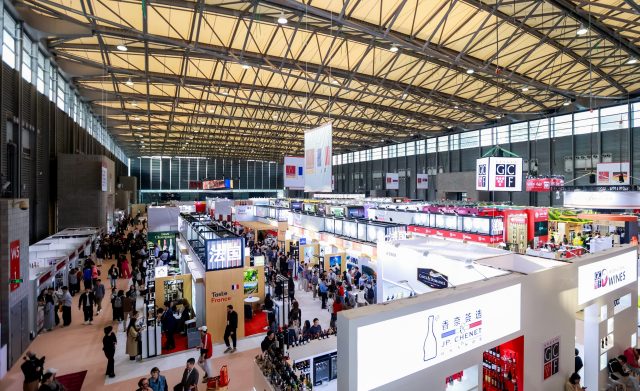
Now, the 2025 edition of ProWine Shanghai offers a gateway for international wine and spirits brands to grasp these opportunities. Taking place on 12-14 November at the Shanghai New International Expo Centre, ProWine Shanghai 2025 offers a strictly trade-focused, professional platform for the entire industry chain to connect. The latest consumer insights from the China business report have informed plans for the exhibition this year, which will support brand localisation through city roadshows and curated forums.
The exhibition will see a strong producer presence, both international and domestic. ProWine Shanghai’s organisers have already reported record participation from Germany, New Zealand, Spain (with four sub-regions), South Africa, Georgia, Serbia, and more, alongside key Chinese regions such as Ningxia, Xinjiang, Shandong, and Yunnan. Helan Qingxue Vineyard will also celebrate its 20th anniversary.
Gu says the commitment from exhibitors this year “reflects a renewed international confidence in China, with ProWine Shanghai positioned as the key stage connecting global opportunities with domestic demand”.
The ProWine Bar is a curated zone celebrating premium global spirits, while ProWine Zero will highlight alcohol-free innovations, reflecting the rising trend in health-conscious consumption.
Gu believes that “the potential for no- and low-alcohol products is particularly clear among new entry-level consumers”.
He says: “While overall alcohol consumption may be decreasing, drinking frequency is actually increasing. Consumers want more flexible and healthier choices that can adapt to diverse lifestyles. For brands, this is not only a new market but also a chance to connect with everyday consumption and reach a broader audience.”
More than 80 city roadshow events will take place in conjunction with the exhibition this year, extending market access into second- and third-tier cities across China.
“The roadshows are a crucial pillar of ProWine’s strategy in China,” says Gu. “China is not a single, uniform market – consumption habits and preferences vary significantly across regions. To truly understand the market, one cannot focus only on Shanghai or Beijing; it is equally important to explore the potential in second-, third-, and even fourth-tier cities. This is exactly what ProWine’s roadshows are designed to achieve.”
Through these events, suppliers can meet face-to-face with local distributors, retailers and end buyers, providing preliminary market insights and helps build relationship networks before fully entering the market.
“For businesses, it is an efficient way to test products, establish trust, and expand connections— both in preparation for and alongside participation in the main Shanghai show,” he added.
Visitors to ProWine Shanghai can expect forums and masterclasses with leading experts including Professor Demei Li and Xing Wei MW, plus tailored discussions on premiumization, women in wine and emerging consumption trends.
Related news
Talha tales: reviving Alentejo’s amphora wines


