



How decades-old values of ‘people and place’ still guide Santa Julia
For decades, Santa Julia has held true to its family-led principles of sustainability, quality and value. Now, through Watermill Wines, UK consumers are discovering what sets it apart from the crowd.

A wine from a UK supermarket has many routes to success, often tied to the ease of putting a bottle in the basket. The brand might bank on familiarity, say, or simply aim to hold its price below the £10 mark when costs for all producers are rising.
However, with the UK seeing a global offering of wines, and consumers increasingly disposed to explore, quality and individuality can also offer promising returns.
That is the attitude at Watermill Wines, a B Corp-certified and highly accredited agency specialising in off-trade sales. It brings high-quality wines to retailers such as supermarkets, with one of its success stories being Argentine winery Santa Julia.
Certainly, for Watermill Wines’ commercial director Richard Dennis, Santa Julia is a beacon of quality in the supermarket scene: “They are award winning wines, fairly priced and offering true terroir expression in a sea of bland, overly-processed branded wines.”
Yet, as a sustainability-minded producer with a developing range and bold ambitions, Santa Julia matches Watermill Wines on more than just quality. In fact, the partnership has been a meeting of minds across the Atlantic.
A guiding philosophy
For Julia Zuccardi, a third-generation member of the winemaking family, Santa Julia’s ethos extends back to her grandparents. They gave the winery a sustainable mission, even if they would not have acknowledged it as such.
“Back in the 1960s and 1970s, nobody talked about sustainability – they didn’t even call it that,” she says. “But they knew that wine is people and place, and that they had a responsibility.”
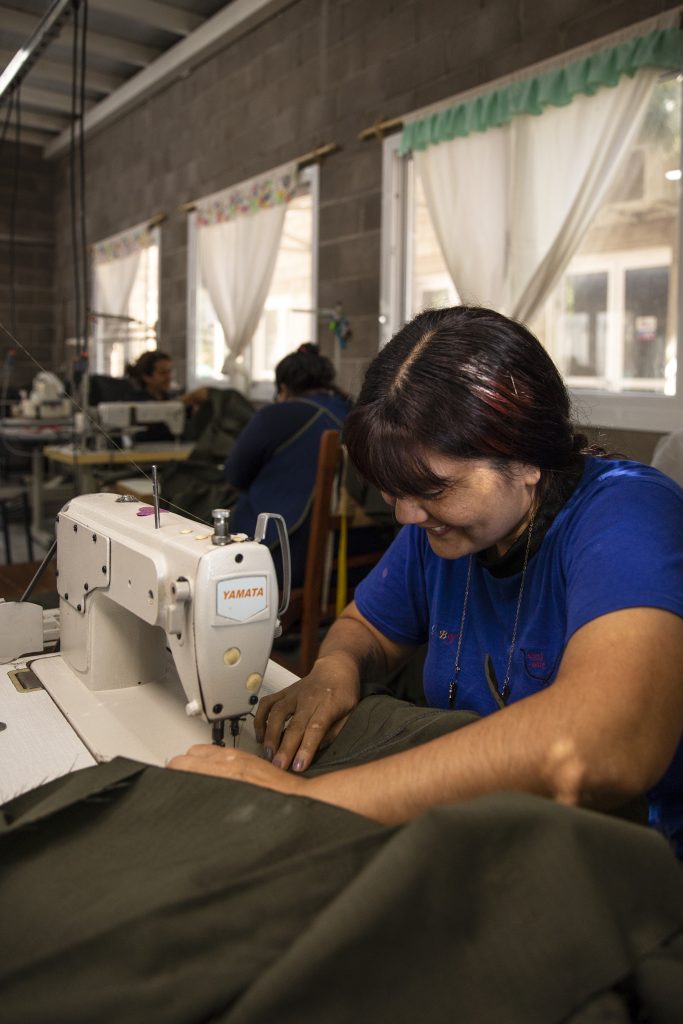
Zuccardi’s grandmother, Emma, who worked until the age of 94, spearheaded the social sustainability programme. Her work on education, setting up cultural centres near the winery, continues to this day. The programme offers adults access to secondary education and vocational courses such as sewing, all held during working hours so learning can take place as part of the working day. Daycare facilities for workers’ children ensure parents can pursue education and employment opportunities with peace of mind. These initiatives provide government-accredited training for both Santa Julia’s workers and the wider community.
The environmental impetus, on the other hand, can be traced back to her grandfather Alberto, who she says was a true “man of the countryside” more than a businessman. He first began farming in Mendoza to demonstrate irrigation techniques, but quickly developed his skills with wine and realised that caring for the landscape would be central to his success.
Now, his family continues that caring approach. The Santa Julia brand was established as an independent entity – though still run by the family – in 1996. Within just three years, its first vineyard had been organically certified; now, the winery has 400 hectares of certified organic vineyards.
By 2013, two of the vineyards had achieved Fair for Life status, enshrining social responsibility alongside Santa Julia’s environmental efforts. Meanwhile, since 2020, the winery has produced natural wines. Even if the winemaker’s hand is less evident, Zuccardi sees it as a clear continuation of her grandfather’s approach: “It’s less human intervention, but with more care than any other wine.”
There are, clearly, moral imperatives for following such a path, but the focus on sustainability has also helped secure partners like Watermill Wines. “We share so many values about putting people and the planet first,” explains Dennis.
Malbec and more
Think of Argentina or, in particular, of Mendoza and you will likely think of Malbec first. That, according to Zuccardi, is no bad thing.
“Through Malbec, we have been able to show the world that Argentina is an important wine producer,” she comments. The grape is essential to the region and, indeed, forms a central part of the Santa Julia portfolio.
Just because it is widespread, however, that does not mean it is monolithic. For Zuccardi, some of the winery’s most important work is in finding its own expression of the grape, when Argentina has many Malbecs to offer. Although they may all be the same variety, the wines vary considerably, even within Mendoza.
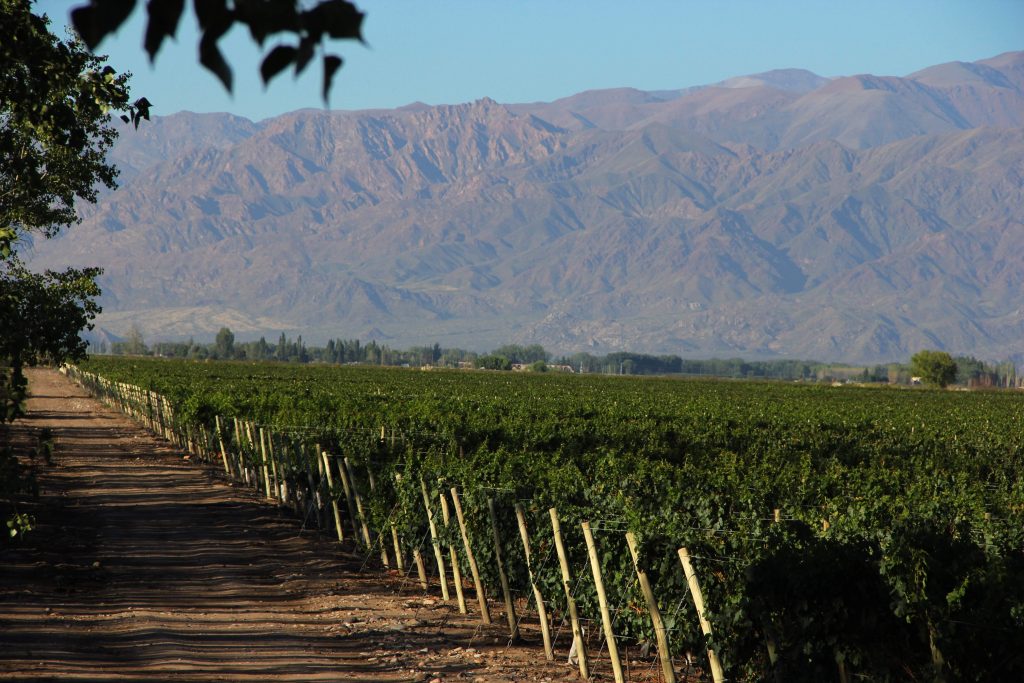
At Santa Julia, she has identified a particular style. Its hot and dry vineyards in Maipú give a rich, fruity expression, though still kept structured and defined by ripe tannins. The wines are also identifiable by the subtle influence of wood: “We don’t want oak to be a protagonist,” says Zuccardi.
Thanks to their quality-minded and recognisable style, Watermill Wines has bought into the Malbec project, with two expressions available in Sainsbury’s and the Family Reserve recently released in Waitrose. “Their care and dedication to Malbec is incredible, comments Dennis, “especially in their restraint on using oak – they are really about quality and fruit expression.”
That is not to say, however, that Malbec is the limit of Santa Julia’s ambition. Nor indeed are other red varieties, often associated with Mendoza wineries. Though these all have a valued place in the range, Zuccardi in fact believes attention might shift elsewhere: “Today, what Argentina is trying to do is to show that there is much more than Malbec,” she says. “I think that, next, Argentina will be known for its white wines.”
For many producers, that means Chardonnay, Torrontés and Sauvignon Blanc – varieties that Santa Julia grows and bottles. Yet the producer has also entered niche territories.
The Zuccardi family was, for instance, a pioneer in Viognier, planting its vineyards in the 1990s. Thus, the variety has become a signature of Santa Julia.
Flores Blancas, an organic expression of the grape, has just launched in Waitrose via Watermill Wines, allowing UK consumers to sample the regional rarity. “It’s different from the Viogniers people are used to,” says Zuccardi. “Naturally, it is very fruity and floral, but it’s not heavy at all. It’s very fresh.”
Investing in the future
The final element that truly sells Santa Julia is the winery’s forward-facing approach. The outfit, it seems, is never standing still.
At its heart, that attitude is neither new nor revolutionary; in fact it comes from the first generation’s approach to the business. As farmers first and businesspeople second, Zuccardi’s grandparents invested in the community and the business rather than extracting from it. In continuing that spirit, Zuccardi and her family have made the space for bold investment.
Most boldly, the winery has put its seven natural wines at the centre of its vision with a brand new winery. The major capital investment is the home of its natural wine production.
Having seen enough poorly made natural wines, the team dedicated themselves to making elegant, clean wines, but with a natural philosophy. It is, as Zuccardi explains, a lot of work for a low-intervention approach: “You need the healthiest grapes. You need the neatest winery. You need to create a perfect operation because you are not adding anything.”
The new building is thus enabling high-quality production as the global appetite for natural wines grows. It has also supported other goals in the business: its adobe walls are a sustainable means of construction; its earthquake resilient design safeguards the building’s integrity; and its new visitor centre means that tourists are more welcome than ever at Santa Julia.
Moreover, Zuccardi herself is taking an active role in building the winery’s reputation around the world. Having finished the major winery project, she visited the UK this summer to meet with retailers and consumers.
For someone immersed in the world of wine since childhood, it was an opportunity to see how far the UK market has come. Certainly, Argentina has become more prominent on UK shelves since Santa Julia’s launch in the 1990s. “We used to be stuck in the corner,” she laughs, “but now we have our own section.”
Moreover, the visit offered a vote of confidence in Santa Julia’s approach. From its sustainable mindset to the investment in natural wines, the prevailing theme is authenticity. And that, more and more, is what connects with the customer.
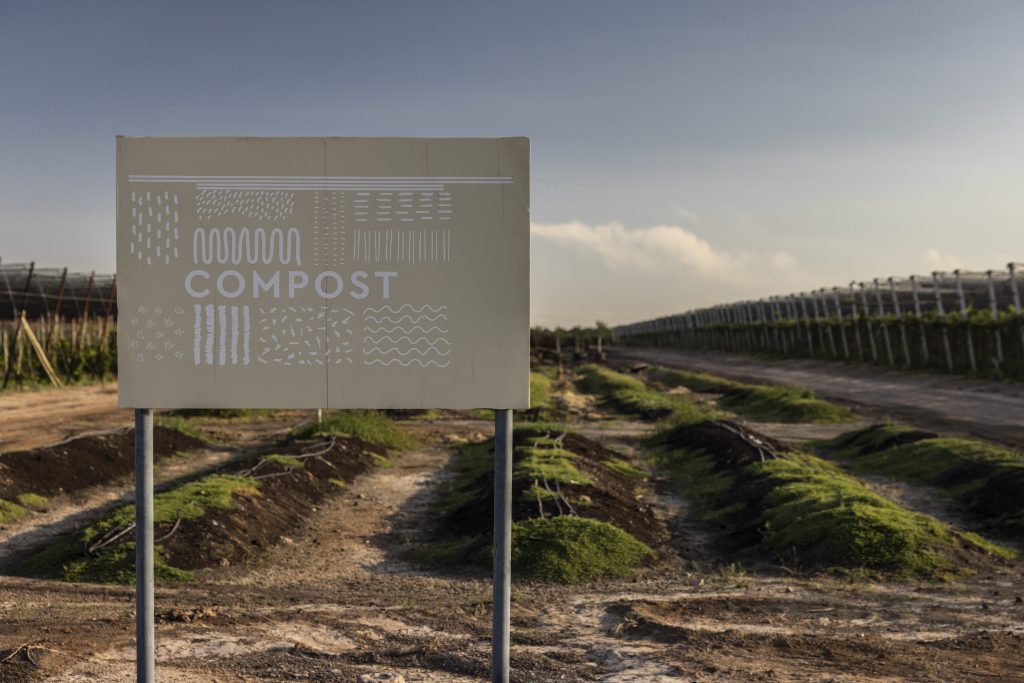
“People want to find wines that have real stories,” she says, “and that have real people behind them. That’s important to us, because if you came to the winery tomorrow, I would be able to show you the schools, the daycare, the sewing workshop, the composting and everything that we are doing on our land.
“We want our consumers to know that, when they drink our wines, there’s a real, true story behind them.”
Related news
Do global awards actually drive Japanese wine sales?


