



Cono Sur carves out Chile’s signature Pinot Noir style
For more than 30 years, Cono Sur has worked painstakingly to create a quintessentially Chilean style of Pinot Noir, with sustainability to the fore. At a recent tasting in London, db found out more.
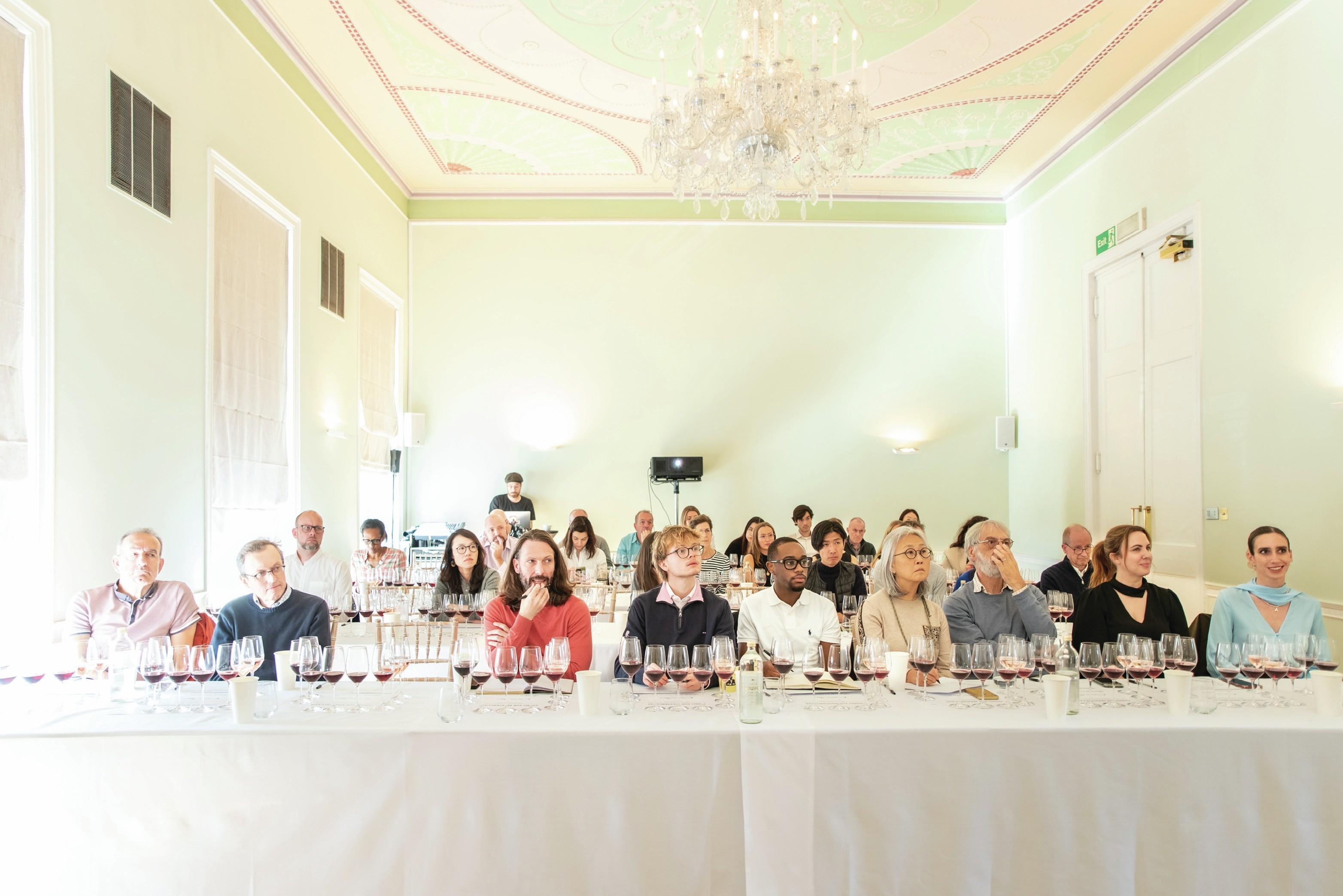
At a recent masterclass in Asia House London, Cono Sur winemaker Matías Ríos presented a tasting of the winery’s Pinot Noirs, emphasising how Chile has developed a distinctive yet varied style across a range of price points and regions.
Since its founding in 1993, Cono Sur has always put Pinot Noir at the heart of its identity. While the winery also produces aromatic white grape varieties, Ríos emphasised that “Pinot Noir is a big focus”. Cono Sur’s precise Pinot Noir winemaking began in 1999, with the “Pinot Noir Project”, an internal programme aimed at creating Chile’s first premium Pinot Noir.
As was highlighted during the tasting, Cono Sur’s focus on Pinot Noir owes much to the guidance of French consultant Martin Prieur, who worked closely with the estate in its early years. Thanks to this collaboration and the winery’s ambition, Cono Sur is now producing Pinot Noirs that reflect both careful winemaking and the quality of Chile’s diverse soils and climates. The Casablanca Valley, along with San Antonio, was described as offering the ideal conditions for Pinot Noir – providing freshness, good acidity and a depth of palate that sets these wines apart.
From the outset, the estate worked with French consultants to adapt viticulture and winemaking to Chile’s particular conditions. That meant, Ríos explained, proving sceptics wrong: when the first Pinot Noir vines were planted, many doubted whether the grape would succeed in Chile, where Cabernet Sauvignon and Carmenere were naturally the traditional flagbearers
Among the wines poured, 20 Barrels Pinot Noir 2022 from San Antonio stood out as an example of Chile carving out its own identity. While the wine takes some inspiration from Burgundy in terms of winemaking approach, Ríos was keen to stress that the ambition is not imitation.
“We don’t want to copy,” he said. “Our goal is to create a Chilean Pinot Noir style – and this is the first wine where we feel like we’ve achieved that.” With 14 months of ageing in a mix of French oak barrels and foudres, 20 Barrels showcased freshness, deep colour and varietal purity – hallmarks of Chile’s emerging Pinot Noir style.
Three decades on, Chile now has some of South America’s oldest Pinot vines, planted as early as 1968, and a spectrum of styles that ranges from fruit-forward and affordable to structured, fine wine bottlings. For Ríos, the aim is clear: “The potential of Chilean quality Pinot Noir, that’s my big goal – to show what has happened in Chile at a higher level of Pinot Noir.”
Cool climates and consistency
Chile’s geography is uniquely suited to Pinot Noir. Flanked by the Pacific Ocean to the west, the Atacama Desert to the north and the Andes to the east, it is one of the world’s most isolated wine countries. Within those borders, however, lies a striking diversity of terroirs.
‘We don’t want to copy. Our goal is to create a Chilean Pinot Noir style’
The moderating influence of the Humboldt Current provides cool breezes, while foggy mornings and slower ripening conditions in valleys such as San Antonio and Bío-Bío create freshness and balance in the fruit. When asked about his approach to each vintage, Ríos explained that climate consistency has always played a big part. “In the Bío Bío, we have a more consistent weather because the buffer of the ocean is really big,” he said. “The main difference you see between years is the level of cloud or fog. For example, 2022 was a little more foggy than 2021.”
These subtleties, combined with a mix of clay, granite and mineral-rich soils, allow Pinot Noir to express itself across multiple sites. In San Antonio, vineyards just 5-10km from the Pacific provide wines of delicacy and depth, while further south in Bío-Bío, cooler conditions give bright aromatics and natural freshness.
Emphasis on sustainability
Alongside Pinot Noir, Cono Sur has built a reputation for sustainability and organics. “The most important challenge in organic management is in the vineyard,” said Ríos. “We try to work with and experiment with as many new techniques as possible in our estates, and when they succeed, we share them across the rest of our vineyards – and with other producers too. For me, it’s better that more people follow organic management.”
‘The most important challenge in organic management is in the vineyard. We try to work with and experiment with as many new techniques as possible’
In the cellar, he added, the team adapts its approach for organic Pinot Noir. “We need a different management, especially because in the organic you have too much concentration in the skin. For that, in the Pinot Noir organic, we have less extraction,” he explained.
A pinot for every occasion
One of the key takeaways from the London tasting was the breadth of Pinot Noir styles now emerging from Chile. From rosé to premium single-vineyard bottlings, Ríos underlined the house philosophy: “We have one Pinot Noir for every moment, for every day.”
Patrick Schmitt MW, editor-in-chief of db, who was presenting alongside Ríos, echoed this, highlighting the importance of both value and quality. “One thing that Cono Sur does very well is make Pinot Noir of a lower price point taste like Pinot Noir,” said Schmitt. He explained that, while some entry-level Pinots can lack freshness or typicity, Cono Sur manages to deliver recognisable varietal character even at accessible price points. “When you’re thinking of affordable Pinot Noir, think Chile, and when you’re thinking of high-end, think San Antonio.”
That dual positioning – offering recognisable varietal character at entry level while also producing wines capable of rivalling Burgundy – is what gives Chile a distinctive voice in the global Pinot Noir conversation. With lighter reds continuing to trend, and sustainability high on the agenda, the country is well-placed to capture consumer attention.
The masterclass showed not only how far Pinot Noir has come in Chile since the early plantings of the 1990s, but also how producers such as Cono Sur are carving out a style that is recognisably their own: fruit-driven, fresh and versatile, yet increasingly capable of delivering fine wine at the highest level.
‘When you’re thinking of affordable Pinot Noir, think Chile, and when you’re thinking of high-end, think San Antonio’
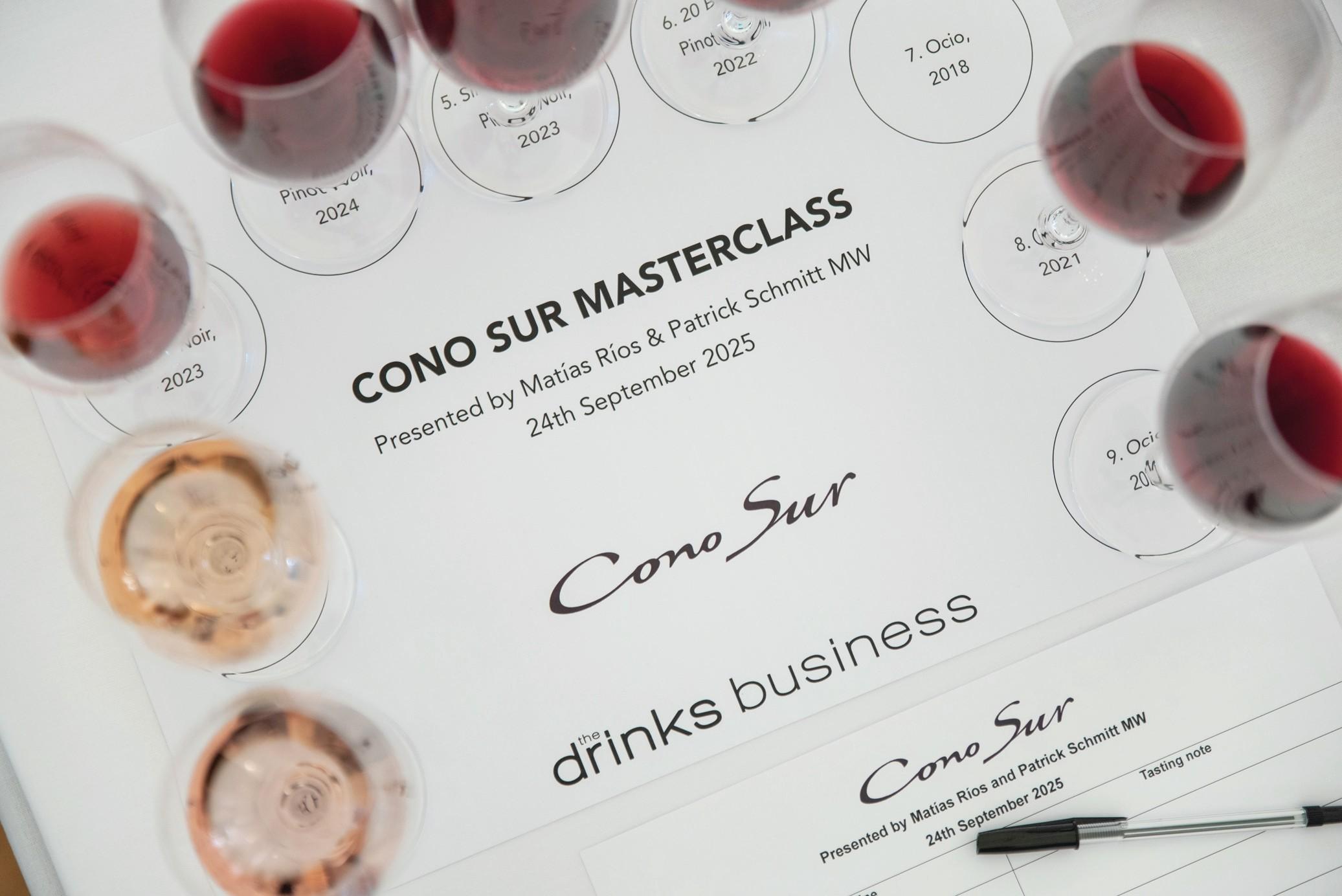
Cono Sur Pinot Noir masterclass: wines tasted
Bicicleta Pinot Noir Rosé 2025 (Bío-Bío, 12%): A vibrant rosé with explosive aromas of cherries, raspberries and strawberries, balancing acidity and texture.
Organic Pinot Noir Rosé 2025 (Bío-Bío, 12%): More concentrated, with a lightly herbal nose. Ríos noted the challenges of organic production in Bío-Bío, where high rainfall is mitigated by drying winds and gentler sunlight.
Bicicleta Pinot Noir 2023 (Chimbarongo, 13%): The UK’s best-selling Pinot Noir, made with malolactic fermentation in old barrels, showing smooth tannins and fresh acidity.
Organic Pinot Noir 2024 (San Antonio, 14%): From some of Chile’s oldest Pinot Noir vines, planted in 1968, this wine combines delicacy with depth.
Single Vineyard Pinot Noir 2023 (Campolindo, San Antonio, 14%): Aged for 12 months in French oak barrels, this wine offered red cherry fruit and natural freshness. 20 Barrels Pinot Noir 2022 (San Antonio, 14%): A Burgundy-influenced wine aged for 14 months in French oak.
Ocio 2021 (Casablanca, 14.5%, not available in UK): Cono Sur’s flagship Pinot Noir, aged initially in 100% new French oak before blending and further maturation. Awarded db’s Pinot Noir of the Year.
Related news
Driverless tractors to GPS planting: how one New Zealand winery is paving the road to success
Soléance: the mid-strength sparkling ‘opening up new scenarios’
Here’s why ProWine’s 2026 Asia fairs deserve a spot on your calendar


