



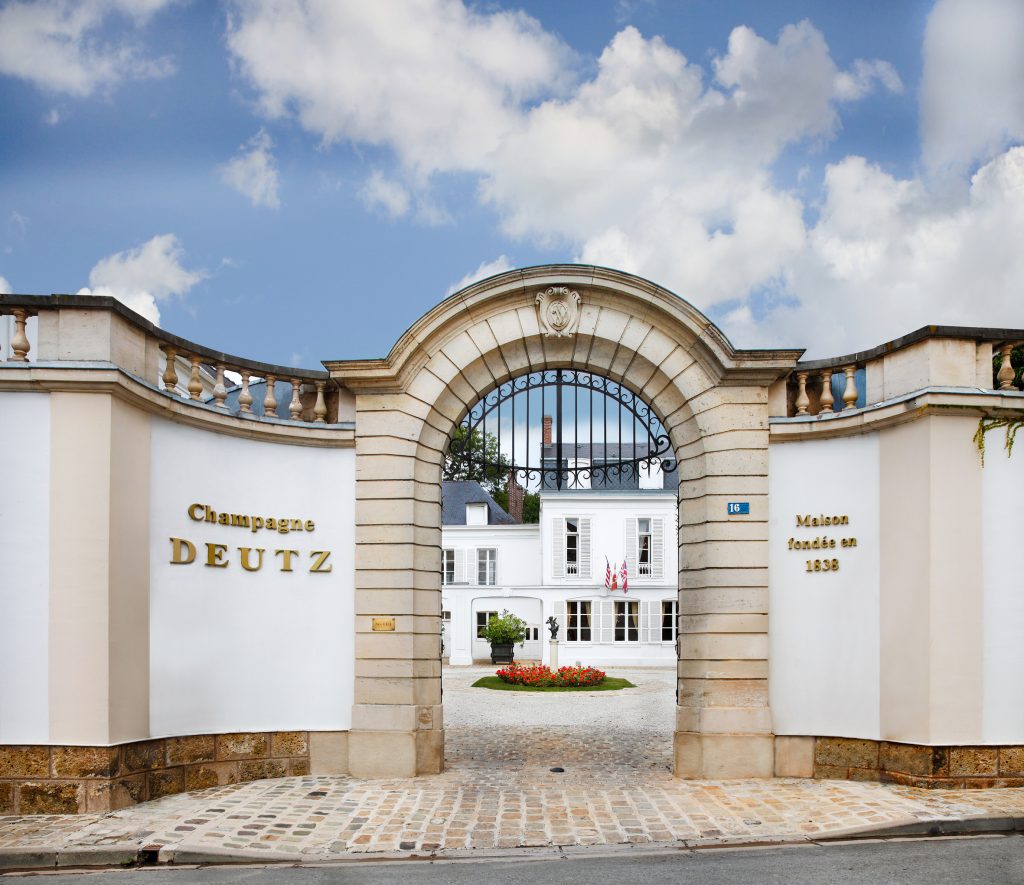
Champagne Deutz enters its next era
Three years after Caroline Latrive took over as its cellar master, Champagne Deutz is entering a new chapter in its history, one that will be defined by organic viticulture and a renewed commitment to its signature cuvée.
Caroline Latrive’s roots in Champagne run deep. As a young girl she would accompany her father, a winemaking consultant, on estate visits, learning the basics of oenology. She went on to earn a degree in oenology and worked at houses including Piper-Heidsieck, Charles Heidsieck and Bollinger, before being appointed cellar master at Champagne Ayala in 2012. She joined Deutz in 2022, working alongside its former cellar master, Michel Davesne, prior to his retirement.
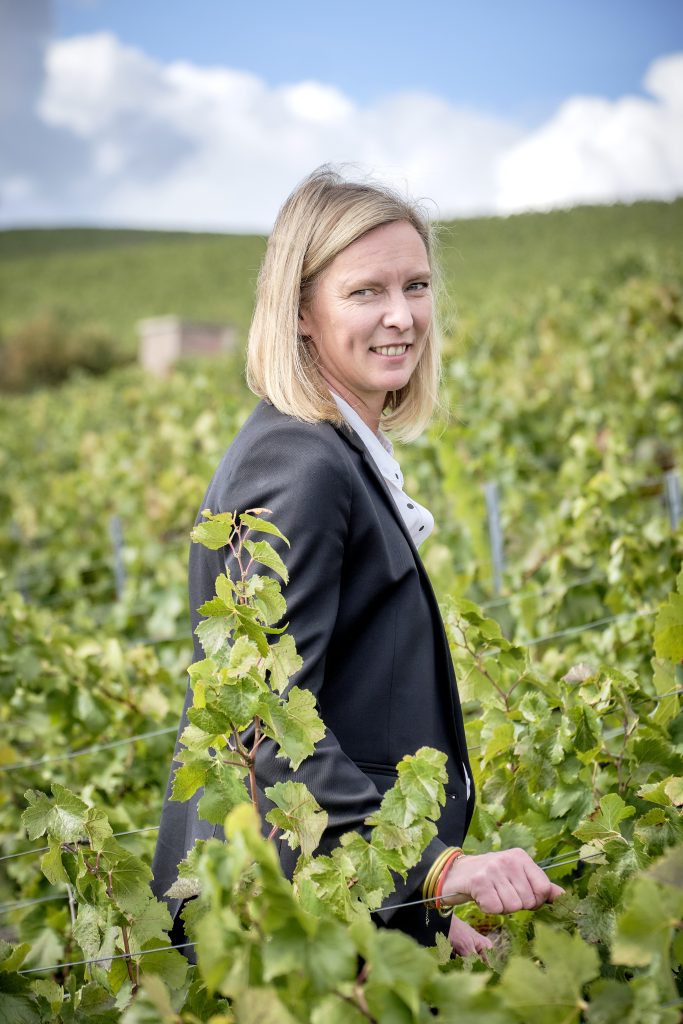
For Caroline Latrive, working with Michel Davesne marked a true “passing of the torch”, carrying on his legacy while bringing her own perspective. “We share the same winemaking philosophy, guided by elegance, precision, and respect for the wine,” she says. “Listening to him, I learned immensely. Today, I continue this mission with humility and gratitude: to preserve this distinctive style while ensuring its continuity, faithful to its heritage yet open to the future.”
The House, based in Aÿ, produces a range of Champagnes, among them its Amour de Deutz (a prestige blanc de blancs), a Brut Rosé and Brut Millésimé, as well as several single-vineyard cuvées under its Hommage à William Deutz label. Its William Deutz is a long-aged prestige cuvée that champions Pinot Noir from the Montagne de Reims.
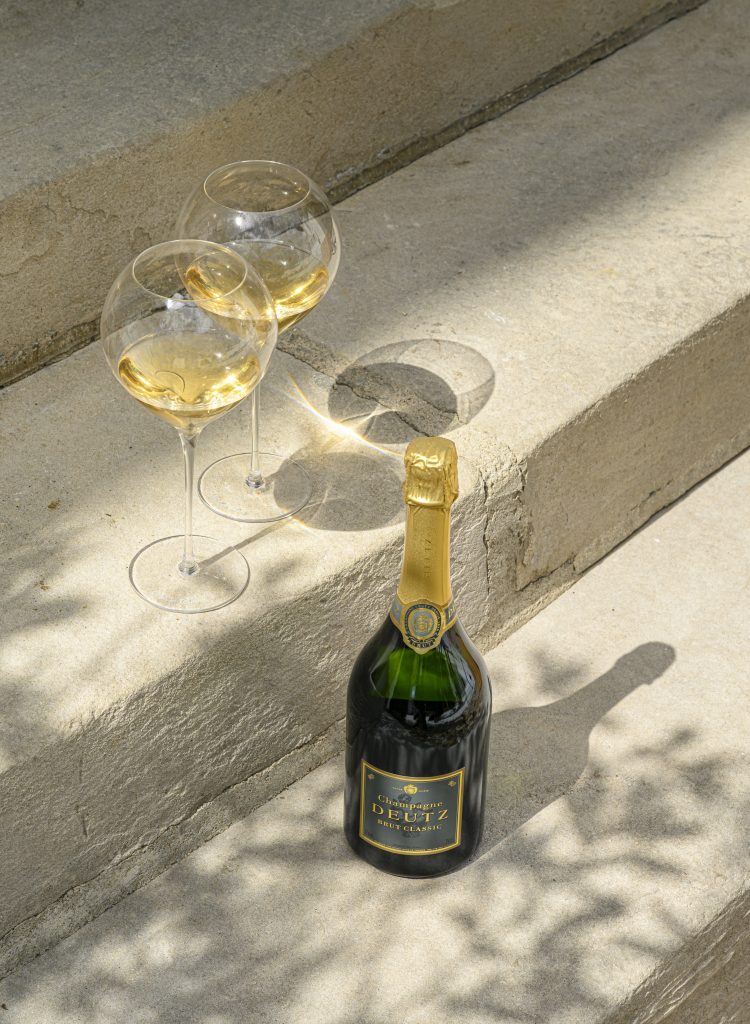
But the most crucial label in its portfolio is the Deutz Brut Classic, which is considered the “purest expression of the Deutz style”. While the selection process varies each year, the blend typically consists of 40-46% Chardonnay, 30-35% Pinot Noir, and 23-25% Pinot Meunier, with the addition of reserve wines from select vintages. Caroline Latrive sources grapes from 90 crus within a 20km radius of Aÿ, as are all Deutz wines, with each cru and grape variety vinified separately, undergoing malolactic fermentation before a long ageing period. “There is no fixed recipe for the Brut Classic,” explains Caroline Latrive. “Each year, I start with a blank page; it is a new story being written, symbolizing our boundless creativity. I also draw from our precious library of reserve wines; a true treasure of nuances and the key to maintaining the House’s stylistic consistency.”
A green mission
Another significant shift is Champagne Deutz’s conversion to organic viticulture, which began in 2023 following several environmental initiatives implemented over the past 15 years. The House aims to achieve certification across its 12 hectares of estate-owned vineyards in Aÿ by 2026, overseen by vineyard director Cédric Georget, reflecting Deutz’s “unwavering dedication to the future of the Champagne terroirs”, says Caroline Latrive.
She is confident that this transition is not only what’s best for the environment and the future sustainability of its vineyards, but also the quality of its wines. “The gradual reduction and eventual total elimination of herbicides in 2018 has increased competition between the vines and the surrounding flora,” she explains. “As a result, the vines have had to redefine their root systems and draw nutrients from deeper layers of the soil, yielding grapes that are more expressive and endowed with greater aromatic density and intensity, qualities we seek to highlight in our blends.”
While Deutz was founded in 1831, and was a founding member of the Syndicat des Grandes Marques de Champagne, it represents just 1% of total Champagne production, allowing it greater creative freedom and agility, and remains completely independent. Overall, 70% of Deutz’s grape supply comes from Grands Cru and Premiers Cru vineyards, significant given that these represent around 20% of Champagne’s total vineyards. “The fact that Deutz remains an independent House gives its identity a sense of authenticity and creative freedom that I find particularly inspiring,” adds Caroline Latrive. “It is also a human-scale company, where teamwork and individual contributions come together to serve a shared vision.”
Looking ahead, climate change remains one of the biggest challenges facing the Champagne region, forcing winemakers to constantly adapt their approach. “Harvests now take place earlier, and grape ripeness levels are higher, which requires us to adjust our production methods,” explains Caroline Latrive. “In recent years, for instance, we have chosen to slightly reduce the dosage to preserve balance, freshness, and the distinctive Deutz style in the face of these changes.” But she knows that consumer tastes are also changing, and consumption habits are evolving. “Consumers are seeking greater transparency and understanding,” she adds. “It is our responsibility to adopt an educational approach around our cuvées, to accompany this evolution and to share a culture of tasting rooted in pleasure and conviviality.”
Related news
Napa Valley's Bouchaine Vineyards appoints new DTC director
Alcohol cancer labels: public health measure or scare tactic?
WineGB Awards reveal growing diversity of English and Welsh wine


