



10 key insights from the 67 Pall Mall Fine Wine Report
Greater diversity (of wines), en primeur cynicism and an enduring love for Burgundy… the 67 Pall Mall London Fine Wine Trends Report charts the evolution of the market over the decade since the London fine wine club opened. Richard Woodard reports.
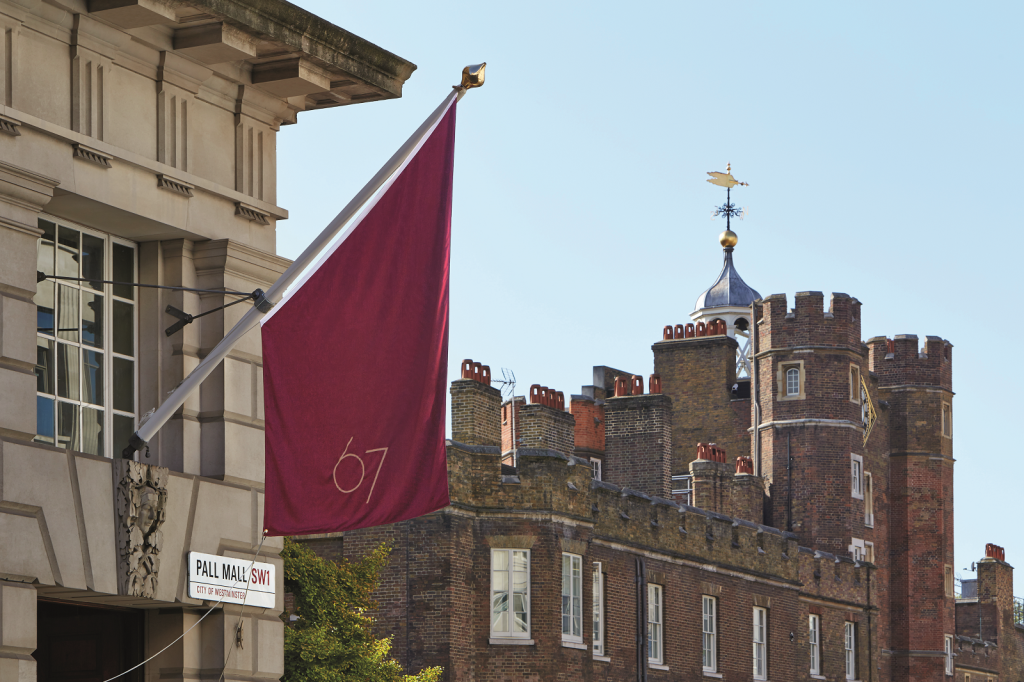
It will be 10 years in December since fine wine club 67 Pall Mall opened its doors in the heart of London’s clubland. In the years since, membership has more than doubled and further venues have been opened in Verbier and Singapore, alongside resident membership in Hong Kong, plus further openings planned for Melbourne, Shanghai, Bordeaux, Beaune and beyond by 2030.
To mark the anniversary, 67 Pall Mall London compiled a trends report, based on sales data from the London club, plus an extensive survey of its members – analysing drinking trends within the club itself, and by its members at home. The report was put together by 67 Pall Mall’s content consultant, Guy Woodward, founder of wine content agency Grand Cru Creative.
Here’s a rundown of the key trends and developments identified in the report…
1: Demographic detail
67 Pall Mall London has just over 3,800 members today, up from 1,500 when it opened in December 2015. Of that number, 23% have been with the club since the outset.
The demographic detail is striking: 74% of members are male, and the average age is 50. Paul Richards, 67 Pall Mall global head of wine and spirits purchasing, says: “We actively recruit and go after younger members, because they are the future of whatever wine culture we are creating.” He adds that this should be aided by the club’s by-the-glass programme – starting at £7.
Younger members also tend to be more active, attending events and taking a greater interest in the social side of the club. “Younger members see wine as an intellectual pursuit,” says Kathrine Larsen-Robert MS, 67 Pall Mall’s head of wine Europe. “They come here to learn and taste.”
2: Growing diversity
Eighty-five percent of members surveyed said they had expanded their drinking repertoires over the past decade – something which is borne out by 67 Pall Mall London sales data.
While Burgundy, Champagne and Bordeaux continue to lead the popularity stakes by a distance, a number of regions have seen exponential sales hikes since 2015: Tuscany (sales in the first half of 2025 up 201% versus H1 2016); England (+170%); Piedmont (+130%); South Africa (+104%); Rioja (+192%); and Sicily (+673%, off a small base). Bear in mind that 67 Pall Mall’s membership has increased by about 150% since the club opened, which will have an obvious impact on these figures.
Federico Moccia, 67 Pall Mall’s head of wine operations London, believes the club’s extensive (1,000 wines) by-the-glass programme has encouraged members to explore and experiment. “At the start, it was classics, classics, classics, but then people feel comfortable and they begin to move around,” he says.
3: Regions to watch
Of the locations mentioned above, two wine-producing countries stand out: South Africa and England. Of the former, Moccia says: “You have a great quality-price ratio there – in terms of value for money, it’s hard to beat. Chenin Blanc for sure, but Syrah and even Pinot Noir too. South African Syrah is perceived as fresher than, say, those of the Rhône Valley.”
English wines, however, still have a little work to do in order to win over 67 Pall Mall’s clientele. Almost half (49%) of those surveyed thought they were getting better, but still had work to do, while 28% would only drink them “as a novelty”. Only 23% said they were really impressed with them and drank them quite often.
Nonetheless, Larsen-Robert sees a number of attributes, from rising quality levels to sustainability criteria, given that wines are produced locally. “The wines also seem to be very balanced, at 12.5%–13%,” she adds.
4: Wines to drink, not lay down
The old habit of buying 12-bottle cases of wines to lay down and await maturity may be slowly dying out. Asked if they were buying more or less wine to lay down than they were 10 years ago, 44% of members said less and 26% about the same, with 30% buying more.
“Beyond the concerted pushback to en primeur [more on that shortly], there was a notable sense that members were less willing to wait several years for wines to come to their peak,” the report says. “Younger members in particular mentioned that their lifestyle didn’t suit buying wines to age, be that due to a lack of storage options, or the fact that they may not remain in the same city or country for ever.
“Members were also increasingly less willing to commit to cases of six or 12 of the same wine, as they were looking to experiment with a greater diversity of wine.”
Partner Content




5: En primeur cynicism
The rising price of fine wine is a common frustration for 67 Pall Mall members. More than half (57%) of those surveyed said they were either buying fewer bottles of the same quality, or cutting back on top-end wines and replacing them with mid-range examples.
But the greatest rancour was reserved for en primeur, and especially Bordeaux, plus Burgundy to a lesser extent. The report notes that it was “hard to find any positive sentiment” about the system, thanks to price inflation meaning that mature, secondary market wines were often similarly priced, or cheaper, than new releases.
“You must remember, we’re being asked to buy wine before it’s bottled, with speculation on the potential quality and value,” said one member. “Twenty years ago, you could get a good deal. But in the last five or 10 years, the prices have gone insane.”
6: Critics – a mixed bag
Very little consensus here. A lot of members mentioned professional critics as being influential, but many respondents adopt what the report dubs “a hybrid approach”, mingling expert opinion with community input, trusted sommeliers or merchants, plus peer review platforms such as CellarTracker and Wine-Searcher.
Asked which third parties they consulted for recommendations, there was a narrow spread between wine merchants (referenced by 18.4% of respondents), friends (15.2%), online-only wine media (14.4%), individual critics (12.4%), sommeliers (11.6%), peer review sites (11.4%) and traditional wine magazines (10.1%).
7: Moderation? Life’s too short
The health and wellness may have passed many 67 Pall Mall members by. Asked if they were moderating their wine consumption for health reasons, 41% replied no, because life’s too short, although almost the same proportion – 40% – said they hadn’t in the past, but were now.
Alcohol level was a concern to some – 22% said they would take note of it before buying – and Moccia believes this is an increasingly influential factor. “Alcohol is definitely an element that members ask about more than they used to,” he reports. “Both for health reasons, and because they want more balanced wines. Wines like Priorat and Amarone are out.”
And no- or low-alcohol wines? Most members (59%) have no interest in them – and only 1% said they really enjoyed them.
8: Organics and biodynamics – more cynicism
Very few club members think about sustainability criteria when purchasing wine: 8% said they took note of whether a wine was biodynamic before purchasing, 7% thought about organics, and 6% considered bottle weight or packaging.
“While members took notice of such credentials, there was a scepticism – even cynicism – as to how they are used,” says the report. “Quality, producer reputation and personal taste were more important factors. That said, certifications such as organic or biodynamic were often viewed as a positive indicator of care and rigour in a producer’s approach, and hence an encouraging sign.”
9: Fine wine’s uncertain future
What issues will have the greatest impact on the world of fine wine in the coming years? Whatever their doubts about sustainability, almost half of 67 Pall Mall London’s members referenced climate change here – particularly in terms of its effects on the styles of classic regions such as Bordeaux, Burgundy and Piedmont.
Beyond this, price reared its head again, with 38% of those surveyed voicing fears that rising prices would limit the future accessibility of fine wine – amid dark mutterings about the “exorbitant” prices of Burgundy and Bordeaux in particular.
10: Burgundy, Burgundy, Burgundy
One final word on the future, and how members see their drinking habits evolving between now and 67 Pall Mall’s 20th anniversary in 2035: which regions/styles do you expect to be buying more of over the next 10 years?
An eclectic mix of responses, perhaps most noteworthy for the complete absence of Bordeaux among the most popular answers. Members, it seems, are more likely to fill their cellars with wines from Italy (mentioned by 35% of respondents), South Africa (23.6%), Spain (23.2%), England (22.5%), Germany (20%), Portugal (16.1%), California (15%), Austria (14.3%) or Champagne (13.6%) – than they are with the great names of the Médoc.
That may be partly because members bought a disproportionate amount of Bordeaux in the past – just because they say they won’t buy more doesn’t mean they’ll stop altogether – but it’s another worrying sign for the Bordelais after a succession of lacklustre en primeur campaigns.
And top of the list of wines that 67 Pall Mall London members expect to buy more of over the next 10 years? Yes, it’s Burgundy, mentioned by 40% of those surveyed. Plus ça change…
Related news
Château Petit-Village unveils its new relationship with La Place de Bordeaux
The Italian region selling rosé to the French
China is rebuilding its on-trade around a new kind of drinker


