



Top travel retail conversion tactics to boost drinks sales
How can drinks business owners in global travel retail make commercial revenue outstrip passenger traffic? Jessica Mason finds out.
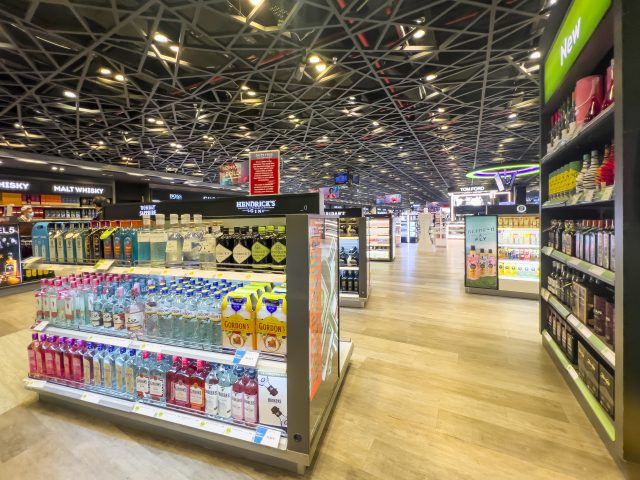
Globally, passenger numbers have recovered from the impact of the Covid-19 pandemic across all regions for the first time in more than five years. The data confirming this was outlined by the Duty Free World Council (DFWC) KPI Monitor for the first quarter of 2025, offering a beacon of positivity for the travel retail marketplace.
Determination
Despite these green shoots, the challenge for many drinks companies, certainly over the past few years, has been to tease out better margins and to implement conversion tactics in a once prosperous sector, even while it was waning. However, while the number of travellers dwindled as the travel and tourism industry clawed its way back, a combination of shrewd analysis, ingenuity and sheer determination has helped to revive it.
Charlotte Reid, GTR senior insights manager at data and research business IWSR, explains: “There is an expectation that global travel retail will continue to outperform the global wine and spirits market in the years ahead.” But she warns that the drinks industry needs to be aware that “volumes will continue to come under pressure, with growth falling slightly below the anticipated increase in passenger numbers”.
Potential
Masi Agricola export and travel retail sales director Pier Giuseppe Torresani points out that, “based on available data and forecasts, we can be confident that, in the coming years, travellers will grow significantly [and] as a consequence, travel retail will also be on the rise”, with IWSR predicting a CAGR value rise of +8.2% between 2025 and 2030 for beverage alcohol in GTR.
The company says the outlook has been boosted by a “resilient premiumisation trend”, observing that “value gains persist in the GTR channel”, while warning that “operators must work hard to engage with more cautious post-pandemic consumers, amid volume challenges”.
It also highlights how, even though “beverage alcohol sales in the GTR channel have overtaken pre-pandemic levels in value terms”, there are still things that need to be done because, as Reid points out: “Shrinking basket sizes highlight more cautious post-pandemic consumers, with confidence impacted by day-to-day inflationary pressures.”
According to IWSR, total beverage alcohol volumes in GTR rose by 5% in 2023 – and yet in terms of value in 2023, revenues were up by 21%, and increased at a CAGR of +3% between 2018 and 2023. Value has grown 14% compared to 2019, but volumes remain down, by 18%.
The quarterly KPI Monitor, produced for the DFWC by Swiss consumer insights agency m1nd-set, also offers insights into what is changing about traveller behaviour. One thing is certain: margin boosting is a complicated business.
Applying the four Ps strategy
Henkell Freixenet international head of sales of GTR Ramón Olive explains that “today’s consumer decision-making process is more complex than ever” and gives a few hints for how to navigate a path towards sales.
Olive suggests that, “with access to vast amounts of information and rapidly evolving needs, it’s essential to offer the right solution on shelf – supported by a compelling four Ps strategy: product, price, place [and] promotion.”
Then, make sure that the “brand portfolio provides a unique range of products tailored to meet every consumer need”. Spain’s Zamora Company agrees, with global travel retail director Ruben Canabal saying that “raising spending in travel retail requires a multi-faceted approach that goes beyond simply reacting to passenger numbers”.
Canabal advises: “Focus on creating a captivating and seamless shopping experience.” For instance, this “includes leveraging technology to personalise offers, such as using data analytics to understand consumer preferences” – a move that then helps in tailoring promotions accordingly.
One example of a brand looking in from the outside and eyeing the opportunity can be seen from Wild Idol.
Wild Idol CEO Paul Beavis observes that, “with sobriety now a lifestyle statement and the sober-social movement continuing to grow, global travel retail is definitely of interest for an elevated, naturally alcohol-free offering such as Wild Idol”.
According to Beavis, Wild Idol would be especially interested in growing its presence in the booming luxury cruise sector. Beavis points out that “ultraluxury lines such as Explora Journeys and Cunard are setting new standards in lifestyle-led experiences” and notes: “We see alignment in the customer base and an opportunity to present a refined, naturally alcohol-free option.”
Added to this, he says that the business is also eyeing other locations and reveals that “beyond cruise, we see strong potential in premium lounges and airport wellness spaces at hubs like Heathrow, Dubai and Singapore – environments where travellers are actively seeking balance, wellbeing and sophistication”.
But for many of the key players already present in the sector, as well as those considering joining it, what are the key tips and tactics? The first is simple and straightforward: consider the airport space and make sure that promotions, gifts and activations pander to it and keep the travelling consumer feeling excited about being a part of the travel ecosystem.
Tip 1: Offer airport perks and promotions
Sparkling expert Henkell Freixenet, for instance, collaborates closely with its customers to analyse its displays. Olive insists: “Promotions play a vital role here – not only in helping consumers to make the most of their airport allowance, but also offering perceived value that encourages them to spend a little more to try a new, more premium product.” Assessing how to get the most out of the GTR shopper, Olive notes that “travel retail provides a unique environment for discovery and experimentation”, and then points out that “it’s not just about the right product-promotion mix – it’s about delivering the best experience. That’s why we’re investing in exciting activations at key international airports, ensuring consumers are in the perfect mindset to explore, engage with, and purchase our products”.
Throughout the summer, Halewood Artisanal Spirits brands Whitley Neill gin and Dead Man’s Fingers rum had activations at Cyprus airports Larnaca and Paphos. Plus, other activations for both spirits will occur at other international airports across Europe, including Berlin, Düsseldorf, Frankfurt, Hamburg and Billund.
Describing the importance of building interest in drinks across airport environments, especially for people already in the mood for travel and adventure, Halewood global travel retail director Eamon Prunty explains: “This year’s airport activations offer travellers an exciting opportunity to discover the latest expressions and to engage directly with the brand in some of the busiest travel destinations.”
Tip 2: Encourage consumers to trade up
Another tip that goes hand-in-hand with this kind of activation is the art of premiumisation. Or, in other words, the subtle way that the trinity of brand owners, GTR retailers and operators can work together to convince people to trade up from a standard purchase to a higher-end product. This notion of ‘treating yourself’, or gifting with souvenirs for others, is highly successful in travel retail especially.
As IWSR outlines and Reid reiterates: “Consumers are continuing to trade up in GTR. Within spirits, there has been a rise in promotional activity in the super-premium and ultra-premium price band levels through price strategies and larger presence of twin packs and 70cl.”
She adds: “This is driving sales and accounting for almost US$4 out of every US$10 spent on spirits in this channel.” As such, Reid predicts that “this trend is expected to continue, with the volume share of premium-plus products increasing from 48% in 2023 to 50% by 2028”.
Reid also points out: “Premiumisation is also encouraged by the often shrinking price gap between domestic markets and travel retail, which leaves many suppliers with little option but to focus on brand building premium-and-above products in the GTR channel”.
She adds: “The ongoing process of premiumisation in GTR is being driven by both consumers and suppliers.
Consumers are drinking ‘less but better’, while suppliers are choosing to use the channel to expose drinkers to the higher-end brands in their portfolios as they increase brand building in the channel.”
Torresani at Masi also notes that, at brand level, businesses can “stimulate the buying of more premium products”. He explains that sometimes this can be about showcasing the most exciting items from the portfolio, either for their historical significance or their newness. Torresani says: “From our side, we have launched a new organic, low-alcohol and low-intervention product line called Fresco di Masi, as well as giving more focus to light reds such as Valplolicella, whites like Lugana and bubbles, and our Canevel range. Other projects are in the pipeline to be launched in 2026.”
Proving this point, at this year’s TFWA Cannes exhibition, Bottega is also presenting its Stardust Gold and Stardust Black, the two releases that are at the top of the range of the Bottega Prosecco Premium Vintage Collection.
Speaking to db, Bottega president Sandro Bottega explains: “Bottega Stardust Gold is an extra brut sparkling wine, vintage 2021, characterised by a longer fermentation, so that the whole production process lasts at least 12 months”, and adds: “It is part of a project to enhance Prosecco that Bottega began developing more than 10 years ago.”
Bottega also outlines that “the aim is to produce sparkling wines of the highest quality by extending fermentation time and thus obtain wines with a more complex character and good longevity”.
He also explains: “The Bottega Stardust Gold bottle is completely covered with 5,000 crystals placed by hand for a stardust effect”. A luminous bottle and gold glitter label and capsule add to the effect, with Bottega noting that “the retail price per bottle of this super-premium Prosecco is €250”, which is sure to offer the ‘wow’ factor to the channel.
While many drinks trends come and go, there are, however, two categories that are having a bit of a moment and should not be ignored.
Tip 3: Align with fizz and agave spirits
As IWSR identifies, Champagne and agave-based spirits have helped to drive overall travel retail performance. Agave spirits are expected to continue to grow in the coming years, “with Tequila in particular building momentum beyond the US and Mexico” and branching out further across Europe and Asia as consumers gain more thirst for new releases and feel that they can pick up something special while on
their travels.
Tip 4: Recognise the cruise ship opportunity
Travel retail does, of course, also include cruises, as well as airline- and airport-focused retail offerings, and this is one area that the guidance suggests brand owners should not neglect.
The cruise sector is now fully resurgent, according to IWSR, following the lingering impact of the Covid-19 pandemic. Reid outlines: “The rehabilitation of the cruise industry has been a quicker process than expected, with passenger numbers now comfortably above 2019 levels.”
To explain more about how the GTR platform works on cruises, Reid adds: “It is predominantly an on-trade sector, with competition to get on the back-bar and cocktail menus intensifying.” Therefore, playing up the versatility of your product in terms of mixology is key.
Tip 5: Never ignore the APAC market
Travel Retail sales in APAC have been “vibrant”, with IWSR figures stating that they were “up 46% in value terms during 2023 and up 34% in volume terms, with Taiwan, Thailand, Singapore and Australia returning to pre-pandemic value levels”.
Reid identifies that “India drives the most incremental volume and value for the region” and, as such, its “momentum is poised to continue”, with whisky set to benefit.
There is also an influx of new Indian passports set to be issued in the coming years as the expanding Indian middle class begins to make plans to explore the world.
Added to this, the IWSR report on the sector highlights that “rising levels of investment in the country’s increasingly sophisticated travel retail offer should boost sales further”, while “in China, the easing of the visa backlog and increased flight listings will enable further growth”.
Tip 6: Perfect your showmanship
The name of the game in travel retail for a long time now has been ‘experiential’, with a growing need for consumers passing through to feel engaged and connected in some way. Speculatively, the sector has mused on how this could have been underpinned further by the effect of lockdowns on people’s mindsets, meaning that, when they did get to travel, they craved interaction.
According to Zamora’s Ruben Canabal, “the ‘wow’ factor is absolutely crucial for cutting through the noise and making a lasting impression”, and “this can be achieved through immersive and interactive experiences”. He points out that travel retail offers the perfect platform for showmanship, which means “we can create spectacular physical installations, such as pop-up bars offering exclusive tastings or even personalised product demonstrations.”
Tip 7: Link up with local talent
Canabal also recommends using “interactive digital displays that allow customers to engage with a brand’s history or products in a unique way. By incorporating local elements, such as partnerships with local artists or designers, we can provide a fresh and unexpected glimpse into the local culture.”
Explaining the ultimate goal in travel retail, he adds: “The idea is to create a moment of discovery and delight that passengers will want to share, extending the reach of the campaign beyond the store.”
A good example of this can be seen in Campari Group’s GTR division’s recent Appleton Estate boutique experience at Sangster International Airport, Jamaica. The space was designed to immerse travellers in the story of the Jamaican rum brand, with a central tasting bar decked out to look like the distillery offering a host of “sensorial experiences led by trained brand ambassadors” while freestanding units surrounding the bar featured travel retail exclusives and special seasonal offers.
Italian Wine Brands (IWB) duty free and travel retail manager Esteban Garcia agrees and adds that, certainly for IWB, “airports, cruises and duty-free stores are ideal stages to showcase the charm of Italy, offering travelers more than a bottle”, but instead “a carefully curated moment of pleasure”.
It is this kind of point that we need to remember about travel retail: it is a world of rare opportunities and experiences. It is also a place where, Garcia observes, drinks are “an invitation to taste a place and its culture”.
Related news
Why travel retail is the smart route for drinks hoping to crack Asia
Why drinks brands with thoughtful design gain traction in travel retail



Actually I read it yesterday but I had some thoughts about it and today I wanted to read it again because it is very well written. India Golden Triangle Tour