



Plans to ‘unleash the power of malt’ are underway
The world’s leading maltster Soufflet Malt has revealed a new roadmap to “unleash the power of malt” in brewing and distilling across the drinks industry and beyond. db reports.
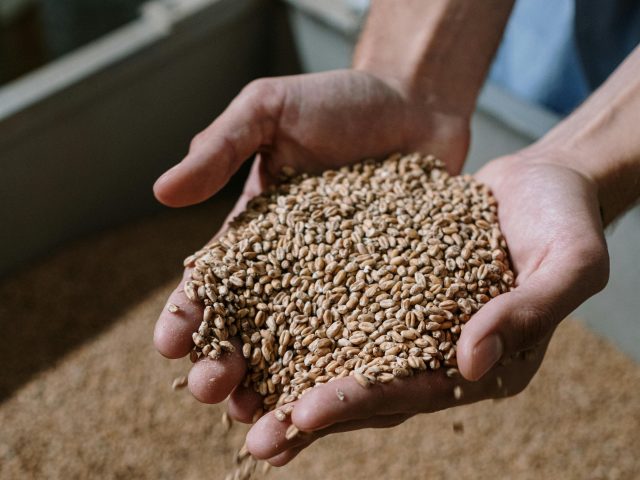
The strategy also aims to expand malt’s role beyond beer and whisky into new areas, including breakfast cereals, hot and soft drinks, snacks, and innovative flavour experiences in spirits.
As many brewers and beer fans know, malting is a process that allows grains to sprout slightly under controlled conditions, resulting in biochemical changes important for beer production.
Speaking to the drinks business, Soufflet Malt CEO Jorge Solis said: “We believe in a future with malt at every moment of the day. We see malt as a versatile platform ingredient that can unlock entire new value pools across the food and beverage sector.”
Soufflet Malt already has 40 malting plants across 20 countries in Europe, Asia, Africa, Australia and America and employs more than 2,300 employees. It also boasts a production capacity of 3.7 million tonnes of malt annually.
A new chapter of growth
According to Solis, the new strategy will help the business to “expand its global footprint, penetrate new markets, strengthen its sustainability leadership, and drive operational excellence” even further. But added to this, he highlighted how the plans outline a “new chapter of growth and investment on the back of strong financial performance, market share gains over the last year”.
After all, Solis explained how “today, more than 65% of revenue from its core brewing and distilling business is secured through multi-year supply agreements, complemented by a robust forward order book. This provides solid visibility and confidence in the core business, enabling the company to actively pursue expansion into adjacent segments”.
Bold ambitions
The plan, named MALTiply 2030, is targeted to not only extend the role of malt, but also to deliver “excellence in execution across every stage of the value chain from field to first taste,” said Solis.
He pointed out how “it sets a bold ambition to grow the product and service offering in fast-growing segments and to generate a substantial share of EBITDA from these segments by 2030, while continuing to drive growth in brewing and distilling.”
Solis explained: “The last year has been transformative with the successful integration of United Malt Group and Malteries Soufflet, and the creation of a new, unified identity as Soufflet Malt. Our new MALTiply 2030 strategy is ambitious, focused and grounded in the needs of our customers. It’s designed to enhance our leadership in our core brewing and distilling markets while serving a broader set of customers across the food and beverage industry and other sectors. It positions us to advance product innovation while mobilising it through the strength of our global scale and the precision of our local expertise. At the same time, we are anchoring our operations in advanced technologies and sustainability. Together, these strengths position us to lead the malt industry into a new chapter of growth.”
Solis highlighted how “the company has the scale and global operations network to serve the specific needs of the craft brewing and distilling sectors. Additionally, its regional strategy is focused on driving performance in both mature and fast-growing markets.
Targeting India, Africa and Brazil
“In mature markets, the company intends to build on its strong regional presence to outperform the market. The company has set an ambition to deliver strong and sustained CAGR. In parallel, it will aim to become the number one maltster in fast-growing markets, including: India, South Africa and Brazil, where demand continues to accelerate,” said Solis.
Partner Content



He revealed: “Capital expenditure above €350 million is currently pipelined for new facilities to serve these markets.”
Additionally, the company outlined its plans to penetrate adjacent markets and noted how “the global food and drink landscape is evolving rapidly, with consumers increasingly seeking healthier, more sustainable products made from natural and traceable sources. This shift is creating opportunities for malt as a natural, nutritious and versatile ingredient,” Solis observed.
He added: “These adjacent markets include fast-growing segments such as no- and low-alcohol beers, soft drinks, hot beverages, and novel flavour applications in distilling. Malt is also being positioned as a natural, sustainable and economical replacement ingredient in the production of leading sweet and savoury foods. Soufflet Malt’s ambition is to generate a substantial share of EBITDA from these adjacent markets by 2030.”
Sustainability
Solis maintained that “at Soufflet Malt, sustainability is synonymous with decades of malt chain expertise and guides every aspect of the company’s operations, from sourcing high quality barley to minimising the environmental impact of its operations.”
As evidence of this, the business has built the world’s first net-zero malt house in Addis Ababa, Ethiopia, setting a new standard for sustainable malting. Further, the company introduced advanced water recycling technology at its Geelong malt house in Australia, reducing the water intensity to less than 2 m3 per tonne of malt, the lowest of all Soufflet Malt malt houses.
As part of its 2030 sustainability roadmap, Soufflet Malt is targeting: 80% sustainable barley sourcing; 50% reduction in Scope 1 & 2 greenhouse gas emissions; 30% reduction in water intensity; 100% waste recovered.
Soufflet Malt’s climate targets have been officially validated by the Science Based Targets Initiative (SBTi). Plus, as part of its MALTiply 2030 plans, the business has declared plans to invest more than €200 million in sustainability initiatives by 2030. Additionally, it will continue to scale its agronomy programmes, including promoting regenerative agriculture globally.
Investment
Lastly, Soufflet Malt has laid bare its intentions to invest more than €25 million each year in a company-wide transformation programme to drive greater productivity. “This includes harnessing AI and digital technologies to optimise malting process parameters and embedding rigorous standard operating procedures worldwide to ensure consistent excellence in execution,” said Solis.
Solis told db that its plans were far reaching but that the company was also able to move quickly to stay flexible with other business’s needs whether large or small.
He added: “We are in a unique position as a truly global maltster with the agility to tailor solutions locally – let’s MALTiply together”
Earlier in the year, db looked into a study, which was derived from the University of Arkansas, that identified how malting has the potential to decrease time and energy costs and make using grains such as rice more feasible for more small-scale craft brewers — especially when creating gluten-free beers.
Related news
Master of Malt reveals World Cup-inspired whisky line-up with retro kits
Regulations on malting barley set to protect the beer sector
Taiwan scraps tariffs on malt and hops to boost local brewers


