



Loureiro poised to emulate Alvarinho’s success
Portugal’s Loureiro grape has the quality and momentum to soon rival its more famous Vinho Verde counterpart Alvarinho, believes one producer who recently joined this charge. Gabriel Stone reports.

“In three to four years Loureiro will be as famous as Alvarinho; I am sure of that,” predicts Raul Riba d’Ave, who heads The Fladgate Partnership’s still and sparkling wine division, formed following its 2023 acquisition of Ideal Drinks.
This table wine addition to the group’s core Port business includes the Royal Palmeira brand, which is produced from 19 hectares of vineyard at the historic Paço de Palmeira estate in Loureiro’s Baixo Minho heartland.
“Everyone knows that Loureiro is a very good grape variety, but they tend to take advantage of the fact that it can produce big yields,” remarks Riba d’Ave. “It’s a variety where if you want to yield 20 tonnes per hectare you can do that no problem, but it will be very light and the aromatics will be lost within three months of being bottled.”
However, Riba d’Ave suggests that a growing number of producers, such as Esporão’s Quinta do Ameal and Anselmo Mendes, a winemaker best known for his success in raising the profile of Vinho Verde Alvarinho, take Loureiro more seriously. “People are now adapting their viticulture, adapting their yield to get a quality never seen before,” he reports.
Outlining the approach at Royal Palmeira, Riba d’Ave explained: “We are planting at high density and yielding eight tonnes per hectare rather than 15-20, and we’re harvesting much later.”
Problematic decision
In a region that experiences average annual rainfall of around 1,200mm, roughly double that of the Douro’s central Cima Corgo sub-region, and with Loureiro a more thin-skinned variety than Alvarinho, this decision to harvest later can prove problematic.
“There are pitfalls,” acknowledges Riba D’Ave. Citing the Autumnal Equinox of 22 September as the target harvest date for serious Loureiro, he notes: “It’s a time of year when rain falls. For Loureiro this is dramatic; it’s a very rot prone variety so if you wait for the aromatics it will rot.”
Enhanced aromatics are not the only reason to take this gamble with the weather. “You need 12-12.5% alcohol to have a little bit more body,” explains Riba d’Ave. “Our Loureiros are really powerful.
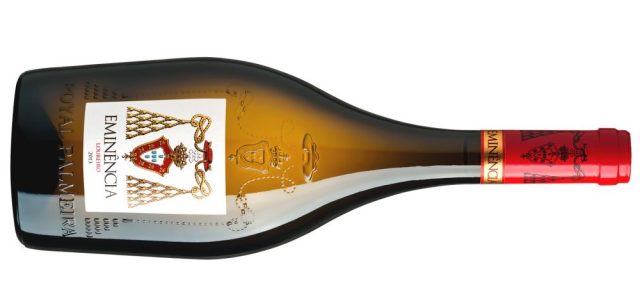
The viticultural challenge of making high quality Loureiro in Vinho Verde helps to explain why the brand’s top tier Eminencia label, which carries a UK RRP of £38, is made only in the best years. Even then, production tends to be small at 2,500-5,000 bottles.
Once harvested, Royal Palmeira Loureiro’s ambitions can be seen in its 12-month maturation using old barrels, followed by up to two years bottle ageing prior to release. As a demonstration of how well good quality Loureiro can mature, the current Eminencia vintage on sale is 2015, with Royal Palmeira on the 2020 vintage. However, Riba d’Ave notes that the company had been moving rapidly through an extensive stock of older vintages it inherited from Ideal Drinks.
Partner Content


As for the character of this grape compared to the better known Alvarinho, Riba d’Ave remarks: “I always say Loureiro is a small Gewürz[traminer]. It has low acidity but lots of floral aromatics.”
Scope to catch up quickly
Although Alvarinho’s profile is boosted by the far larger volumes produced across the border in Spain as Albariño, in Portugal Loureiro’s roughly 5,000ha vineyard area is almost double that of its Alvarinho. As more producers start to take this variety seriously, Riba d’Ave suggests that its reputation has the scope to catch up quickly.
“We have much more Loureiro than Alvarinho,” he notes; “there’s so much more potential for it to become a famous variety.” As a sign of the change already evident, Riba d’Ave comments: “Among producers who export, a lot more are now doing a single variety Loureiro because they’re seeing demand.”
In terms of positioning, Riva d’Ave points to the growing number of retailers and sommeliers now seeking an alternative to Alvarinho. “I think Loureiro needs to be the brother of Alvarinho, but in a different style,” he suggests. “If you’re fed up with Alvarinho, try Loureiro.”
More adventurous
Adrian Bridge, CEO of The Fladgate Partnership, picked out Loureiro alongside Alvarinho from Monçao e Melgaço property Quinta da Pedra and Touriga Nacional from the Dão-based Bella brand as key export representatives for the company’s new table wine division. Other wines such as Bella Pinot Noir will sell primarily in the domestic market “as a stepping stone into Portuguese wine for tourists.”
For Bridge, “Loureiro is a bit more adventurous, a different audience” compared to Alvarinho.
“Alvarinho is a bit more known, then the next step is aged Alvarinho, then Loureiro and aged Loureiro,” he suggests. “Now you’re in the territory of aged white Burgundy.”
Having taken on a total of 26 wines upon purchasing Ideal Drinks, The Fladgate Partnership is still working out how best to position and prioritise this large, multi-regional portfolio. “We need to focus that down,” acknowledges Bridge, while noting that the business he bought was “98% domestic” in terms of sales.
As the group now starts to build a more international profile for its Loureiro, Bridge stresses: “We’re still at an early stage of showing it to sommeliers and professionals.” He set the company’s ambitions for Loureiro within the wider context of changing trade perceptions about Portugese wine. “Their big understanding I would say is that Portugal is a tremendous source of value. That doesn’t mean cheap, but it does mean if you’re going to spend more then you get a hell of a lot of value for your money.”
Related news
What Portugal can do for the UK wine trade
Riccardo Cotarella makes first move into Portugal with Amorim Family Estates partnership


