



José Urtasun: Rioja producers are struggling to sell, but quality has never been better
As his winery, Remírez de Ganuza, teeters on the cusp of harvest, José Urtasun talks sustainability concerns, why ice in wine isn’t a crime, and why Rioja producers shouldn’t rip up their Tempranillo vines to jump on the white wind trend.
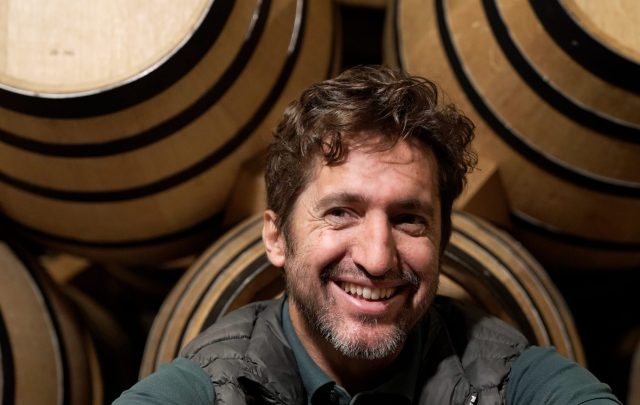

Dressed down in a Ralph Lauren polo and blue jeans, José Urtasun stands out from the gaggle of men, suited-and-booted in salmon and navy ensembles in the London’s private wine club, 67 Pall Mall, on Thursday morning.
It’s an outfit characteristic of its wearer: unpretentious, with his feet firmly on the ground. It’s 11am when we meet, and outside, the weather wails between sheets of rain to quiet sunshine as large leaves blend into curtains, Noccellara-green.
Some opt for wine, and others coffee. For Urtasun, a silver pot of green tea suffices. “You’ll never hear me say we are organic because we are not,” he begins, leaning forward in a plush plum armchair. Sustainability’s thrown around as a buzz word, but with 80 hectares of land and more than 200 plots, being 100% organic is tough: “If we have to treat, we do, but in an early moment where disease is just showing. You walk around the area this year and you’ll see many vineyards are almost gone – the fruit is gone. We have to prevent that.”
And the winery’s on the cusp of harvest which kicks off on 10 September. Urtasun’s careful to stay grounded: While the forecast’s looking good – aside from vineyards ravaged by mildew – the first few weeks of the month are “crucial days”. Rainfall could change everything, and if you miss the prime picking window by just a few days you’ll end up with an utterly different wine. Still, 2025’s humidity and hot weather will hopefully foster grapes that are “lower in quantity, probably fresher, less alcohol, more acidity”.
Long-term sustainability
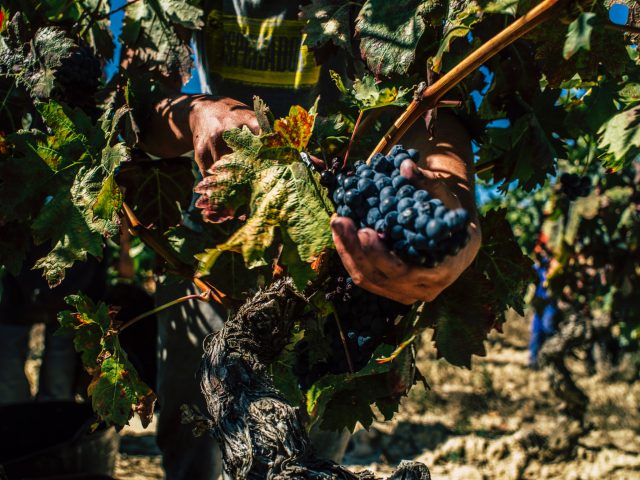
A recent study revealed that between 1950 and 2014, the average temperature in the Rioja region ticked up between 0.9ºC and 1.2ºC, with 65% of winemakers worrying about the negative effects of climate change. The Spanish Meteorology Agency, touts that, by 2050, the maximum temperature will be 4ºC higher than its 2010 level. Urtasun, for one, has seen a slew of scorching summers since he joined the winery in 2010.
Go back 30 years, and southern Rioja was the prime spot for grape growing. Plant north, and you risked a mediocre harvest and unripe grapes. Now? “Everybody’s willing to be northern”. Remírez de Ganuza is no exception, but the barrier of a mountain means there’s a limit to how far it can shift: “It comes to a level where it’s a protected area, so you cannot plant anymore, because you have to preserve the forest.”
To mitigate the impacts of climate change, Urtasun will also avoid planting new Tempranillo, instead plumping for Garnacha, Graciano and Mazuelo, which ripen later. He’ll also plant more trees, to create shade and fight frost.
In many ways, Rioja, one of the world’s oldest and most traditional wine regions, is in a state of flux. An excess supply of wines, a cost-of-living crisis and downward trends in wine consumption have thrown it ‘on the rocks’, with stocks of unsold Rioja amassing in cellars since 2018. In response to the oversupply, the DOCa banned new vineyard plantings for 2024, 2025 and 2026, and limited production yields to 90% of the official maximum for 2023 and 2024.
“It’s a very bad moment in terms of sales – most producers are not selling the complete production, so people are suffering,” admits Urtasun, “but at the same time, it’s the best moment ever in terms of quality, production and diversity.”
A region in flux
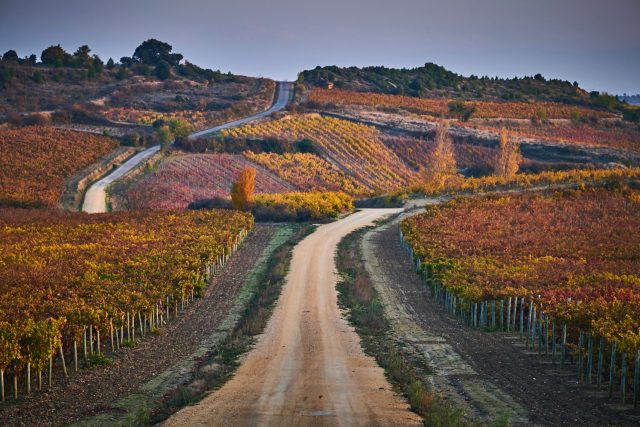
The old idea of Rioja – Crianza, Reserva, Gran Reserva, aged in American barrels – is “in the past”, he claims. He’s no purist in how wine should be enjoyed either (“they ask me, ‘what do you think about people who put ice in wine?’ I’m not against them. Do they like it? Then go ahead”). And, he makes clear, diversity is a precious thing; hence why trends can be dangerous. “A trend comes and then it seems like everybody has to do the same wine in the same way. Then the trend leaves, and it’s killed much of the diversity we have.”
Partner Content


Take white Rioja, for instance, which is currently surging in demand, despite 80% of the region’s production being red. There used to be a fair bit of white Rioja, points out Urtasun, but Tempranillo took off, so producers axed their white variety vines. Now, he fears winemakers will take things to the extreme in the opposite direction. “Let’s hope we don’t go too far with that one thing, because it’s important to value the old vines, and not everybody does in our area.”
Besides, at Remírez de Ganuza, where wines are aged for up to a decade, you can’t get too bogged down by fleeting trends. With the exception of the Covid dog days (2020), where sales plummeted by around 16%, the Rioja winery has been in consistent growth, climbing by more than 10% each year. 2024 was exceptional, with last September the winery’s best month ever in terms of sales.
Hitting the global market
So, while other Rioja producers are struggling to sell, Remírez de Ganuza paces forward. How come? “Our winery has a very uneven recognition around the world. There are some markets where we are very well known by professionals and consumers where we sell a lot, and other markets where we are still almost unknown, so we still have a lot of places we can grow” he says. It’s almost word-by-word what he told the drinks business two years ago. So has the boutique winery made any moves in the international market since then?
While the Spanish market has become even stronger, with many people actually coming directly into the winery’s on-site shop to buy bottles, the export market has slowed. But Urtasun believes the winery will switch this up, as its ploughing effort into several regions. “The UK is a priority, the US is a priority, and being a Spanish winery, Latin America is very important.”
Growing pains
Of course, a volatile global economy – no less, the alarm sounding on US tariffs – complicates things. But Urtasun has a rational knack to zoom outwards and see the bigger picture. First, Trump threatened to slap 200% tariffs on wine, which then dipped to 15%. “I said, ‘order lots, order for over a year, and I’ll give you a special payment agenda. You don’t know what he’s going to do later.’”
Anyway, the Supreme Court could cull the tariffs by mid-October. And besides, everybody’s talking about tariffs, but nobody’s talking about the fact that the Euro strengthened by more than 11% against the dollar, making a “far bigger impact than Trump himself,” stresses Urtasun. “Sometimes we are getting obsessed in the industry with certain things that are not even the most important ones.”
Still, Urtasun’s anything but blasé when laying out the struggles winemakers face today: “All governments – regional ones, European Union ones, Spanish ones – they are making things more and more difficult. And the problem is, they’re starting to ask ridiculous questions, the kind you can only answer if you lie. I don’t want to tell lies, and I’m not going to, but it forces you to do that. You’re asked for information it’s not possible to have.
“Those different administrations should be there, first of all to help, second, to certify that nobody is doing something that goes against public health, then against the region. But they should be there to certify more than obligate people to do things the way they want, and sometimes, we’re lacking freedom.”
Fairness comes first
And while people are drinking less, with global wine sales nosediving to a six-decade low in 2024, for Urtasun, this isn’t the main problem. Instead, “it’s that everybody in the chain has less and less money”. He spells out the consequences: “My importers or distributors are waiting longer until stock is lower, and many times, what happens is they run out of stock, and they don’t order again, because they are waiting and don’t want to spend more. That is affecting my sales much more than consumption.”
Then there’s the price of grapes. Sometimes, they’re fixed in an area, but Urtasun thinks they shouldn’t be: “Let’s say you have a restaurant, and the price for any fish is the market price, but you know a fisherman that has greater quality on something. Wouldn’t you pay more? A great grower with great grapes should be paid much more than an average grower with average grapes.”
Despite the challenges, Urtasun’s cup is half full, even if it is buoyed by a few cubes of ice: “I am very optimistic – the future should be bright.”
Related news
Rioja’s rosado renaissance: from sideline to serious
Five delicious white Riojas, one rosé and a sparkling
Beyond the barrel: why ‘diversity and uniqueness’ are Rioja’s calling cards


