



Is it time to look at Chinese wine again?
When Janet Z Wang wrote her era-defining book, known by many as the Chinese wine bible, she was bullish about the fate of China’s wine industry internationally. But six years after the first edition was published, she has had to rethink her expectations. Eloise Feilden speaks to the writer about today’s wine scene in China.
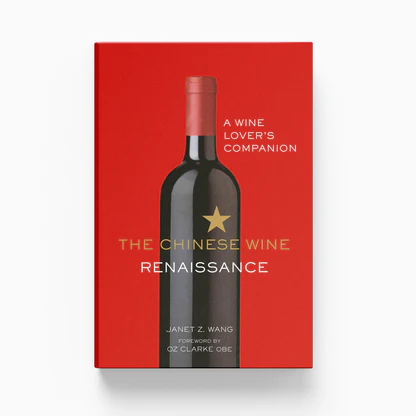
When Wang’s book, The Chinese Wine Renaissance: A Wine Lover’s Companion, was published in 2019, China’s wine industry felt to be on the cusp of an international shift.
Wang says that when the first edition of her book came out, she had a “bullish view” about rising Chinese wine exports in the near future.
However, looking back six years later, she admits that her prediction about the category’s success “hasn’t really happened”.
There are many reasons for this; the most obvious being the years-long global pandemic which rewrote the first part of this century for much of the world. “In recent years, especially after Covid, there’s been mostly very downbeat talk about the Chinese wine industry in general,” she says.
International buyers are “more conservative”, wanting to “sell what they know, and what consumers already drink”. And consumers themselves have “pulled back” – “people default to what they know when things are uncertain,” Wang explains.
Secondly, there’s the “geopolitical overhang” acting as a barrier to sales. Wang says: “China is not the flavour of the month at the moment, you know, and therefore selling Chinese wines doesn’t strike people as being terribly on trend.”
However, Wang argues that wine should help bridge the gap created by political tensions.
“Wine is a really good way of getting into the psyche of China; the history of wine in a country tends to give you great insights into a nation’s DNA and personality,” she says. “For me personally, I think when the geopolitics is tense, it’s more important at the cultural level, education level, business level, that we keep really open dialogue, because it’s through cultural exchanges like this that we minimise tension and misunderstanding.”
Domestic successes
Wang’s confidence in the international penetration of Chinese wines may have wained, but she’s still bullish about the domestic market.
“Locally, there are green shoots within China,” she says, noting that “producers are now more aggressive, more confident in what they’re doing, and there’s good support coming from the consumer base”.
She adds: “If you talk to producers in China, they are all very upbeat, and they are trying really exciting things.”
This positivity is in spite of the significant decline in production recorded in recent years. “People say our production has dropped off a cliff, which is true,” Wang says.
Partner Content




Indeed, OIV data shows that Chinese wine production dropped 17% year-on-year in 2024. The previous year saw even bigger declines, with production down 33% on 2022.
However, Wang argues that this is more of a correction of the inaccuracies of the past, rather than a reflection of the current production drop off. “Historical data was not accurate, and there was lots of double counting,” she says; something which is now being rectified.
And the landscape of people making wine in China has changed. “Before, there were lots of lots of people having a go, but many were not consistently making wine every vintage, for example. Now you’ve seen quite a lot of those players have fallen to the wayside. And the serious producers, and also the premium producers, they are really starting to consolidate what they’re doing.”
The quest for higher quality has also played a part in bringing production figures down; “there has been a move towards lower yield and better quality”, Wang says, and various winemaking regions in China have recently introduction appellation rules, bringing in maximum yield restrictions.
“[The] quality level has been increasing, and also you are seeing a consolidation of serious wine producers,” she says.
This, in turn, has driven up domestic consumption. “Chinese people are starting to really want Chinese wines.”
Wang sees promise in China’s domestic market, but within limits. “Pre-Covid there was lots of hubris with people overestimating where it was heading, but now the market is slightly more mature. There’s been a consolidation; serious players are sticking around, while opportunistic ones have fallen by the wayside.”
With such strong demand from Chinese consumers, “the incentive to export is limited”, Wang says. But it still exists, even if it is now more of a “branding exercise” than anything else. She explains that international sales are a way for brands to be “waving the flag for China globally” – “that’s great for brand building internationally, but also to reinforce branding at home”.
Despite a difficult few years, Wang is still confident that Chinese wine can succeed on the international stage, though at a slower rate than she previously predicted.
“I’m miss quoting, but they say people tend to overestimate the impact of something in the short run, but underestimate impact in long run. And Chinese wine is now going into that second phase,” she says. “Now you’re seeing this period where the market, although it’s still fledgling, it’s starting to behave in a more mature way.”
This, in turn, should warrant more attention from global consumers. As Wang puts it: “I would argue that now is the time to really look at China again, but with a more mature eye this time.”
Related news
Do global awards actually drive Japanese wine sales?


