



How the lines between ‘new’ and ‘old’ worlds are blurring in Mendoza
Gustavo Rearte, winemaker at Achaval Ferrer, describes his work as “balancing new world fruit with old world winemaking”. But, at a tasting in London last week, it became clear that the lines are less clear cut.
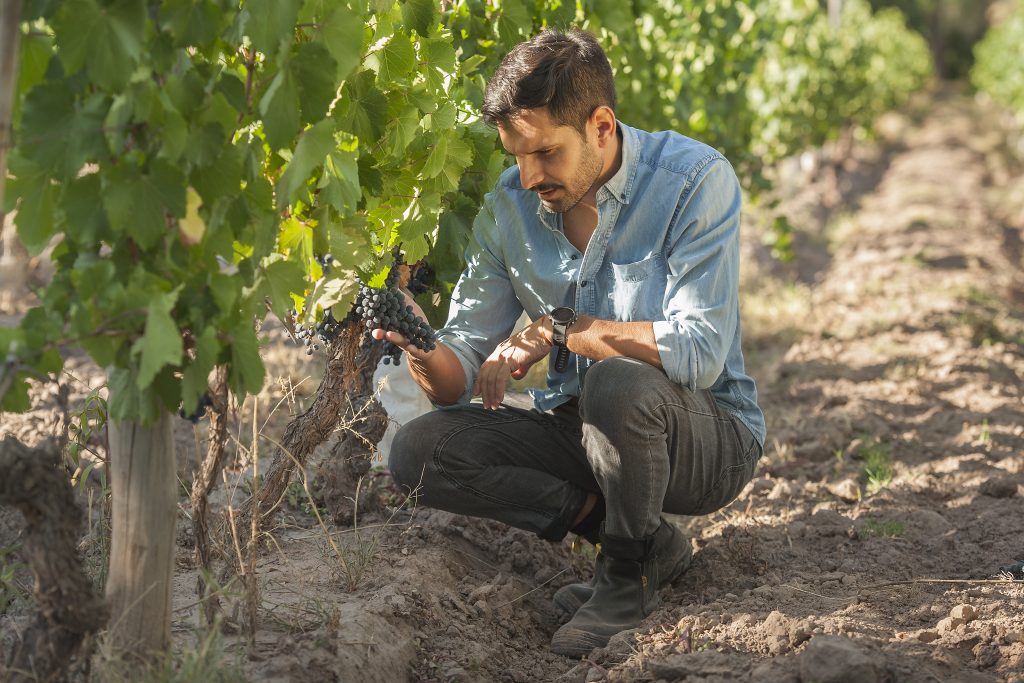
The Fincas range from Achaval Ferrer is unmistakably Argentinian. Each of the four Malbec vineyards, spread across Uco Valley, Luján de Cuyo and Junin in Mendoza, demonstrates a terroir that appears nowhere else. Planted at high altitude, and yet without the perils of mountainous viticulture, and protected by the Andes, the grapes that go into the Fincas range could grow nowhere else.
Yet the approach at the winery, founded in 1998, is forever poised between European tradition and Argentinian exploration. In part, that reflects its history. The company’s founders were a mix of Argentinians and Italians.
Yet it is a philosophy that has been preserved after a quarter of a century. Indeed, it is a central tenet of winemaking for Gustavo Rearte, winemaking director at Achaval Ferrer, who joined the company in 2013. Indeed, introducing the newly released 2021 vintages in London last week, he described his work as “balancing new world fruit with old world winemaking”.
It sounds like a simple enough proposition. Yet the tasting demonstrated the complexity of straddling that line, where stereotypes of wine regions and historical associations butt up against modern winemaking in Mendoza.
Carefully selected terroirs
When asked what the old world influence constitutes, Rearte highlighted three facets of his approach: winemaking with oak and concrete; old, deep-rooted vines; and a focus on terroir.
That final element is the most obvious ‘old world’ parallel. Achaval Ferrer proudly emphasises the terroir of each single finca, with the vineyard’s name given top billing on the bottle. With the 2021 vintages of the four fincas – Finca Bella Vista, Finca Mirador, Finca Nazarenas and Finca AltaMira – being released in parallel, there is a sense akin to Burgundy or Barolo of direct plot comparison.
The terroirs at Achcaval Ferrer are hugely important to Rearte. He describes the winery’s location as “a place that changed my mind about Argentinian wine.”
Yet this element of terroir is, of course, also paradoxical. A focus on terroir is strongly associated with the fine winemaking regions of the ‘old world’. However, by highlighting them, Achaval Ferrer in fact emphasises the uniqueness of the Mendoza sites.
Thus, each finca presents a notably different profile. Finca Mirador, a vineyard planted on clay-loam, sand and eroded rock at 700 metres above sea level, has a smooth profile, with nuances of spice and graphite. Finca AltaMira, on the other hand, is planted 400m higher on soils of silt, sand, volcanic ash and calcareous rock. Its profile instead shows orange peel, balsamic and violet notes.
The nuances are not insignificant, but they all still show the rich fruit and elegance of Mendoza Malbec. That profile that is both hyper-local and indicative of the region is a sure-fire indicator of terroir with potential.
So is the fact that the terroirs are adaptable. Rearte recounted Achaval Ferrer’s informal collaboration with Zuccardi, the neighbour to its AltaMira vineyard. The two share a distinctive sub-region terroir, yet the wines are not identical. You can tell them apart according to the winemaking, demonstrating a terroir has the depth to be adaptable.
Built to last
There is a further noteworthy parallel between Achaval Ferrer’s Fincas range and the great wines of Europe. The Malbecs are designed for ageing.
For Rearte, the “ground zero” of ageing is four years. That easily places the wines in parallel with fine Bordeaux releases, or perhaps the premium wines of Tuscany.
Partner Content
Indeed, to illustrate his point, Rearte presented the new 2021 releases with prior editions of the Fincas wines, ranging from 2012 to 2016.
In part, the selection demonstrated the importance of vintage conditions in Mendoza. Much like terroir specificities, that can often be overlooked when the archetypal Mendoza Malbec is inexpensive and designed for consistency.
Fortunately for the new releases, 2021 was a very traditional vintage for the region, unlike, say, the warmer conditions seen in 2020 or the cold and humid season ending in the 2015 vintage. You could think of the new vintages as typical for the region.
Yet, again, the framing of these wines as ‘old world’ influenced is not uncomplicated.
Rearte is, unsurprisingly, an advocate for aged Argentinian wine – he particularly highlights its balsamic character as a boon. And he finds himself wishing that more people agreed.
“Not many people outside of Argentina know the quality that Malbec can deliver after 10 years,” he commented at the London tasting. In other markets, it seems, people too often see Malbec as an early drinking red, without being mindful of its potential once it hits double digits.
Thus ageworthiness is a useful point of comparison with established ‘old world’ superstars. Yet, like the terroir focus, there is nothing inherently European in that characteristic. It is, if anything, a question of framing rather than potential.
Blurred lines
I put this question of ‘new versus old world’ attributes to Rearte, and his answer was articulate, but equivocal. He cited the most concrete evidence of an ‘old world’ influence: the Italian origins of the company and the winemaking, which prioritises character other than stainless steel.
Yet he also gave indications that Argentina can and should take the opportunity to claim its own identity: “The next step for all of Argentina’s winemakers is to articulate their own properties.”
For the moment, the “balancing act” is essential. It allows Achaval Ferrer to emphasise the seriousness of its winemaking without losing sight of its uniquely Argentinian position.
Yet Rearte’s approach offers a hint of the reputation for quality that Achaval Ferrer is helping to carve out in Mendoza. Excitingly, that reputation can stand out on its own merits.
After all, the Fincas range demonstrates that there is nothing in Europe that Mendoza cannot offer. It has old vines – more than 100 years old, in some of the vineyards. It has distinctive terroirs, with the potential for fine wines. It has winemaking expertise, and the resources to invest in the very best equipment.
In fact, the primary difference you could articulate is that Achaval Ferrer is a relative newcomer, still in its twenties as opposed to the centuries of winemaking expertise found in wineries in other premium regions.
It is, therefore, useful to offer a comparison with ‘old world’ classics. But, on the basis of that evidence, and given Rearte’s hope for the Argentinian wine industry, it seems likely that the ‘old world’ reference points will be less and less necessary to persuade drinkers of Achaval Ferrer’s quality.
Related news
The highlights of the hors Bordeaux 2026 Spring collection
Santiago Marone Cinzano: 'my generation wants wines that are ready to drink'
Raise a glass to Cabernet excellence: enter The Global Cabernet Sauvignon Masters 2026


