



English wine is booming – so why has Chapel Down scrapped plans for a £32m winery?
Chapel Down has pulled the plug on a flagship winery development, citing planning delays and shifting market realities. The move raises questions about growth in the English wine sector – even as producers remain confident about the long-term future.
Plans on ice
Chapel Down, England’s largest wine producer, has abandoned plans to build a £32 million winery east of Canterbury after facing a series of delays in securing planning permission, The Telegraph reported yesterday 24 September.
The Kent-based producer, founded in 1977 in Tenterden, is widely recognised for putting English wine on the map, with its sparkling wines frequently winning international awards. But despite a strong harvest in 2025 and solid sales growth, the company has opted not to pursue the new development.
Chief executive James Pennefather told The Telegraph he was “confident that the category and Chapel Down can continue to grow”, and added that 2025 had delivered “a great summer” for the company’s harvest, with “ideal growing conditions”.
Sales at Chapel Down grew 11% in the first half of 2025 to £7.9 million, although the business still recorded a pre-tax loss of almost £700,000.
Slower growth in the category
The decision comes amid signs that English wine’s rapid growth is moderating. According to industry data, sales of English wine climbed by 3% in 2024, down from a 10% rise in 2023.
This reflects a wider trend identified by market commentators. Speaking to The Telegraph, Chris Spofforth, a wine estate agent at Savills, noted that while demand for English wines is rising, it is not keeping pace with the rate of production.
“Sales of UK wines are increasing, but not at the same rate as production is increasing. So, that clearly leads to many vineyards carrying more stock than they would ideally be comfortable with. And if they can’t sell their wines at a reasonable margin, that comes with a cash flow issue,” he said.
Spofforth added, to The Telegraph, that the industry was not in crisis: “We’re not on the verge of some sort of collapse of the vineyard market or anything like that. That’s not going to happen. There is still a lot of good money to be made in the sector. There’s considerable interest in staying in the sector and entering the sector. It’s just a bit more discretionary.”
WineGB’s 2024 harvest summary shows that although yields dropped (projected at between 6 and 7 million bottles, a 30-40% reduction versus the 10-year average), stock levels remain healthy thanks to reserve volumes built up during previous bumper years. WineGB CEO Nicola Bates commented that in a tough year, producers showed “huge resilience and expertise in harvesting a small, but high-quality crop.”
Partner Content



This trend speaks to one of English wine’s strengths: its ability to ride vintage ups and downs, leveraging reserve stocks from strong years to cushion weaker ones.
Expanding footprint and ambition
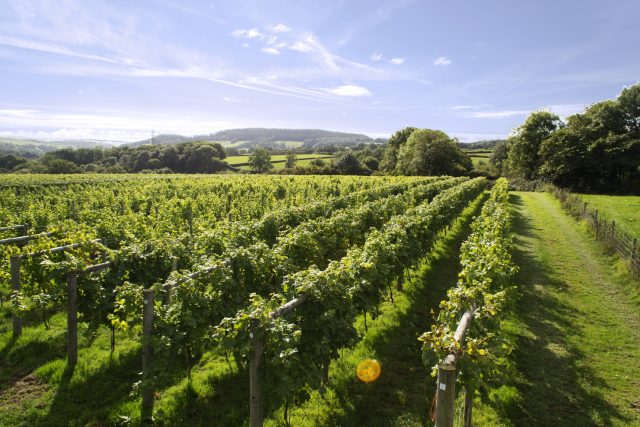
WineGB reports the UK now has over 1,030 vineyards. The planted area under vine, particularly in southern England, has expanded substantially over the past decade. The sector is moving beyond just sparkling wine: still wines — especially Chardonnay — are steadily gaining traction in both domestic and international markets.
Exports, in particular, are a leverage point. WineGB notes that the proportion of sales from exports has already doubled (from 4 % in 2021 to 8 % in 2023) and argues that strong government backing is needed to scale that further.
Additionally, external forces may play to English wine’s advantage. For example, proposed US tariffs on EU wine have been flagged as a possible opportunity for English sparkling wines in the US market.
Wine tourism is another growth engine. WineGB expects UK vineyard visitor numbers to grow by 20 % through to 2029. Wine tourism in the UK has seen significant growth, with a 55% rise in visitor numbers since 2022, reaching 1.5 million visits. The latest WineGB Tourism Report 2024 highlights the increasing importance of wine tourism to the rural economy and outlines actions needed to support further expansion. For example Cellar Door Duty relief and Tax-Free Shopping & Visa Reform.
Outlook for English wine
The shelving of Chapel Down’s new winery project does not point to a downturn in English wine. Rather, it reflects a more measured period of growth after years of rapid expansion.
As db reported in July, English wine sales continue to rise, albeit at a slower rate. Moreover, evidence recently pointed towards how England is emerging as a serious source of fine white wines. More recently, producers expressed optimism about this year’s harvest, pointing to favourable weather conditions and rising confidence in quality.
In the broader sector, the coming years will likely be defined by:
- Balance over expansion: Aligning vineyard output with market demand, avoiding overstock pressures.
- Export growth: Building deeper in markets where English wine can stand out (e.g. US, Nordics).
- Broadening styles: Elevating still wines to share the spotlight alongside sparkling.
- Sustainability and credentials: Certification, terroir narratives, and environmental credentials will matter more and more.
- Government support: Industry voices, including WineGB, are urging reliefs (such as tax or tourism incentives) to accelerate growth.
In essence
Chapel Down’s decision to pause its large winery project is not a brake on the industry — it’s a strategic adjustment in response to evolving conditions. The English wine story, built over decades of incremental progress, remains compelling. Weather will always pose a challenge, and financial discipline will always matter, but the forward momentum is still there — underpinned by quality, ambition, and a growing global footprint.
Related news
English wine’s golden age faces a tiny villain
Ridgeview Wine Estate finds new owner after administration
WineGB returns to Wine Paris with expanded stand and export ambition


