



Cathay Pacific steps up Chinese wine game
The international airline, which is listed on the Hong Kong Stock Exchange, is expanding its selection of Chinese wines poured in First Class and Business Class as the carrier looks to support the Chinese wine industry.

Cathay Pacific has been rolling out its Discovery Wine Series in First Class and Business Class cabins since April, but has just announced it will be adding premium Chinese wines to the previously all-European range.
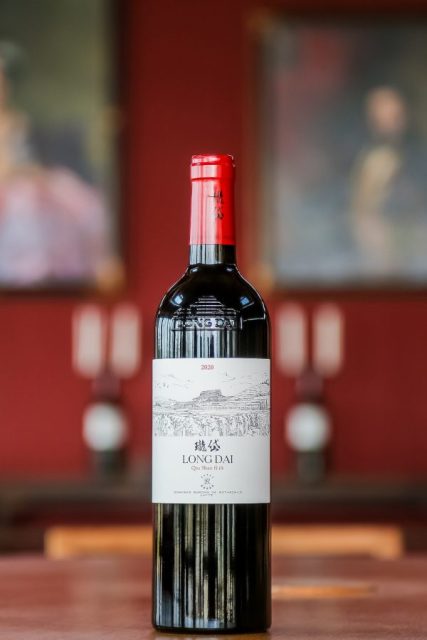
Included in the revamp are the Domaines Barons de Rothschild-owned Long Dai Qiu Shan Valley 2021, produced in Shandong in north-eastern China, which will be poured in First Class, and Jia Bei Lan Estate Red 2019 from Helan Qingxue winery in Ningxia, which will be served in Business Class.
The move follows the successful but temporary China Series offered by Cathay Pacific last year, with wines selected by Master of Wine Debra Meiburg, along with Cathay wine consultant Roy Moorfield and Ronald Khoo, Cathay’s wine, spirits and beverages manager. To make their picks, the trio tried more than 40 wines from different Chinese wineries, finally settling on Long Dai for First Class and Grace Vineyards, Silver Heights and Xige Estate for Business Class.
The new additions to the airline’s Discovery Wine Series underline Cathay Pacific’s commitment to championing the Chinese wine industry.
“China is rapidly becoming a significant player in the global wine industry, and it is growing in a responsible way,” says Ronald Khoo, wine, spirits and beverages manager at Cathay Pacific. “We found that many vineyards are already strategising about how to scale up while also keeping sustainability at the forefront.”
Marselan: symbolic grape
Long Dai’s first commercial vintage was 2017, and the wines are a blend of Cabernet Sauvignon, Marselan and Cabernet Franc from vines planted in 2011 on 34 hectares spread across 420 diverse terraces. According to the estate’s general manager Charles Treutenaere, who held a vertical tasting of Long Dai at Vinexpo Asia in Singapore recently, “Marselan is becoming the symbolic grape for China. All over China, the expression of Marselan is very good.”
Treutenaere added that Shandong’s terroir is also surprisingly good for Cabernet Sauvignon, achieving “full ripeness levels, whereas other regions can struggle to achieve optimal ripeness.”
Cathay Pacific’s Khoo describes Long Dai’s 2021 vintage as showing “notes of peony, cocoa and raspberry” and recommends pairing it with “rich meat dishes, such as grilled lamb chops with rosemary.”
First Class cabins are also equipped with Riedel glassware which Khoo says “is the perfect vessel to showcase Long Dai”. And Khoo is confident enough that the quality of Long Dai means it will stand up to other international wines poured in First Class, including those from Krug, Chateau Lynch-Bages and Chateau Montrose.
Partner Content




Meanwhile, Jia Bei Lan Estate Red, Ningxia, China 2019 has “spicy notes of plum, currants, red capsicum and dark olives, with finely grained tannins and a balanced finish,” says Khoo. This expression will be rotated in Business Class with two other premium Chinese wines: Yihu Chardonnay Reserve, Qiu Shan Valley, Shandong, China 2022; and Puchang Vineyard’s Saperavi, Turpan Valley, Xinjiang, China 2017. On routes to London, Paris, San Francisco and New York, the latter will be replaced with Hu Yue’s Qiu Shan Valley, Shandong, China 2021, “a vibrant red wine with a beautiful aroma of hibiscus complemented by hints of liquorice and black pepper.”
Aptly, most of Khoo’s recommended food pairings for the Chinese wines are Asian dishes. For example, stir-fried chicken with mushroom and bamboo shoots for the Yihu Chardonnay, and spicy Sichuan stir-fried beef or mapo tofu for the Puchang Saperavi.
Lesser-known varieties
Alongside the premium Chinese wines, guests flying in First Class and Business Class with Cathay Pacific will also be able to sip wines made from a host of lesser-known grape varieties grown outside of China, including Portugal’s Tinta Roriz, Hungary’s Furmint, Zweigelt from Austria and Saperavi from Georgia.
Though Saperavi is also increasingly grown in China as can be seen by the aforementioned expression from Puchang Vineyard. Shanghai, in fact, played host to the world’s first International Saperavi Symposium, held in 2019 in partnership with ProWine China to shine a light on the ancient Georgian variety. As part of the line-up of events, a live debate took place on whether Saperavi could be considered “a noble grape variety”.
Big player
Cathay Pacific, the home carrier of Hong Kong, is owned by the Swire Group, whose own parent company John Swire & Sons is headquartered in the UK. Cathay Pacific also owns 15.09% of Air China Limited, according to Swire’s website, as well as Air Hong Kong, which runs cargo operations transporting DHL Express goods to 17 cities across Asia, the Middle East, Europe and Australia. Cathay Pacific’s cargo joint venture, Air China Cargo is also the leading provider of air cargo services in the Chinese Mainland. The airline successfully acquired HK Express in 2019.
While the majority shareholder is Swire, the government of Qatar also holds a notable stake in Cathay Pacific, and Qatar Airline is a “strategic partner”, with passengers able to earn frequent flyer miles across both airlines’ networks. Cathay Pacific has been listed on the Hong Kong Stock Exchange since 1986.
Related news
The airline turning its home wine region into an in-flight calling card
Sonoma's Aperture Cellars makes its debut on United Airlines
Singapore Airlines becomes only air carrier to offer Cristal 2015


