



Castello di Meleto: a modern operation in an 11th century castle
Sat atop a Tuscan hill, Castello di Meleto looks like a postcard from unchanging Chianti Classico. Yet the winery is pursuing a modern agenda, from disease-detecting tech to single cru expressions.
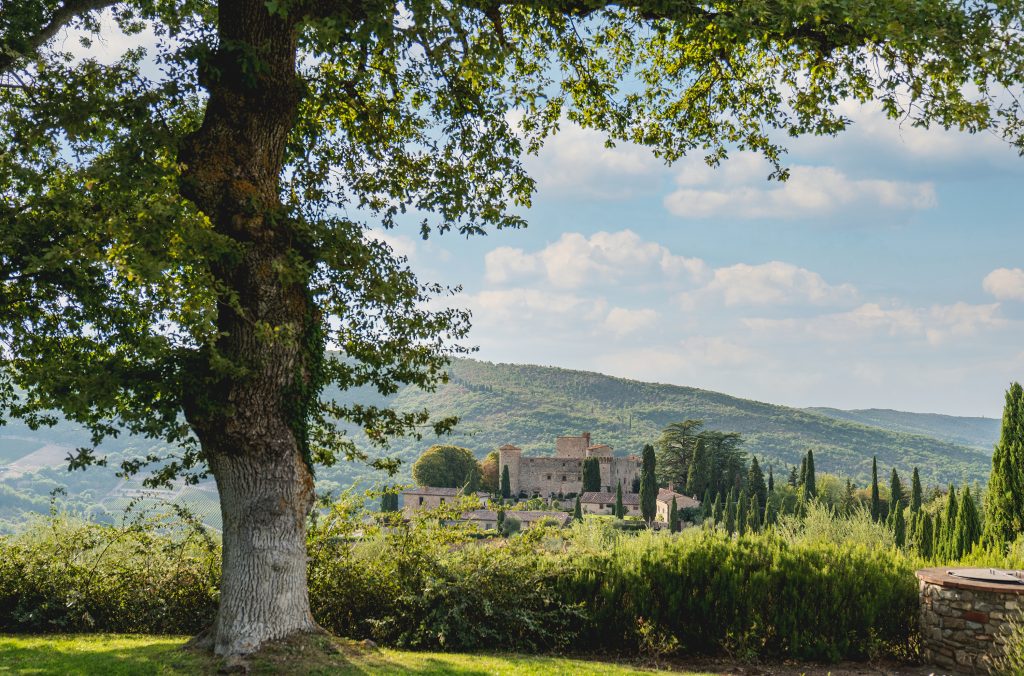
There are two sides to Castello di Meleto. On the one hand, it is a deeply historic property, whose namesake castle overlooks the much-loved landscape of Tuscany. On the other, it is a bold producer that has adapted to changing conditions in the Italian – indeed the global – wine industry. The two facets combined have made it a name to watch in Chianti Classico DOCG.
Certainly, with a name like Castello di Meleto, you should not want for history. The building’s oldest sections date to the 11th century, when it was constructed by Benedictine monks, with its first named record appearing in 1256. It has adapted – from fortifications in times of war to terraces for leisure – but it has stood watch over the valley for centuries.
Its terroir is likewise steeped in history. Although grape-growing is an ancient tradition in Tuscany, the notion of Chianti Classico DOCG truly began in 1716. In that year, Grand Duke Cosimo III of Tuscany issued an edict defining the boundaries of Chianti winemaking.
Over time the boundaries of production expanded, but the original area held special appeal. Thus, after the founding of the Chianti Consortium in 1924, producers soon added the suffix ‘Classico’ to denote wines made in that historical area. By 1996, Chianti Classico had an independent DOCG based on that historic area. It remains, as Partick Schmitt MW explored last year, a historic region that is still full of surprises.
The history is significant, because these vineyards showed many of the markers of top Tuscan terroir. Chianti Classico DOCG is, on average, higher than Chianti DOCG, with its vineyards largely between 200 and 500 metres in elevation. It also has distinct soil types: galestro, a clay-schist marl; and albarese, a limestone-heavy soil. Their drainage and unique mineral content help craft the great Sangioveses of Chianti Classico.
The modern touch
At the winery, however, there is a modern touch at work. The special terroirs of Chianti Classico find expressions ready for the 21st century at Castello di Meleto.
That, in part, reflects the winery’s founding. It was, in fact, a highly innovative and relatively recent origin story. In 1968, Viticola Toscana (the winery’s owning company) was formed through crowdfunding.
The programme – named Operazione Vigneti – invited members of the public to buy shares in the fledgling endeavour. The money raised saved the estate – the castle, buildings and 1,000 hectares of land – from abandonment.
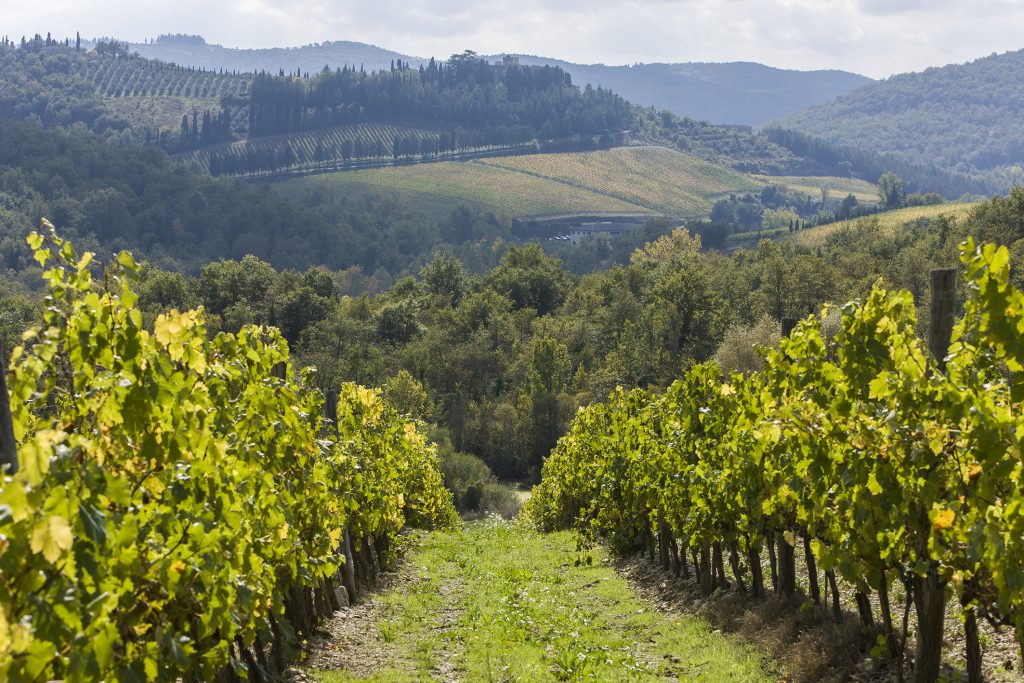
Now, the innovative, modern approach still defines the company. As just one example of this, the team’s average age is just 37 years old; notably young, in such a traditional region.
Yet the modern touch at Castello di Meleto is central to preserving its heritage. That is plain at the castle itself, where a thriving oenotourism arm levers the twin appeals of fine wine and a picturesque propert to bring in visitors.
Yet you also see it in the grounds. The company’s extensive lands – 130ha of vineyards and more than 900ha of forest – are cared for with an eye on the future. Castello di Meleto employs, for instance, data-driven and sensor-led detection technology to look out for vine diseases. It has also followed the latest science that emphasises balanced, beneficial ecosystems: it has restored three million bees to the local biome and experimented with mustard as a cover crop to prevent powdery mildew.
Adaptability to new thinking has also come at the level of regulation. The Gran Selezione classification is a recent addition to the Chianti DOCG, but Castello di Meleto has embraced it fully.
The top of the pyramid
Introduced in 2014, Chianti Classico Gran Selezione sits atop Chianti Classico DOCG’s hierarchy. It requires longer minimum ageing and a higher proportion of Sangiovese, and the grapes must be estate-grown and produced, matching the quality level set by an expert panel. In short, making Gran Selezione is demanding.
The team at Castello di Meleto, however, is far from daunted. In fact, it has turned the category into a challenge.
Castello di Meleto’s Gran Selezione cru project is identifying the unique characteristics of its best sites. These vineyards, spread across the sub-zone of Gaiole, are yielding individual Gran Selezione expressions, as well as a blend across them.
It stems from the winery team’s perspective that the estate’s 130ha of vineyards are not a homogenous mass. Instead, Castello di Meleto reframes them as 130 individual hectares; even if they neighbour each other, two hectares of vines will have their own identities. In a region as complex as Chianti Classico, too specific is not a problem.
Of particular note is Casi, the quintessential cru of Castello di Meleto. Positioned 450m up the slopes, just below the hilltop hamlet of Vertine, it offers a fresh, temperate climate further moderated by nearby woodland.
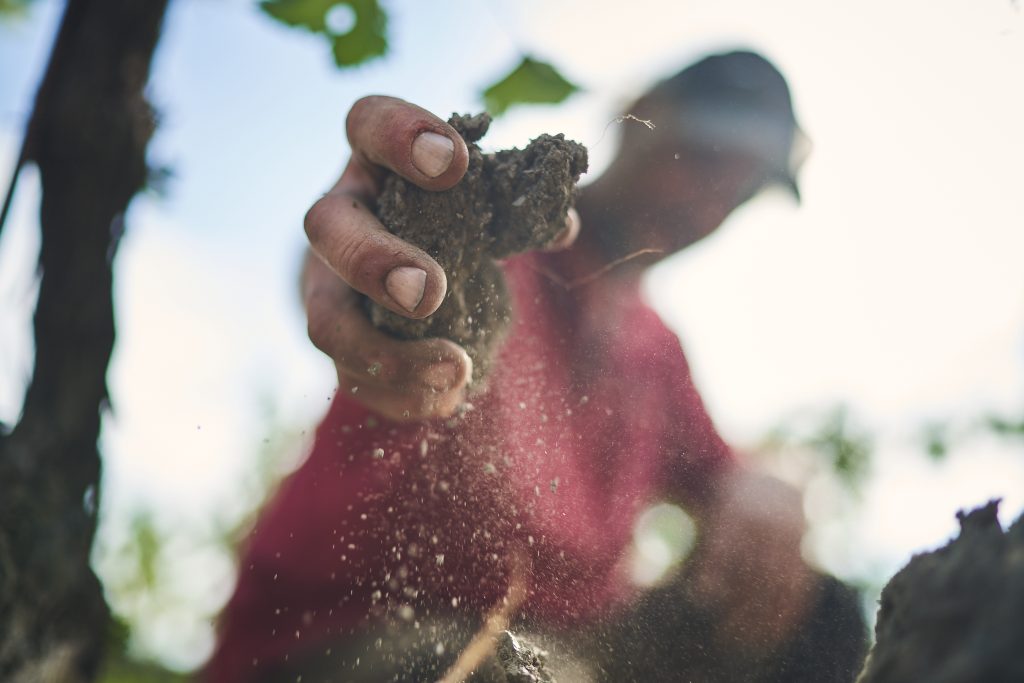
The cru is split into two plots: Casi Sotto is guyot-trained, while Casi Sopra is a rare instance of bush vines – known in Italy as alberello. These grow on complex soils, coloured dark by clay but cut through with layers of layers of alberese, sandstone, and clay shale. The soils are rich in iron, sulfur and quartz, a mineral cocktail that contribute to the wine’s elegance, structure, depth and longevity.
The Gran Selezione from Casi secured a Gold medal at this year’s Global Sangiovese Masters. Below Patricia Stefanowicz MW offers her take on the award-winning wine.
Castello di Meleto Vigna Casi Chianti Classico Gran Selezione 2020
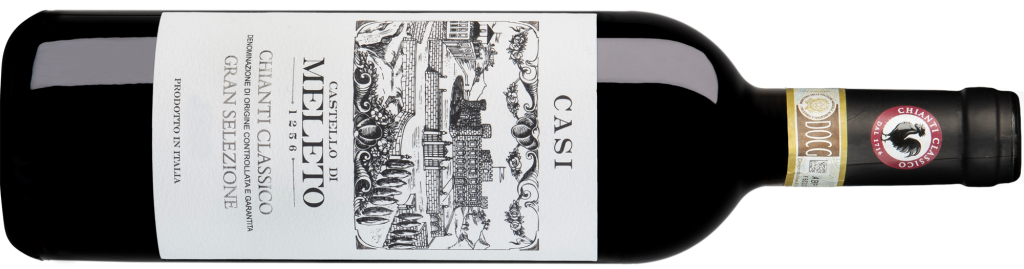
- Producer: Castello di Meleto
- Region: Tuscany
- Country: Italy
- Grape variety: 100% Sangiovese
- ABV: 14%
- Approx. retail price: £60
Castello di Meleto has been a keeper of heritage and vineyards in Gaiole-in-Chianti since 1256, and nowadays is a leader of biodiversity in the region with its 1,000ha estate, including forests, olive groves, beehives and organic vineyards. This wine comes from the single vineyard, Casi, and displays a limpid ruby colour and cherry, raspberry and pomegranate fruit, with subtle, toasty wood, tangerine and pepper accents. Beautifully balanced, the palate has racy acidity and velvet-textured tannins supporting the flavours, and finishes with gentle, exotic spice notes. A good choice for sweet-and-sour wild boar, hunted from the estate forest.
Related news


