



Can beer be turned into useful fats and medicines?
Brewer’s spent grain, which is full of proteins and amino acids, could be repurposed as an alternative to animal protein or used emulsifiers to make medicinal capsules, according to research.
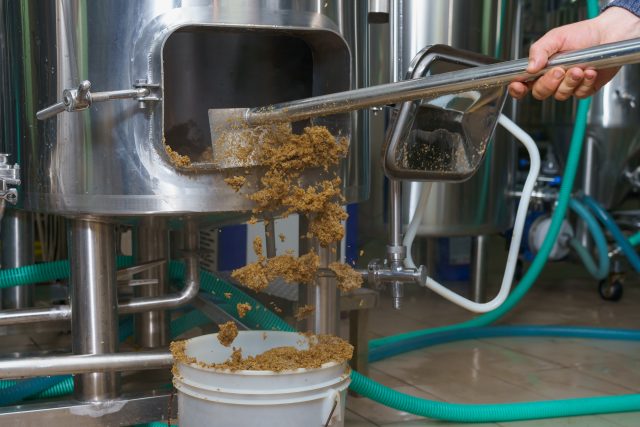
In a report from Steinar Brandslet from the Norwegian University of Science and Technology, it outlined how a study that looked into how the residue left over from brewing could be used differently.
Currently, it is predominantly used as an additive in animal feed or sometimes simply thrown away. However, now, a PhD research fellow at the Department of Biotechnology and Food Science at NTNU has discovered a way to use the grain and noted it in a new study published in Food Hydrocolloids.
Excellent properties
Toktam Farjami, who is taking her PhD in food science at NTNU explained: “This is a valuable source of protein with excellent properties. More people are therefore interested in using spent grain as an alternative to animal protein.”
Farjami explained that there were many other different possibilities for the industry to use the raw material and highlighted how “the proteins in spent grain are water-repellent”.
This means “at the same time, they act as emulsifiers, and help mix substances that don’t necessarily want to mix. The proteins can also be used to create a protective film. The proteins in spent grain are promising for making the walls of microcapsules for fish oil and other food products that contain healthy omega-3 fatty acids”.
According to Farjami, the research goes further and is “not just making the microcapsules” but longevity because “these microcapsules must be stable over a long period”. She explained: “To prevent oxidation and preserve the health effects of fish oil, it is crucial that we make effective and durable capsules.”
Farjami revealed that she and her peers have studied the proteins at the molecular level to understand them in a detailed way and made protein concentrates from spent grain using an alkaline extraction method.
In addition to this, the researchers investigated the effect of “different precipitating agents and gentle heating on composition, encapsulation and several other aspects of the concentrates”.
Partner Content




Microcapsules
She revealed: “We found that our protein concentrates had excellent properties for making microcapsules” and insisted that these properties were improved when she and her team replaced hydrochloric acid with citric acid in the extraction process, and at the same time adjusted the acidity.
Farjami explained: “We see that the microcapsules can preserve fish oil so that it is as fine as fresh oil even after storing the microcapsules for 15 days at 40 degrees.”
Microcapsules like this can also be used to store medicines, she reiterated and noted how the cosmetics industry can also benefit from them.
The results have suggested that spent grain can, in time, become a valuable product that assists in the reduction of food waste and also contributes to a healthier diet and many other useful areas across medicine and research.
Researchers also recently identified how some of the findings could help mitigate a possible protein shortage due to a forecast 73% increase in meat consumption by the year 2050 which has been predicted by the Food and Agriculture Organisation of the UN to occur amidst the future rapid growth of the global population.
Added to this, another recent study showed how fermenting blue corn with Rhizopus oryzae could significantly boosts its antioxidant content. The research is far reaching and can assist in evolving the category as well as giving it new avenues to explore within health, science, medicine and wellbeing.
Market potential
Farjami’s supervisor Professor Eva Falch highlighted how “in the future, we must make far better use of our resources than we do today. This requires not only technological research, but also insight into raw materials, market potential and consumer behaviour. That’s why research like this is so important”.
Falch pointed out that many byproducts of food production aren’t currently used in the food and drink sectors and it’s crucial that society moves forwards with research to develop methods to use every part of the raw materials used in food and drink production.
Falch added: “The exciting thing here is how a residual stream from one industry—the brewing industry—can become a functional ingredient in another. These are the kinds of interdisciplinary innovations we need to build the sustainable food systems of the future.”
Related news
Sunshine and football fever help beer sales soar


