



Analysis: Château Lafleur, climate change and the future of the appellation system
db’s Bordeaux correspondent Colin Hay investigates Château Lafleur’s monumental decision to leave the appellation system, the reactions to it, both public and private and the wider implications on how best to respond to accelerating climate change.
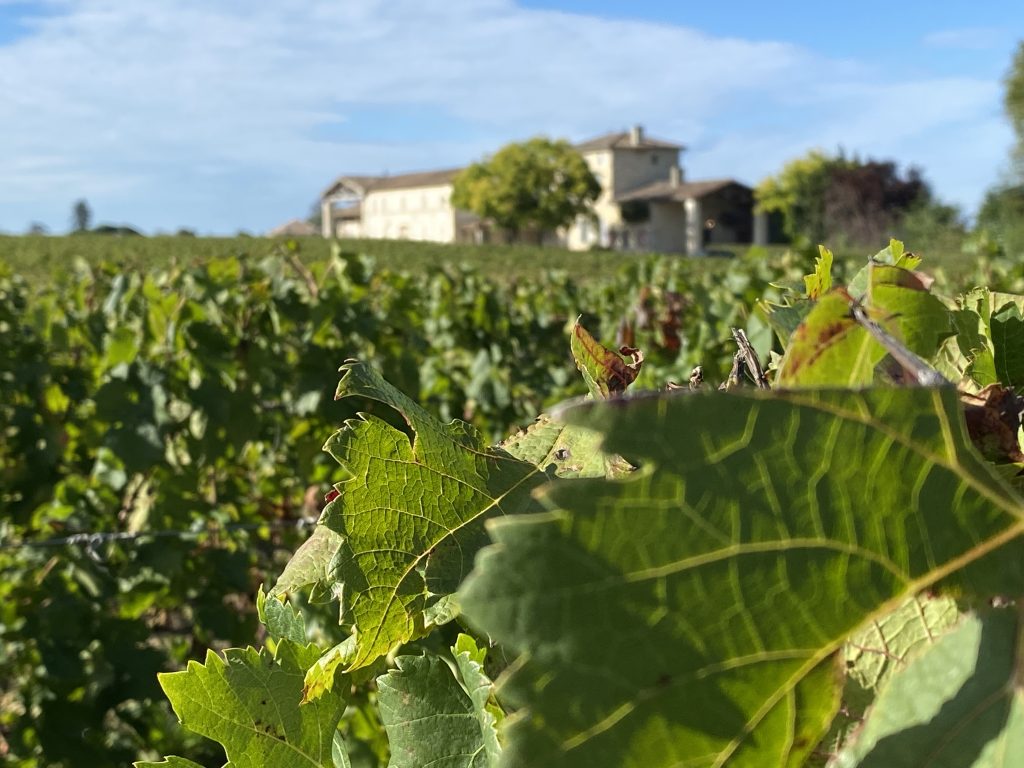
As the Merlot harvest gets underway in Saint-Émilion, Pomerol, the Médoc and the Graves, Bordeaux is abuzz with talk. Surprisingly perhaps that talk is not about the precocity or even the potential quality of the vintage but the unexpected and unprecedented announcement from the Guinaudeau family of Château Lafleur in Pomerol that, from the 2025 vintage, all of its wines will leave the appellation d’origine contrôlée (AOC) system to be bottled simply as Vins de France (VdF).
The shock waves are still radiating outwards from their epicentre at the heart of the Pomerol plateau. The effects are likely to be seismic as the long overdue debate they are in the process of prompting commences. That debate calls into question the very viability of the appellation system itself in the face of accelerating climate change, above all its reactivity and its capacity to deliver the degree of regulatory flexibility that is already urgently required.
This is complex, difficult and touchy terrain. Opportunists have seized on the Guinaudeau’s announcement, distorting and misreading its message in the process. And the chorus of appreciation and public acclamation that their bold decision has prompted masks a series of rather different agendas and discordant voices – some more noble than others. It also masks a certain amount of private grief, anxiety and dissensus that has yet to find a public voice.
When it comes to the internal (and external) politics of the appellation system, above all on the right-bank, it is important to proceed cautiously. That makes it more than ever crucial to be clear from the outset what the Guinaudeau family have actually said (and, no less significantly, what they have not said), before we turn to its interpretation, the (public and private) reactions to which it has given rise and the all-important wider implications of all of this.
What happened?
The sequence of events is clear. On 24 August, with their white plots already picked and on the eve of the harvest of the reds, Julie and Baptiste Guinaudeau wrote to a number of their friends, distributors and a selection of wine-writers, critics and journalists.
Their message was short, a single page of printed text, and crystal clear – crystal clear, at least, in what it said explicitly. Their communiqué – an open letter, in effect – announced, as they put it, their decision “to cease adhering to the appellations of Pomerol and Bordeaux” with the effect that “the six wines of Société Civile du Château Lafleur will be designated as Vins de France beginning with the 2025 vintage”.
A decision of this magnitude, of course, required an explanation. And the Guinaudeau were no less crystal clear as to their motivation: “to assure beyond any doubt the perennity of our vineyards [and] the quality and identity of our wines” at a time when the adaptation necessary in the vineyard to mitigate accelerating climate change was “evolving much faster than that authorised by the AOC system”.
Beyond this, details were sparse. The message was carefully phrased and succinct (always an advantage in situations like this). But it left many questions unposed and unanswered.
Unanswered questions
- What were the specific adaptations that existing appellation rules (notably those in Pomerol) precluded?
- Above all (and as many assumed), did they relate only to questions of irrigation and the emergency watering of plants under conditions of intense hydric stress or was there more at stake here?
- Had the Guinaudeau family, in the vineyard of Château Lafleur for instance, already chosen to break the appellation rules during the 2025 growing season – and, if so, which ones? Or were they merely declaring a prospective intention to do so if, as seemed likely, the need would arise in future vintages?
- Might a return to a revised, more appropriate and, above all, more flexible set of appellation rules be possible or was this a rejection of the appellation system itself rather than just a rejection of its current inflexibility?
And, finally:
- In leaving the appellation system, were the Guinaudeau family implying that the only way to produce a quality wine in a vintage such as 2025 and prospectively, in Pomerol and potentially elsewhere, was to refuse the regulations it imposed?
- In short, were they implicitly suggesting that climate change mitigation necessitated the demise of the appellation system in its entirety?
In an attempt to seek answers to at least some of these questions (and others perhaps too), the influential French wine-writer Jean-Marc Quarin picked up his phone and dialled Baptiste Guinaudeau.
Whether with or without the latter’s express consent (that we simply do not know), a précis of their conversation soon appeared on social media and was circulated to Quarin’s subscribers’ list.
The risk of the rapid diffusion of a text which was not their own made it impossible for the Guinaudeau not to provide a full and detailed account of the factors influencing their decision in their own words. That was almost certainly their intention anyway.
Either way, precisely such a text was circulated to the original group of friends, distributors, wine-writers, critics and journalists on the 28 August.
It clarifies many things and it makes for fascinating reading.
Crucial factors in responding to climate change
Above all, it details the five factors that the Guinaudeau family see as crucial now if we are to regain the capacity to respond adequately to climate change pressures as they are already present in vineyards like their own. They come in the form of a series of proposals which, in order to avoid any risk of misinterpretation, I list in the terms and the order in which they were presented:
- To authorise planting at reasonably lower densities, adapted to the real available water reserve of each soil type. In some cases, planting below 5,000 vines/hectare is necessary.
- To authorise full soil-cover techniques, such as mulching, to reduce soil evaporation.
- To authorise the use of temporary or permanent canopy shading.
- To authorise significant reductions in canopy height.
- Irrigation … based on early and regular monitoring across all different soils, starting in the spring, the appellation’s governing body should be empowered to demand of the INAO the implementation of an adapted and flexible authorisation programme, to be activated as early as June if necessary.
It is perhaps important to note that the fifth (and most controversial) point here – on irrigation – is elaborated in rather greater technical detail than I have here provided. We will return to some of that detail presently.
But before we do that, it is no less important to dispel a number of potential myths here.
Myth 1: a costless gesture – (Château) Lafleur by any other name would smell as sweet
Many of the views expressed to me in private by some of Lafleur’s near and somewhat more distant neighbours suggest, in effect, that this was a much easier choice for the Guinaudeau family to take than for practically anyone else in Bordeaux.
I understand that view and I empathise with it. It is true, but only up to a point. What is undoubtedly the case is that if there are any other properties in Pomerol capable of leaving the appellation system in order to give themselves more options to cope with the consequences of accelerating climate change there are, at most, only two of them. There is no need for me to identify them since you know already know which they are.
For every other Pomerol estate and, more significantly still, for every single classed growth in the Médoc, Pessac-Léognan, Saint-Émilion and, indeed, Sauternes and Barsac, this is not in any sense a realistic option. Leaving the classification system is one thing; leaving the appellation system is another thing altogether. These properties – and legions of others besides – are dependent upon their appellation and in that sense bound to (and bound by) its rules. And since they do not have a credible exit option, they have to make those rules work.
Partner Content

But that makes Lafleur’s intervention more rather than less important – as it provides the opportunity to launch the debate that now urgently needs to take place (and which probably should already have been underway in some of the most impacted appellations, like Pomerol).
The myth here is that to leave the appellation system and, in effect, to turn their back on Pomerol is a costless gesture by the Guinaudeau family. That is where I disagree. In putting their heads above the parapet in this way they are not only giving up on the right to use the appellation labels ‘Pomerol’ and ‘Bordeaux’ – what is less appreciated (for now at least) is that they will also no longer be able to use the term ‘Château’ to refer to any of their wines (a point they fully acknowledge).
In the current market context (with allocations of even the most iconic of crus now being refused by some), actively choosing to disassociate oneself from an estate’s traditional markers of quality is a risky and potentially far from costless act. That is true even when it comes to a brand as strong as Lafleur, as many of its distributors have been screaming to themselves – and to any of those within earshot – in private.
This, I think, makes Lafleur’s decision all the more significant and courageous – and I suspect it weighed heavily upon them before they went public with it.
Myth 2: more flexibility in regulation means less regulation
A second reaction is more unfortunate still, not least as it is based on a quite wilful and, one can only assume, almost entirely opportunistic and disingenuous misreading of what the Guinaudeau family have communicated. It comes from the usual suspects, those for whom all regulations are unnecessary impositions and unwelcome market distortions.
It is expressed, typically in tweets, which say, in effect, “welcome to the club of rule-breakers, we are delighted to count amongst the converts our newfound friends, the Guinaudeau family” or, more pointedly still, “we welcome Lafleur to the wider Vins de France community, we are glad to see that it too now embraces the liberties that come from being able to choose one’s own rules and not to have to disclose them publicly”. I paraphrase, of course, but not much!
This is a rather more important myth to dispel – that this is what membership of the Vins de France community, such as there is one, entails. But I am more interested here in the second myth here – the idea that the Guinaudeau family are revealing, in a way, their previously well-disguised libertarian leanings.
Any close reading – indeed any reading – of the text of either of their communiqués suggests otherwise. There are three points to make here.
- The first is that, even though it only appeared in their second communiqué, the 5-item list of reforms they propose is written, quite explicitly, as an agenda for the appellation of Pomerol. It is difficult – or even impossible – to see that as indicative of an outright rejection of the appellation system. It is, as they make explicitly crystal clear, the specific content of the current configuration of the rules (their inflexibility and inadaptability in a context of rapid change and hence their lack of real-world relevance and applicability) that is the problem here, not the existence of such a set of rule in the first place. If that were not the case, why propose new rules? This is an agenda, quite rightly, of regulatory reform not of deregulation.
- No less significantly, the detailed and substantive proposals they table (not least when it comes to irrigation) would require more regulation and closer monitoring and surveillance by the appellation authorities (the regulators) – not less. We’re not talking about deregulation but re-regulation (such as the stipulation that any emergency dispensation for irrigation be neither an automatic right nor draw on the public drinking-water network).
- Finally – and here I seek to resolve a partial ambiguity in their text (which others might resolve differently) – it seems that the Guinaudeau are indicating that if measures like those they propose were to be enshrined in the revised rules of the appellation they would be happy to return to the Pomerol fold. That is my interpretation and I have not asked them directly – but it seems to me entirely consistent not just with what they have said but how they have chosen to say it.
There is a final thought to share on this relating to irrigation directly – by far the most sensitive and difficult subject here. Pomerol and, above all today, certain parts of Pomerol in certain vintages might well need a dispensation for emergency watering of individual plants (triggered quickly, but only under specific conditions). But, for now at least, any move towards the more generalised and systemic use of irrigation is only likely to generate perverse incentives and, in all likelihood, the loss of inter-vintage and inter-terroir specificity.
In short, whilst the rules governing emergency watering and irrigation restrictions certainly need changing, those changes cannot simply be the liberalisation and normalisation of watering rights.
Myth 3: the reputation of the 2025 vintage is at stake
There is a third set of issue here – and, once again, a rather sensitive and touchy one.
In the conversations I have had since the 24 August in the Bordeaux community and beyond, I have heard quite a lot of support for the Guinaudeau’s announcement. But I have also heard some grumblings that have yet to spill out into the public debate. Chief amongst these is the anxiety that the principal effect of all of this, now that it is in the public domain, will simply be to damage reputationally the 2025 vintage before the grapes have even been harvested.
I can see the argument here and I find this a trickier set of issues to adjudicate. But I think there are some things that can usefully be said.
The first is that this is most definitely not Lafleur’s intention. And a close reading of the second text above all suggests that it has been carefully formulated to reduce the chance of that effect (though, as we have already seen, carefully worded texts hardly preclude more or less wilful misinterpretations!).
Second, and as again a close reading of their text implies much of this is specific to Pomerol and specific to certain parcels within the appellation – at least for now. Hydric stress is unevenly distributed and in Pomerol, certainly on the plateau, the extensive (and at the time, very necessary) drainage system put in place in the 1960s is now a significant factor in that distribution. Parcels that might otherwise endure manageable stress that sit atop a drainage channel are much more likely to suffer catastrophic stress in vintages like 2025. They are, in effect, early warning devices.
But, as that implies, this is – in 2025 at least – rather more a question of quantity (yield) than quality per se, certainly when considered at the level of the appellation as a whole. What is interesting here is that the Guinaudeau give us figures based on their own analysis of a particularly susceptible parcel (La Grave) where they chose sharply to reduce the height of the canopy, to increase the density of the foliage and to provide targeted watering of the roots from mid-June onwards. From this parcel they have fruit (presumably Merlot), on the date of its harvest (26 August), with a (relatively low) pH of 3.5, small grapes (of around 100g per 100 grapes) and moderate potential alcohol, at 13.8 per cent.
What I find reassuring is that those estates around Bordeaux that I have either talked to or visited in the last few days all report to me Merlot, on the eve of their own harvest, with relatively low pH (typically below that in 2022), small berries and potential alcohol levels below 14%. At this stage I have no particular worries for the quality of the harvest, though it is clear that selection in the vineyard above all will be strict and overall yields low. As that suggests, I do not think that the reputation and perceived quality of the vintage is a factor in this debate.
The wider implications
So what are we to make of all of this? The implications, as I see them, can be summarised simply.
- The Guinaudeau’s intervention is a timely and important one.
- It should be taken as an opportunity to launch a wider debate, in Pomerol, in Bordeaux and, indeed, beyond.
- Some of that debate needs to take place in private but much of it, ultimately, needs to take place in public – and all of this is urgent.
- That debate needs to reflect on the current inadequacies of the appellation system, at the appellation level and as a more global system of regulation.
- The most notable of these is its inflexibility and its associated incapacity to respond at sufficient pace so as not to hinder the transition to forms of viticultural practice that are consistent with ongoing and accelerating climate-change.
- Without reform, properties are destined to face an ever more stark trade-off between abiding by the appellation rules on the one hand and ensuring the adaptability of their vineyards in the face of climate change on the other.
- The vast majority of Bordeaux properties are already impacted by this. Yet they effectively have no choice other than to remain both bound to and bound by appellation rules.
- Those rules (and the processes in and through which they are updated) need urgently to be revised to ensure that they work for these properties today and prospectively.
- That requires not less regulation (above all if irrigation is to be permitted) but more flexible and adaptative regulation and, almost certainly, greater discretion on the part of the regulator (the appellation authorities).
- There is no inherent reason why the appellation system cannot be reformed but the extent of the reform required should not be underestimated.
I remain anxious but quietly optimistic. Where there is a will – and, above all, where there is both a will and a palpable necessity – a way must be found. Like many others I am keen to do whatever I can to help find that way. But it must, in the end, be a collective effort leading to a collective choice.
Related news
Bordeaux 2024 en primeur: the satellite right-bank appellations
Castillon to break away from Côtes de Bordeaux appellation
Bordeaux 2022 en primeur: the satellite right-bank appellations



Why did Château Lafleur decide to leave the Bordeaux appellation system, and what are the public, private, and climate-related implications?
Regard Konten Digital