



Wine Tasmania targets Singapore and South Korea in export push
The Australian region has sharpened its export focus on Singapore and South Korea following detailed market research.
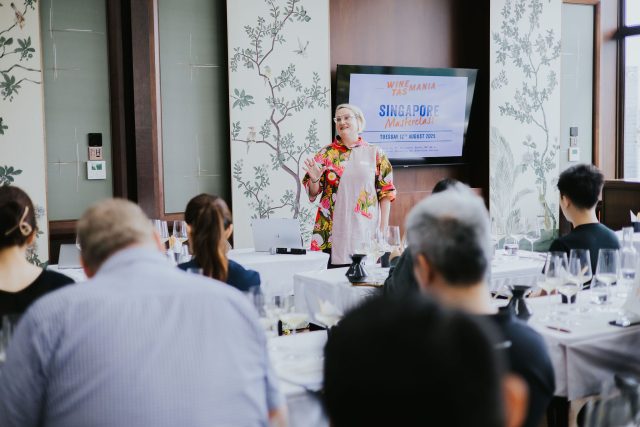
Wine Tasmania hosted its first Asia activation in Singapore this month. The session was aimed at the local wine trade and media audience, with a view to expanding the region’s presence in the Asian market.
Led by Wine Tasmania CEO Sheralee Davies, the visiting delegation included a select group of producers keen to introduce the island’s cool climate wines to a discerning audience in Singapore. The programme featured a free-pour tasting and an in-depth masterclass highlighting the diversity and precision of Tasmanian sparkling wines as well as still expressions of Pinot Noir and Chardonnay.
Tasmania, Australia’s southernmost state, sits between 41 degrees and 43 degrees latitude and benefits from a maritime climate influenced by the prevailing westerlies of the Southern Ocean. Its vineyards, largely concentrated in the north and east, are predominantly planted with Pinot Noir and Chardonnay. Though Tasmania accounts for just 1.2% of the Australian wine production by volume, it contributes a significant 6.5% of the nation’s grape value, a testament to its premium positioning.
“We are very small in the Australian context,” said Davies, speaking exclusively to db. “We currently export only 5% of our wines and hope to grow that to about 15% over the coming years.”
Davies hopes to quadruple the Tasmanian wine output by increasing vineyards in the region. “As we grow, we want to share our wines with people who love and appreciate the finer things in life, including export markets,” she said.
After extensive market research conducted with Wine Intelligence, Wine Tasmania has set its sights on Singapore and Seoul as its first international targets. The aim is to develop these markets through sustained and targeted efforts in the region and in-market visits.
However, Davies remains realistic about the time and effort it takes to build an export market. In the next two years, the ambition is to develop trade connections, establishing in-market partners and equip the wine business with key exporting skills.
Partner Content



The masterclass
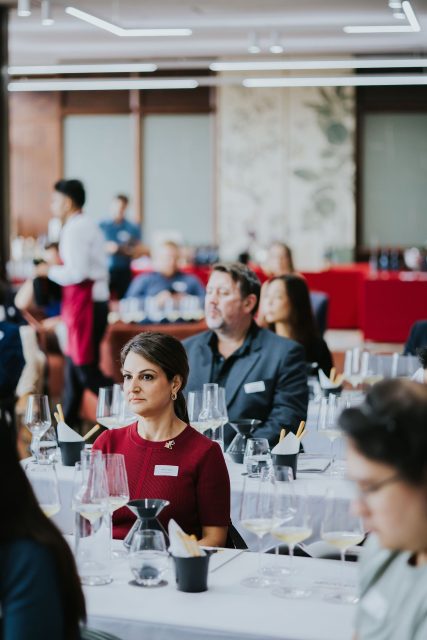
The Singapore event was hosted by Benjamin Hasko MW MS. It included a regional overview, followed by a blind tasting of 18 wines: two sparklings, six Chardonnays and 11 expressions of Pinot Noir.
Hasko views Tasmania, alongside Margaret River, as one of the only Australian regions with long-term potential to produce world-class wines, particularly as the global climate shifts. “Tasmania is arguably better positioned to cope with climate change,” he added.
During the tasting, Hasko encouraged the audience to note the lifted acidity – considered a signature of Tasmanian wine – alongside the contrasting fruit profile, structure and regional characteristics that define wines from different parts of the island.
The diversity was on full display during the first flight of Chardonnays, with Ghost Rock Estate Chardonnay 2024 showcasing richness and opulence, while Pressing Matters Chardonnay 2023 revealed a refined, mineral style.
The Pinot Noir flight included wines from five vintages, starting from 2018 to 2024, with five expressions from Coal River Valley, a region attracting much attention and investment.
The restrained use of oak was a notable feature across the flight. Fran Austin, winemaker at Delamere vineyards, explained that Tasmanian producers tend to favour French oak, which she believes complements the elegance of the region’s fruit.
Related news
Key week for Bordeaux en primeurs as pace quickens
'Impressively fresh' 1892 Château d'Yquem found under chapel floor
Vinexpo Hong Kong holds steady as appetite for Asian markets grows


