



Why Austria has protected its historic blends
Wiener Gemischter Satz is almost unique as a legally mandated blend, while other Austrian regions see producers blending to explore new avenues. db explores why multivarietal wines found such a central place in Austrian wine.

Blends have a special place in Austrian winemaking. Any winemaking country will craft multivarietal wines, but in Austria, the blend is elevated to an even higher level of significance. While blends are found all over the nation, it is home to one region where blends are not just common, but are legally mandated.
Wiener Gemischter Satz DAC (Districtus Austriae Controllatus – the legal framework for Qualitätswein) is an appellation like no other. It is one of just a handful in the world which can only be produced as a blend (other notable examples include Côtes de Provence and Côtes de Rhône from the region’s south).
The DAC’s stipulations are clear. The wine must be a blend of at least three Qualitätswein grape varieties, with none making up more than 50% of a blend and the third largest accounting for at least 10%. It is thus ‘baked in’ that a Wiener Gemischter Satz will have significant character from several grapes.
A tradition made law
The local rules create a distinct style and also pay homage to a distinct history. For Wiener Gemischter Satz DAC, it is not simply a question of mixing together varieties, but the wine must come from a field blend, harvested and then vinified together.
Nowadays, field blends are usually romanticised as a relic of times gone by, but their original adoption was a simple question of practicalities. There is a degree of ignorance at play; in centuries past, winemakers simply may not have known that similar varieties were distinct.
Yet, more importantly, a field blend was a commercial guarantee. It is a viticulturalist’s rendering of the proverb ‘don’t put all your eggs in one basket’, as a spread of varieties offers protection against threats to the crop. If one grape falls foul of bad weather, the others might be hardier; if one is particularly susceptible to a pest, it will not ruin the entire crop. Field blends used to be essential to ensuring a reliable crop each year.
Wiener Gemischter Satz also protects its local history. Wien, also known as Vienna, may be Austria’s capital, yet it is still home to 582 hectares of vines (228 of which are for Gemischter Satz).
These are no longer in the city centre, instead pushed to the suburbs, but it is still remarkably close. If you transposed their locations to London, for instance, you would find vineyards covering the hill of Greenwich Observatory and next to the Olympic Stadium in Stratford.
You might expect the vineyards to be under threat, but the city has taken steps to preserve them. All existing vineyards are protected by a state law, meaning no future development can change their use.
The wine’s traditional home is also now protected. Once bottled, Wiener Gemischter Satz was frequently sold in Vienna’s Heurige wine taverns. Since 2019, they have been registered as Unesco Intangible Cultural Heritage.
Blending prowess elsewhere
Austria’s blending heritage, however, does not end at the city limits. All over the country, producers blend together varieties with great success.
Key to the success of Austria’s blends is its varied grape varieties. Thanks both to its position at the heart of Europe and its pioneering work in developing new grape varieties, the menu from which producers can choose is varied.
That menu, of course, includes many of the French varieties that dominate global wine sales. Yet their presence is limited, with local specialties taking up most of the vineyards. Less than 20% – around half of the global average – of the nation’s vines are French variety’s, according to Kym Anderson and Signe Nelgen’s 2020 study.
The practical upshot of this is that producers are not wedded to monovarietal bottlings that can translate to any market. They can fly under the radar, free to make single variety wines with local grapes or blends that follow their own rules.
One such example of Austrian freedom in blending comes from Weingut Weinwurm in the Weinviertel, an hour’s drive north of the capital. Its Asia Blend series takes inspiration from Asian cuisine, blending to create red, rosé and white wines that each pair with select dishes from across the continent.
Its ‘Asia Blend’ Cuvée White combines Grüner Veltliner with Pinot Blanc, a combination you would be unlikely to find anywhere else. Yet its success is evident, as the 2024 vintage secured a Gold medal at The Drinks Business Spring Tasting 2025 (following a prior Gold for the 2021 vintage, three years ago). Whether from the codified vineyards of Vienna, or enterprising winemakers elsewhere, Austrian blends are clearly a powerful weapon in its viticultural arsenal.
Weinwurm ‘Asia Blend’ Cuvée White 2024
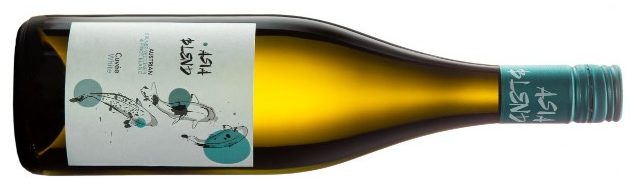
- Producer: Weingut Weinwurm
- Region: Niederösterreich
- Country: Austria
- Grape varieties: 70% Grüner Veltliner, 25% Weißburgunder, 5% Muskateller
- ABV: 12.5%
- Approx. retail price: £8
Based in Dobermannsdorf in northeast Wienviertel, the Weinwurm family cultivates a wide range of indigenous and international varieties. This blended white wine is designed to match Asian cuisines. Very pale lemon-green-coloured, the wine is fresh and clean, with an emphasis on green fruit – kiwi and greengage – with hints of nettle, white pepper and orange blossom. Very nearly dry, the palate is light-bodied, with racy acidity and well-defined, fresh fruit flavours. As it says on the label, the wine will be a good pairing for light Asian cuisines. (Patricia Stefanowicz MW)
Related news
Garcés Silva: fresh thinking from Leyda
Christie's to sell Burgundies from renowned British collector Ian Mill KC


