



Whisky industry grapples with energy efficiency challenges
Rising costs and pressure to cut fossil fuel use are driving change in whisky production, but solutions differ sharply between large PLCs and smaller distilleries.
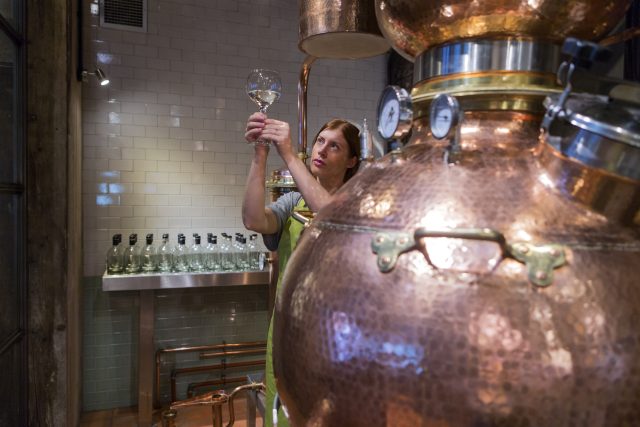
Rising costs drive efficiency focus
Rising energy costs have hit whisky producers hard in recent years. While distillers can do little about the price of malted grain – which has also climbed due to the energy used in harvesting and malting – or the cost of casks, there is scope to act on the efficiency of spirit production itself.
“Rising costs have hit every producer in the last few years. Distillers can do nothing about the cost of malted grain (which has also increased in cost due to the energy used to harvest and malt), or the cost of casks,” said Gareth Roberts of Organic Architects.
“The main efficiency that distillers can control themselves is to reduce the cost of producing spirit by upgrading plant, equipment and buildings, rather than rely on the ease, but increasing costs of fossil fuels.”
“The past ten years have seen a transition away from oil boilers to less environmentally damaging natural gas boilers, yet all fossil fuels will be phased out soon. Some distillers – even relatively small producers such as Arnamurchan and Nc’Nean – have taken advantage of local fuel opportunities such as woodland to make steam using biomass.”
Scale and affordability
For Roberts, the question of scale is decisive when it comes to energy efficiency. “Costly cap-ex investments are beyond the capacities of smaller producers,” he said. Complex heat recovery systems, which larger distillers deploy to capture and reuse energy, “could cost a large proportion of the investment made in an entire small distillery”.
“Small distillers will never be producing spirit for the same cost as a larger distiller,” Roberts explained. Economies of scale become critical when a company is producing 100 million litres or more each year. “Every penny saved on the production cost of a litre of spirit is a win,” he said.
For smaller distillers, however, cost of production is less of a concern than quality and brand positioning. “For a small distillery whose mission is to produce high quality spirits in an artisan fashion, cost of production is less of a concern,” Roberts argued. Some sites even build in inefficiencies through their location – whether due to access restrictions or noise limits – but balance these higher costs through visitor income.
Partner Content



Tradition versus evolution
Whisky-making is rooted in tradition, but Roberts suggested that attitudes are shifting in certain areas. One example is the use of the third water in mashing. Traditionally, distillers rinse the grain three times, but the energy required to heat the final water is increasingly being questioned.
“This a minor change to traditional methods that distillers could adopt to save energy and therefore cost,” Roberts said. Similarly, non-traditional equipment such as mash filters are beginning to find their way into the industry. “Yes, it could change the character of the spirit, but it’s a machine which is creeping into a few distilleries who aren’t locked into age old ways of production,” he noted.
The tension between heritage and innovation is sharpest for established producers. “For the large legacy distillers who need to maintain a constant product, the answer is clear – change things at their peril. A new distiller with no track record is free to search for new ways of production,” Roberts said.
Realistic interventions
With distillation accounting for 50 – 70% of a distillery’s energy use, interventions at this stage offer the biggest potential savings. Large PLCs have adopted mechanical vapour recompression (MVR) and thermal vapour recompression (TVR) systems, with Chivas notably sharing its positive Glentauchers findings as open-source for the wider industry. But such multi-million-pound systems are out of reach for most smaller distillers.
For those with tighter budgets, Roberts said the most impactful options are more modest: localised heat exchangers, processing co-products through anaerobic digestion to generate gas, and planning large thermal stores to capture process heat.
“For the well organised business, funding allows large equipment such as biomass boilers to be financed over time, backed by government Renewable Heat Incentive payments which still pay for each kW of heat produced,” Roberts noted. “For a distiller who is near to ageing forests this could be an attractive option.”
An industry at a crossroads
Ultimately, Roberts sees a split in how producers respond. For some, efficiency means investing in new equipment and rethinking traditional processes. For others, it is about location-specific solutions, from visitor centres offsetting higher production costs to tapping local biomass sources.
“A distillery is either fixed in its ways, or it can evolve,” Roberts reflected. For heritage distillers, preserving the character of their spirit will always take priority. But for new entrants, energy efficiency is becoming not just a necessity, but a defining part of their identity.
Related news
GlenAllachie installs next-gen energy tech in distillation overhaul
Soaring energy costs hit Encirc's gross margins
Iconic New York wine store "struggling to keep the lights on"


