



Western Australia’s ‘underwater winery’ hauls latest batch from the Southern Ocean
Subsea Estate has retrieved wines aged beneath the waves in the Southern Ocean, with production set to grow from 15,000 to 100,000 bottles.
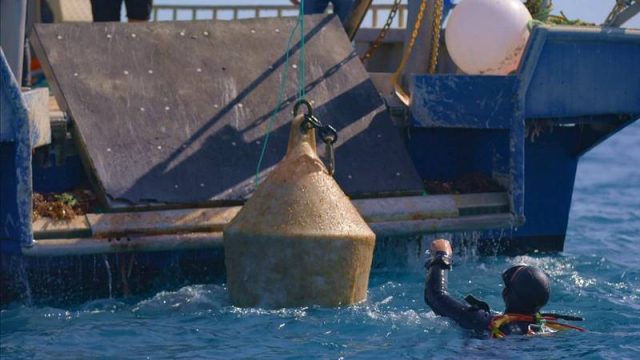
Brad Adams, co-founder of Subsea Estate in Western Australia, has hauled up vats of his latest wine from the seabed off the coast of Augusta, Wendy Laursen at Marine Link originally reported.
Adams, his wife and fellow co-founder Jodee Adams, and chief winemaker Emmanuel Poirmeur are producing a wine unlike any other in the southern hemisphere. For the past two years, Subsea Estate has made Semillon and Shiraz that undergo secondary fermentation 15 metres deep in the Southern Ocean.
The idea stemmed from the 1998 discovery of thousands of bottles of 1907 Heidsieck & Co Monopole Goût Americain Champagne, recovered from the wreck of the Swedish schooner Jönköping, sunk by a German U-boat in 1916.
Poirement first developed his subsea fermentation method in French waters around 20 years ago through his company Wine Reef. For the Australian venture, he created 265-litre poly vats anchored above the seabed.
He selects locally-produced wines after their first fermentation for the subsea process, with a local contract winery handling the remainder of the winemaking and bottling.
Eight months in the Southern Ocean
The latest batch spent eight months swaying in the current at temperatures of 19–22°C. The vats were anchored across a sandy, five-hectare area, positioned away from seagrass habitats vital to the Adams’ other business, abalone farming, but close enough to share vessels and logistics.
The same boats used to transport divers and abalone also carry the wine, and the vats are secured using the sand anchors from the work boats.
Partner Content
“We get about 10 immersions out of a vat, so four to five years of life, and then we recycle them. In France, Emmanuel actually sends them back to the same factory that he gets them made at and they turn them into canoes,” Adams said.
Opening a recovered vat is “like opening a huge bottle of Champagne”, he added. The wines retain a subtle spritz, with most bubbles filtered before bottling.
Keeping the yeast in motion during autolysis imparts distinctive flavour notes. Variations in ocean conditions from season to season mean “every immersion is different”, making the process “bold and unpredictable”.
“They’re wines of adventure,” Adams said. “They’re for people who have a sense of adventure and are willing to try new things. The maturation process really does provide unique flavour profiles that you won’t get on land.”
Expansion plans
In the coming weeks, 15,000 bottles will be ready for sale — some purely subsea-aged, others blended with land-based wines from local producers.
Adams and Poirmeur plan to expand production across their 413-hectare subsea site, targeting 100,000 bottles in the near future. The next batch will include Chardonnay and Cabernet Sauvignon alongside Semillon and Shiraz.
“There’s everything we need to scale up within 30 kilometres of the harbour,” Adams said.
Beyond Augusta, the pair aim to expand to other Australian waters, South-East Asia, South Africa and Miami.
Related news
The highlights of the hors Bordeaux 2026 Spring collection
Santiago Marone Cinzano: 'my generation wants wines that are ready to drink'
Raise a glass to Cabernet excellence: enter The Global Cabernet Sauvignon Masters 2026


