



Top 10 white wine trends of 2025
With whites the undeniable success story of 2025, db identifies the top 10 white wine trends of the last 12 months, from a greater spotlight on salinity and texture to side dishes leading the pairing conversation.
Regions and producers focused on red wines may have had cause to hold their heads in their hands over the last 12 months, but white wines have been a dazzling bright spot for the trade.
This is the year that ‘salinity’ replaced ‘freshness’ as the buzzword du jour, and winemakers sought ‘texture’ above all else. Chardonnay is getting yet another image overhaul, while sommeliers are homing in on side dishes rather than main courses to create the perfect white wine pairings for diners.
“White wine is the category where some of the most noticeable and positive changes have taken place in the wine world,” says Dora Simões, president of Portugal’s Vinhos Verdes Wine Commission.
These changes are reflected in white wine sales, with more than 750 million nine-litre cases of white wine consumed in 2024. And while the predicted compound annual growth rate (CAGR) for whites is negative at -1% between 2024 and 2029, this is a healthier level of growth than is forecast for red wines at -2%.
According to global drinks analyst IWSR, one age group in particular is making a beeline for whites. “Millennials are drinking a larger number of wine varieties across markets [compared to other generations],” Richard Halstead, IWSR’s COO of consumer insights, tells db. “And this is particularly true of white wine, where they are showing a preference for aromatic, fruity wines such as Viognier or Torrontés.”
According to Argentinian winemaker Susana Balbo, a white wine pioneer who has dedicated her career to producing Torrontés, the world is currently undergoing “a white wine revolution”. She says: “White wines are no longer simple, straightforward or linear in complexity. Today, whites are expressing terroir, showcasing unique places in the world and highlighting winemaking techniques that elevate each variety’s character.”
In blends, she says, whites are delivering “a symphony of flavours and aromas that were totally unknown in the past”.
Equally significant, Balbo adds, is the “value-for-money ratio” that whites offer in a market where price definitely matters. James Dainty, business unit controller for UK wine importer Lanchester Wines, which works with a tripod of national, regional and independent retailers, believes that price is the biggest determining factor for consumers when choosing a bottle of wine. “In the majority of cases, it’s the first thing consumers look at,” he says. Due to inflation, the quality of white wines “really steps up a notch at £20-plus in the indies, and £15-plus in national retail, unless you find a real bargain,” he adds.
Perhaps a key marketing message for brands is that white wines are “moving beyond seasonality”, says Simões. In other words, consumers are discovering that, while refreshing, mineral whites are perfect for summer time, “richer and more textured whites work wonderfully in cooler months”.
Read on to discover db’s top 10 white wine trends of 2025.

1. Portugal and Spain win for quality low-alcohol whites
One might expect two countries as warm as Spain and Portugal to find producing low-alcohol white wines challenging. But, thanks to the Atlantic influence and the fact that they got a head start on (almost) everyone else, these countries have become two of the leading innovators in this increasingly important field. While low ABV and vibrant acidity have long been the backbone of Vinho Verde wines, Lisbon is also starting to prove itself a key player with sales of Leve Lisboa (light wines of no more than 10.5% ABV) shooting up by 80% in 2024.
“The nine official appellations (DOs) of the Lisboa wine region are heavily influenced by the Atlantic, making them ideal for the production of lower-alcohol wines,” explains Francisco Toscano Rico, president, Wines of Lisboa. “This is especially true on the north-facing slopes, where there’s less direct sunlight, and the proximity to the sea ensures that ocean winds, carrying moisture, are felt more intensely. These winds and mists are most common in summer, precisely during the grape maturation period. That’s why locals often only go to the beach after lunch, when the fog has lifted.”
Historically enjoyed locally, Leve Lisboa wines are now exported around the world. “Moderating alcohol is our region’s strength,” says Toscano Rico, who adds that Lisbon winemakers are always searching for the sweet spot – “the perfect equilibrium of acidity and alcohol”, with harvest dates increasingly set more by the acidity level of the grapes than by their sugar content.
Across the border, a number of Spanish producers are finding success with low-alcohol Verdejo. J García Carrión (JGC) in Jumilla is currently developing its own expression, while Ramón Bilbao’s Rueda outpost already produces an Early Harvest Verdejo at just 11% ABV “by carefully selecting the vineyard plots and harvest dates.”
According to wine director Sara Bañuelos, “climate change poses significant challenges, but through thoughtful vineyard selection, altitude and orientation, we are actively addressing these issues – and seeing results”.
Meanwhile, Mar de Frades in Rías Baixas is “working towards creating a 0% Albariño that retains the grape’s hallmark characteristics – salinity, floral notes and vibrancy”, winemaker Paula Fandiño tells db. “We’ve already sent one batch of Mar de Frades Albariño 2024 for dealcoholisation. It’s still very early stages, but the results are promising. For now, it remains a research project with no set release date.”
Fandiño adds that Mar de Frades is also experimenting with partially dealcoholised wines, mirroring exciting work being done in Lisbon. “We plan to start certifying partially dealcoholised wines, with alcohol levels between 5% and 7%, mainly aimed at Northern European markets,” reveals Toscano Rico.
2. Winemakers focus on texture
The lion’s share of the conversation about texture in wines is reserved for reds. Think terms such as ‘silky’, ‘velvety’ or ‘smooth’. But across the globe, producers are realising that texture can be equally transformative in whites.
“We’re placing strong emphasis on the mouthfeel of our white wines, aiming for texture, tension, and grip – especially in our three Sauvignon Blancs, but also in our Riesling and Sauvigon Gris,” reveals Viviana Navarrete, chief winemaker for Viña Leyda, the coastal Chilean project belonging to wine giant VSPT. “This began in the vineyard, where we separated plots with interesting soil compositions (marine terraces, granite, calcium carbonate, silt, etc), which allowed us to shape more complex and layered wines.”
Simultaneously, Leyda began making important changes in the winery, including experimenting with skin contact for Sauvignon Blanc – “an unconventional approach for this variety” – and whole-cluster pressing. The producer has also moved away from stainless steel, “which tends to be colder and more linear”, and towards untoasted foudres, 400-litre barrels and concrete vats. It is also focusing on lees work, resulting in “more complex musts and wines with enhanced mouthfeel and depth”. All of this, Navarette says, has been done to achieve “greater texture and concentration in our whites”.
On the other side of the Andes, Susana Balbo credits improved texture as one of the main factors behind an uptick in gastronomic whites. She highlights that, while some wines “may not be as fruity or expressive on the nose, they have a strong and distinct personality in the mouth; more weight and texture on the palate”.
Balbo is embarking on this pursuit of texture by planting at higher altitudes, such as in the mountainous San Pablo, at 1,600m above sea level. “There, we are getting wines with texture and complexity that have us very excited,” she says. However, the shorter vegetative period in these vineyards brings a high risk of frost, forcing Balbo to “develop a complex system involving under-vine irrigation and other techniques to avoid losing the crop”. She believes the effort is worth it: “We are able to offer unique whites with wonderful texture and complexity, which will form part of exciting new releases in the coming years,” she tells db.
Meanwhile, Spain’s J García Carrión prioritises “textural elegance” in its white wines, looking for “vibrancy without sharpness” and “structure without heaviness”, according to vice president Luciano García Carrión, who pinpoints the “velvety mouthfeel” of its Verdejo.
In South Africa, whites at Spier Wines are similarly characterised by their “rich mouthfeel, with layers of complexity that unfold beautifully”. According to cellar master Johan Jordaan, “we’ve seen how alcohol content influences mouthfeel and balance, so we work with both ripe and fresher components to craft wines that are harmonious and expressive, without being heavy”.
3. Salinity sells
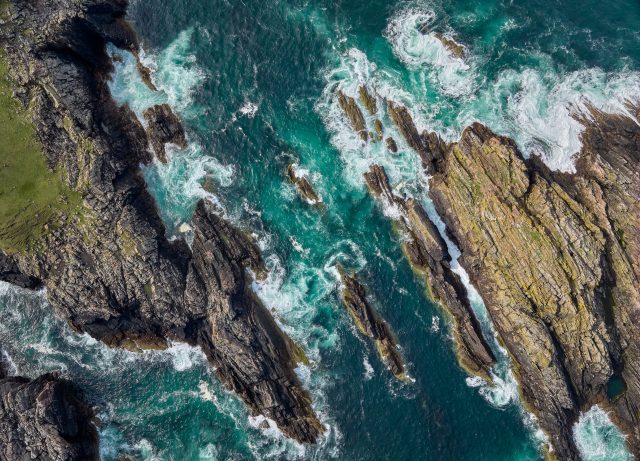
The drinks business has noticed one word increasingly cropping up in white wine producers’ vernaculars in 2025. It’s a word that speaks of salty breezes and coastal influence: salinity. In the constant search for freshness, producers are exploring vineyard sites closer to oceans and bodies of water, with salinity being a natural offshoot of this. While the characteristic has always been present in coastal wines to some extent, winemakers are starting to bring it to the fore rather than attempting to restrain it, and are making it a central part of a wine’s narrative.
Take the new Éminence de Bijou Viognier, for example; soon to launch in the UK. Hailing from a single vineyard in Coteaux de Béziers, less than 10km from the Mediterranean, the wine benefits from “strong local breezes” which blow the sea air towards the vines. The brand also claims that nearby oyster farms enrich the soils with subtle mineral deposits. “The result is a Viognier with beautiful lift, aromatic depth and a delicate hint of salinity,” says Bijou’s commercial director Edward Vellacott.
Mar de Frades in Rías Baixas has built its whole identity on the back of its ocean influence, with its Albariño “deeply marked by the untamed purity of the Atlantic, reflected in the wine’s saline edge”, says winemaker Paula Fandiño.
Similarly, Chile’s Viña Leyda picks out the “saline notes, herbal edges and crisp acidity” of its Coastal Vineyards Sauvignon Blanc, stressing that these wines make the perfect companions for oysters, scallops and ceviche.
And in New Zealand, which is the number one value contributor to the UK’s white wine category by far, producers are flirting with planting vineyards practically on the water’s edge. te Pā’s single-vineyard Reserve Collection Seaside Sauvignon Blanc has “an enticing salinity” thanks to vines planted just 150m from the ocean at Marlborough’s Wairau Bar. “We have abundant waterlife here. Whitebait, clams, trout, flounder…” explains owner Haysley MacDonald, who also scatters crushed mussel shells over his vine roots to “stop weeds coming through”.
Shouting about salinity is proving a successful marketing strategy for some, but runs the risk of alienating consumers who don’t understand what salinity in wine ‘looks’ like.
4. Lesser-known white varieties bring an element of exclusivity
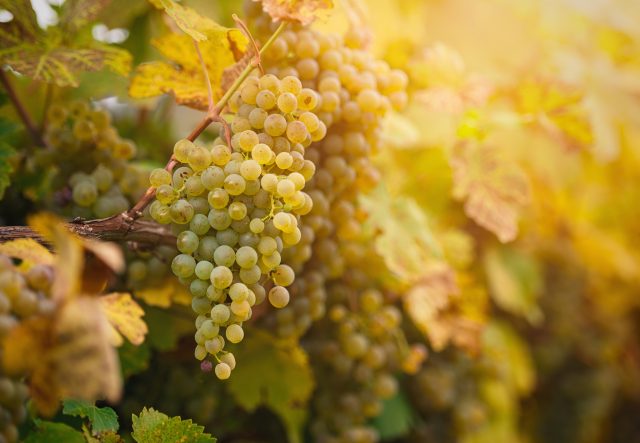
Climate change and a quest for more terroir-specific wines are encouraging winemakers to focus on indigenous white grape varieties. This approach also lends an element of exclusivity, as the grapes are rarely planted widely outside their native regions.
From Viña Leyda experimenting with vinifying white Pinot Noir – “something that, to our knowledge, hasn’t been done yet in Chile” – to the likes of Ramón Bilbao and Marqués de Cáceres working with Maturana Blanca and Tempranillo Blanco, “authorised only in Rioja”, producers are turning their attention to lesser-known white varieties.
One producer making this a core part of its business plan is Bodegas Sonsierra in Rioja Alta, which hopes to win customers over with Malvasía de Rioja. Having first discovered the white variety planted in a vineyard on its property in 1947, Sonsierra didn’t start making a wine from it until the 2022 vintage. “The Malvasía is interspersed within red Tempranillo vines, not grown in separate rows, at about 30% Malvasía to 70% Tempranillo,” explains technical director Rafa Usoz. Aimed at the premium on-trade, Sonsierra’s 100% Malvasía wine is aged in a large 500-litre oak vat known as a bocoy.
“Wines made from Malvasía de Rioja differ significantly from the more traditional, Viura-led white Rioja wines, the major difference being aroma,” explains Usoz. “Malvasía is much more floral.”
According to Luis del Águila, Sonsierra’s general director, the wine has already been listed in top restaurants, “including Michelin-starred dining rooms in Germany and Switzerland, where sommeliers are looking for expressive, elegant whites that offer uniqueness and depth”.
In terms of international reference points, del Águila describes Malvasía as offering “something of the aromatic complexity of Viognier and the structure of a white Burgundy, but with a Mediterranean soul”. He stresses: “This is not a mass-market wine, but one for curious, discerning customers looking for something memorable in their glass.”
One virtually unheard-of white variety is the brilliantly named Defensor. That’s because it hasn’t yet been approved, though it is going through the process in Portugal as you read this. While planting disease-resistant hybrids there is still prohibited, Wines of Lisboa is “breaking the taboo” by championing the inclusion of Defensor under the Lisboa designation.
“We are still awaiting final authorisation from the Portuguese Government,” explains Toscano Rico. “But the aim is to advance cautiously, with planting limits and a strict 10-year evaluation of the batches produced.” Defensor has been studied in regions across Portugal and has been found to offer “productivity, acidity and sugar levels suitable for making quality wines”, says Toscano Rico. “It’s also highly resistant to downy and powdery mildew – an enormous advantage in an Atlantic climate for reducing plant treatments and associated costs.”
For these reasons, Defensor shows “both strong agronomic and economic potential”. A verdict is expected to be reached by the end of 2025. However, “the topic is not consensual in Portugal, and will generate much national discussion”, Toscano Rico cautions.
Meanwhile, the Vinho Verde appellation is conducting studies into the potential of Lameiro, Esgana Cão (Sercial) and Pintosa, all of which lie “outside the mainstream commercial circuit”, says Simões. “They offer unique characteristics and may contribute to the diversification of our wines, but we need another vintage for more robust data.”
Partner Content

Albariño might be well-known internationally, but it is certainly uncommon in Stellenbosch where, according to Spier Wine’s Jordaan, the grape is showing “great promise and is set to play a bigger role in future plantings”. This is especially relevant, he adds, “for key UK partners like Majestic and Laithwaites”.
Spier is also investing in Grenache Blanc and exploring new clones of Chenin Blanc, made possible due to new mapping technology which helps to identify Stellenbosch’s “incredibly complex” soils.
5. Chardonnay is being reborn (again)
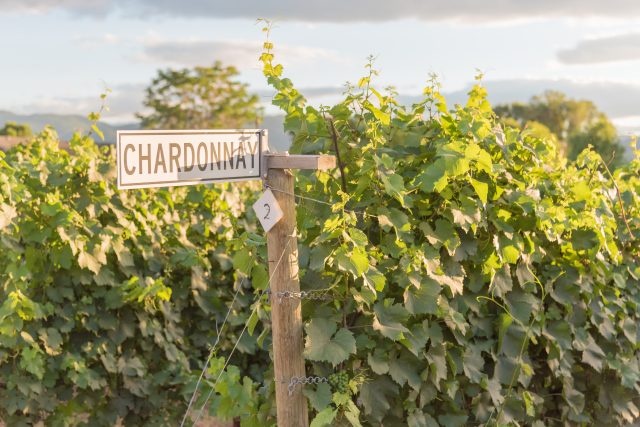
According to IWSR, Chardonnay remains the most consumed white wine globally in 2025, and while it’s well-documented that consumers are leaving the big, blousy, buttery expressions of this variety behind, the evolution is far from over.
When South American wine group Concha y Toro first launched its Amelia Chardonnay in 1993, it was considered by many to have been Chile’s “first ultra-premium Chardonnay”. Thirty-two years later, the producer has changed almost everything about the fine wine, from the location of the vineyard to the level of oak used.
“Amelia was first released in 1993 as a Casablanca Valley Chardonnay, crafted with a strong focus on the American market,” winemaker Marcelo Papa tells db. “At the time, grapes were not harvested at particularly high levels of ripeness, but there was significant use of oak. The result was a fruity, fresh wine with a pronounced oak presence. Today, Amelia comes from the Limarí Valley, which is playing an increasingly important role in Chile’s fine white wine story. It’s one of the few regions in the country where calcareous soils are found on a large scale, and this has a major impact on the style and quality of the wine.”
Consequently, the style of Amelia Chardonnay has changed significantly. “The wine is now much more mineral, the use of oak far more integrated, supporting rather than dominating,” says Papa. “In 2025, Amelia is a Chardonnay that expresses purity, precision and a true sense of place.” Priced at about £45 in the UK off-trade, Amelia is a good example of how producers are evolving their Chardonnay to suit consumer tastes.
Another wine business capitalising on Chardonnay’s versatility is Bijou, based in Languedoc-Roussillon. Taking a Bordeaux-style approach, it has a ‘first’ and ‘second’ Chardonnay fulfilling different roles in the market. Its Vestige de Bijou Chardonnay “represents the most refined and contemporary interpretation of the grape that the Languedoc can deliver,” says commercial director Edward Vellacott, while he describes the more accessible Le Bijou de Sophie Valrose Chardonnay, as “a more nervy style”.
Only 1,200 bottles of Vestige de Bijou are produced, using grapes sourced from the clay-limestone soils of AOP Limoux in the foothills of the Pyrenees. Having explored “extended ageing and meticulous small-batch vinification”, Vestige is tailored to “prestige on-trade settings”. Le Bijou de Sophie Valrose Chardonnay from La Haute Vallée de l’Aude, on the other hand, is “vibrant, approachable and designed to be enjoyed with ease”.
6. Aromatics are everything
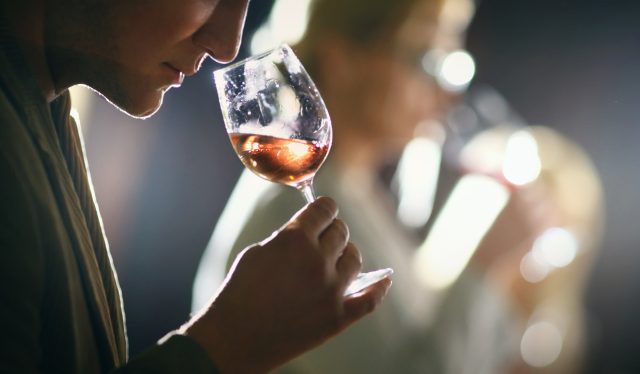
While aromatics have always been a cornerstone of the white wine conversation, almost all producers db spoke to for this article said they were actively looking to dial up the aromatic influence of their whites, suggesting increased demand for expressions that speak to the nose first.
Mar de Frades has gone one step further, with a project dedicated to “defining the aromatic potential curve of Albariño”. Fandiño defines the aromatic curve as “the number of days after sugar accumulation stops until the grapes are harvested”.
She explains: “Each stage expresses differently: before the stop, the profile is vegetal; at the moment of the stop, it has a thiolic profile of fresh fruit; 10 days later, it becomes a ripe thiolic profile; and after 15 days, it shows a ripe fruit character.”
Meticulous attention is therefore paid to the ripening of grapes, which determines the harvest date for each plot. Fandiño continues: “Depending on how many days have passed and the probable alcohol level at which the sugar loading stops, the expression of the grape’s aromatic precursors after fermentation will vary.”
Research such as that being carried out by Mar de Frades could inform future winemaking for whites around the world.
7. Producers rethink barrel ageing
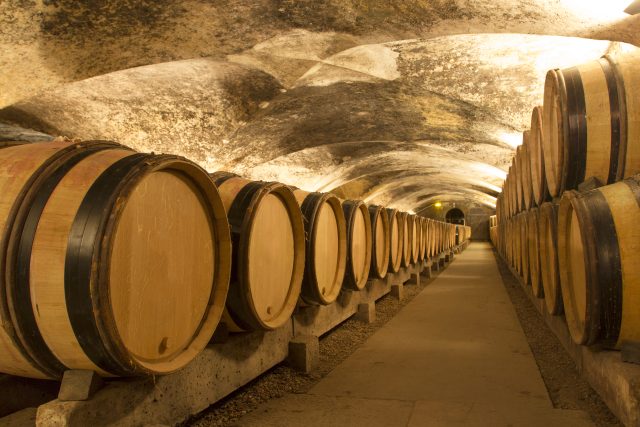
Incorporating at least one barrel-aged white has become an important part of a producer’s repertoire, though opinion varies as to the degree of consumer demand for this wine style in 2025. Along with white Burgundy, white Rioja is the posterchild of barrel-aged whites, and Spain still dominates in the field, with the likes of Marqués de Cáceres, Bodegas Riojanas and Ramón Bilbao all leading from the front.
One widespread development is is the evolving choice of wood, with Ramón Bilbao choosing to include Hungarian oak in the ageing programme for its Verdejo Sobre Lías, which spends 10 months in concrete tanks, followed by eight months in Hungarian and French oak barrels.
“Hungarian wood delivers more balsamic notes, such as aniseed or sandalwood,” explains Bañuelos. “French oak, on the other hand, contributes spicier aromas like clove or pepper. The combination of both results in a wine with remarkable aromatic complexity.”
db has also noted a growing interest in using Portuguese oak barrels to age whites, with Wines of Lisboa’s Toscano Rico describing the material as “denser and less porous than French oak”. He explains that Portuguese oak “allows less oxygen into the barrel, making it suitable for longer maturation without the wood dominating, while adding a unique character to the wine”, and namechecks Arinto as a white variety with “extraordinary ageing potential”.
Marqués de Cáceres has long mastered wood influence with precision. “Demand for barrel-aged whites is definitely rising,” Cristina Forner, president of Marqués de Cáceres group, tells db. Its white Antea wine from Rioja is fermented in new and once-used French oak, then aged for six to eight months – split between barriques and demi-muids.
“Over the years, we have trialled acacia and various Central European oaks, but French oak has proven superior for the nuance we seek,” says Forner. Under its Finca La Capilla Brand, Marqués de Cáceres also makes a Verdejo/Sauvignon Blanc blend, aged in a mix of French oak barrels, wooden vats, concrete eggs and stainless steel, which Forner describes as “manual, detail-driven work”.
It’s not the only producer to use multiple materials to age its wines. Ramón Bilbao ages Maturana Blanca and Tempranillo Blanco together in oak, amphorae and concrete, resulting in a white Reserva, while Argentina’s Susana Balbo is “currently experimenting with white wines in different types of fermentation vessels, such as clayvers, amphorae, concrete eggs and barrels”.
There is lively debate over the maximum period of ageing that a white wine can withstand. At the upper end of the scale is Bodegas Riojanas, which subjects its Monte Real Reserva Tempranillo Blanco and Monte Real Gran Reserva Blanco to hand-bâtonnage for six months to keep the lees in suspension. The Reserva then spends another 12 months in French oak, while the Gran Reserva spends a further 18 months in French oak. This longer maturation period, claims Bodegas Riojanas president Santiago Frías, is the perfect duration to “ensure complexity, volume and smoothness”.
8. Whites make greater inroads in organics
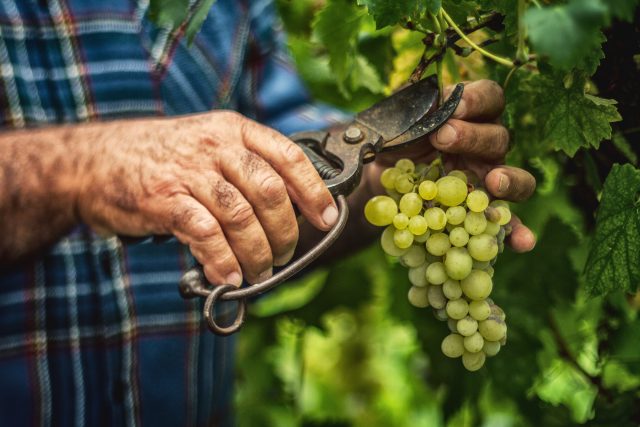
There are mixed opinions about the suitability of organic viticulture for white wines. Luciano García Carrión of J García Carrión in southern Spain believes “there is a strong opportunity for white wines to lead the organic conversation, especially since they naturally align with the perception of lighter, purer and more health-conscious choices.” However, he recognises that producing organic white wines is “technically more demanding, as they require extremely careful vinification and microbiological control”.
Holding both truths in one hand, García Carrión has decided to expand the winery’s organic white range beyond the already certified organic expressions in its Pata Negra, Jaume Serra and Don Simón Nature lines. The cooperative is committed to growing this segment progressively and sustainably”, he tells db.
More than 11,000km south from J García Carrion’s home in Jumilla, Spier Wines in Stellenbosch also makes the case for organic whites. “Whites can be a little more vulnerable,” concedes Jordaan. “But when farming is in balance and grapes are harvested at the right time, organic whites can be just as expressive and age-worthy as reds. Our organically certified Good Natured range includes both red and white wines.”
Other global players on the white wine stage take a more cautious approach.
“What we can talk about are white wines made from organically-grown grapes, using winemaking methods that help preserve the exceptional quality we achieve in the vineyard, with a minimal amount of preservatives, to extend their shelf life in bottle,” says Susana Balbo. “Organic grape growing makes this possible, because it allows us to produce wines with very low sulphite levels – and that is the path we have chosen to follow.”
Even though organic wines are widely discussed, Balbo maintains that “actual consumer demand is still too low to commit to large-scale organic production. For that reason, it’s a category we’re exploring gradually, and we will expand it depending on how the market and consumer preferences evolve”.
9. Side dishes take centre stage for sommeliers
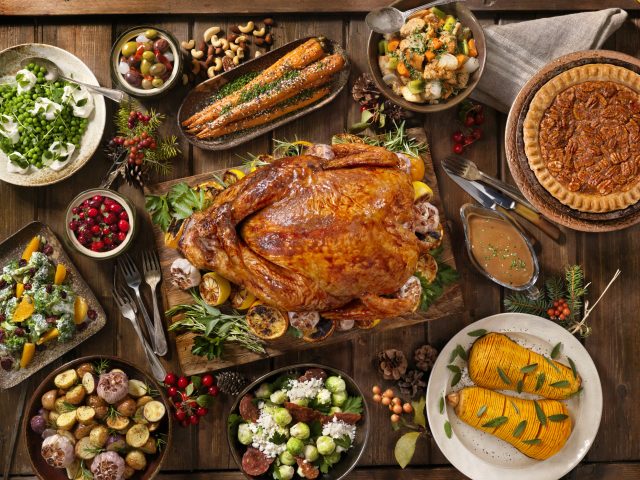
One exciting development to take place in the realm of wine and food pairing is the literal sidelining of main courses. According to Ramón Bilbao’s Bañuelos, “today’s food pairings have evolved”. She explains: “It’s no longer just about the main ingredient on the plate – minor ingredients and seasonings now play a big role, enabling white wines to pair beautifully in ways that were previously unthinkable.”
Contemporary and fusion cuisines are driving this change and encouraging greater diversity in white wine pairings. Speaking to db, wine producers across the globe suggest dishes as wide-ranging as katsu curry to Argentine steak. “There’s certainly a growing recognition that white wines can handle much more diverse and robust flavour profiles than previously thought,” agrees Jordaan of Spier Wines. “Our 21 Gables Chenin Blanc, with its riper style of fruit and natural acidity, pairs beautifully with anything from East Indian curries to spicy Asian cuisine and delicate seafood.”
Bijou recommends pairing its Viognier with Moroccan tagines or a Thai green curry, J García Carrión suggests matching its Verdejo with tuna tataki, while Concha y Toro’s Amelia Chardonnay works just as well with pumpkin soup as it does with salmon-stuffed ravioli. Unexpectedly, Wines of Lisboa champions pairing a barrel-aged Arinto from PDO Bucelas with beef Wellington.
Susana Balbo adds that the enormous potential of white wines is now spilling over into the mainstream, where once it was reserved for fine dining. “The perception of white wines in gastronomy has changed enormously over the past five or six years,” she says. “It’s very common to see Michelin-starred restaurants and fine dining establishments offering menus where most of the pairings are based on white wines. This is very typical in sophisticated cuisine, and now it is reaching simpler, high-quality gastronomy, where white wines are being equally well appreciated.”

10. White Burgundy still dominates at auction
According to iDealwine, white wines remain strong across all regions, accounting for around 28.7% of all bottles sold in iDealwine auctions in 2024 (this figure includes sparkling wines).
“Unsurprisingly, Burgundy’s Chardonnays continue to dominate this category,” says iDealwine co-founder Angélique de Lencquesaing.
A total of 26,657 white Burgundy bottles were sold at auction in 2024 – a record increase of 37% in volume. Of these, 3,700 were grand cru whites (scaled to 750ml), with 61% coming from the Côte de Beaune and 39% from Chablis.
“The Côte de Nuits represented less than 1%,” says de Lencquesaing.
The highest-priced white wine from 2024 was a 2005 Criots-Bâtard-Montrachet Grand Cru from Domaine d’Auvenay, which sold for €16,875 – a leap of more than 300% on this wine’s price estimate five years ago. For context, the average price of a white grand cru from Burgundy reached €459 per bottle in 2024 – nearly double the overall average for Burgundy wines (€250).
“However, several other French regions outside of Burgundy are increasing their share of white wine sales at auction,” says de Lencquesaing, “with the Loire Valley, the Rhône Valley, Savoie and Jura all leaving strong impressions.”
Continuing, she says: “Loire whites are celebrated for their freshness and complexity, while Rhône whites regularly feature among the highest-priced.”
According to de Lencquesaing, she has noticed “a clear shift in consumer preferences in the fine wine market towards white wines that are fresh, elegant and aromatic”.
Related news
White wines shine at Hospices de Nuits-Saint-Georges auction as red sees slight 'adjustment'
Ramón Bilbao explores ever more of Spain with white wines
Trinity Hill taps into rising demand for white wines in Asia


