



Have scientists discovered which beer has the longest-lasting foam?
Ever wondered which beer style will always retain its frothy head of foam? Now, the type of beer with the most stable set of bubbles has been identified by new research. Or has it?
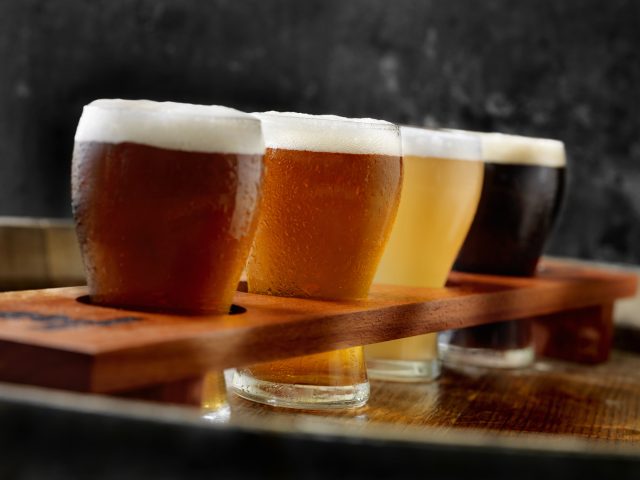
The findings from the research which was led by ETH Zurich’s team headed up by professor of soft materials Jan Vermant, was outlined in the journal Physics of Fluids following a seven year study looking at head-retention in beer.
According to the science, the foam of triple-fermented beer styles like Belgian Trappist beers lasts the longest. While, comparatively, the head of single-fermented beer styles like lager are understood to be less stable and dissipate more quickly than many others. This was, however called into question by the beer book author Laura Hadland who noted how brewers had started to baulk at the findings.
Hadland told the drinks business: “A lot of people who brew have already expressed scepticism about this research.”
Beer style interplay
Without awareness of the criticism that the study was receiving online, the research had noted how the interaction of various factors determined by the proteins within the beer as well as their state in what is known as the liquid film of the bubbles is actually the reason behind the foam’s stability. The scientists stated that “it is believed that the structure and properties of protein-rich layers influence beer foam stability through their impact on both surface tension and surface viscosity. However, our experiments employing surface rheometry, tensiometry, and dynamic thin-film balance reveal that the governing mechanism is actually more subtle, and depends on the beer type”.
According to the scientific evaluations made by Vermant and his team, “while film stability in lager beers does hinge on surface viscosity, as previously reported, Belgian ales (such as Trappist beers) display minimal surface viscosities”.
The research has however been debunked by brewers, quick to point out how the science behind the data is flawed due to one point that is obvious to them: “They suggest fermentation is the likely cause of foam difference between lager/Belgian ale, but differences in mashing affecting the proteins seems far more likely,” said author and researcher of farmhouse ale Lars Marius Garshol.
Why foam is important
In an earlier study, lead author Dr Wenjing Lyu of the American Institute of Physics had previously explained how a new “bottom-up” tapping system in which a nozzle pushes up a magnet, could “help in controlling foam formation, reducing consumption and pouring time and improving the overall efficiency of the process”.
Why is it such big business? it has also been outlined in research, published in the Journal of the American Society of Brewing Chemists, that foam plays a crucial role in the scent of the beer and that aroma components are 1.3 to 1.9 times higher in the beer with a frothier head compared to the flat beer. Echoing this, the trend for the Czech pour ‘Mlíko’ which sports involves the glass being filled almost entirely with beer foam is growing in the US.
Partner Content

In the new research on foam from Vermant, it was noted how vital the information was for an industry that not only integral to the economy but was also marketed on messages of quality. To qualify this: Vermant explained: “Beer is one of the most widespread beverages in the world and represents a relevant economic sector of more than US$555 billion and 23 million jobs in 2024. Among its many characteristics, the foam head that crowns a freshly poured glass of beer stands, at least in most countries, as a symbol of quality and craftsmanship of both brewer and bartender”.
Is this really playing ‘a pivotal role’
Further into the research, Vermant described how “the analyses confirmed that the abundance and specific modifications of lipid transfer protein play a pivotal role in foam stabilisation, especially in blond Belgian ales”. But also pointed out that “foam stability also depends on the number of fermentations, with triple-fermented Belgian ales outperforming single-fermented ones”.
Now that the tests are conclusive, Vermant said that “together, these findings offer direct experimental insight into the dynamics of beer foam, facilitating a deeper understanding of foam physics”. But brewers remain sceptical about the validity of these claims.
Garshol noted: “Looks like another beer myth is about to be born” and said that the researchers had “mistakenly” conclluded that “tripels have better foam because they’re fermented three times. (They’re not).”
Vermant had otherwise gone ahead and highlighted how “the life and death of foam encompasses several physical phenomena, including bubble formation, the rising of bubbles and froth formation, drainage, and foam collapse”. He also described how “traditional foam stability comes from a balance between low surface tension, the presence of surface elastic properties to slow down drainage, and the presence of a repulsive disjoining pressure, acting normal to the interface”.
‘Valuable opportunities for brewers’
But, he insisted: “Beer foam stability is closely tied to beer type: lager (or low fermentation) beers are primarily stabilised by surface viscosity or subtle viscoelastic effects, rather consistent with earlier studies, while triple fermentation Belgian ales are stabilised”.
He added: “Notably, Belgian ales, especially those undergoing multiple and prolonged fermentations, exhibit enhanced foam and film lifetimes…the magnitude of these stresses depends on the fermentation conditions, resulting in superior stability for tripel beers compared to singel beers”.
Vermant concluded that the study’s results now offered “valuable opportunities for brewers to improve foam stability and beer quality by adjusting fermentation temperatures or refining malting practises” however the brewing sector remains nonplussed, calling the research “nonsense”.
Related news
Could craft beer be seeing the start of a second wave?
What’s happening to Sheffield’s historic Cannon Brewery?
Carlsberg emerges as World Cup winner despite smaller than expected beer boost



I agree that there might be other reasons for the stability of belgian ales, but the study nevertheless shows that it is liked to those styles of beer. Whether it is more influenced by mashing or fermentation remains debatable, perhaps, but this research is valuable, as it opens doors to more research on the subject. Knowing that belgian beers rely on different properties than viscosity, as opposed to lagers, brings a different perspective to the research.