



Regenerative Viticulture Foundation launches UK One Block Challenge
On 14 August, The Regenerative Viticulture Foundation (RVF) launched the UK edition of its One Block Challenge (1BC), a collaborative and risk-free introduction to regenerative viticulture for British vineyards. Kate Lofthouse reports.
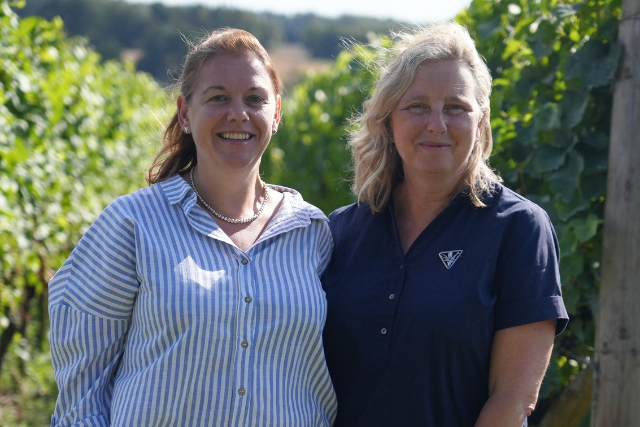
Last week at The Grange, Hampshire, the RVF hosted an all-day regenerative viticulture workshop in collaboration with WineGB to mark the launch of its One Block Challenge in the UK, a low-risk, community-driven initiative to advance regenerative viticulture in British vineyards.
Following a series of talks and practical demonstrations, including insights from the Grange about their own regenerative trials, representatives from the RVF introduced the 1BC concept: a year-long challenge inviting growers to trial regenerative practices in a supported and manageable way, starting with just a few rows of vines.
Participating wineries will be asked to select a parcel to dedicate to the challenge for one year – this could be their worst-performing block, with everything to gain and the least to lose. They will then carry out five simple, free tests to assess the baseline soil health of that block, including a penetrometer test, water infiltration test, an earthworm count and a soil macro-biodiversity count. ‘The idea is that you can take part without any additional cost to your operation, however big or small that may be,’ said Anne Jones, RVF development director, on the day.
A collaborative trial of regenerative principles
During the 12-month challenge, wineries will trial several regenerative practices chosen from a “menu” tailored by the RVF to complement British viticulture, climate, and soil, which might include experiments with cover crops, biochar, composting, or grazing. Viticulture consultancy, Vinescapes, will be on hand throughout to provide free advice and support, as well as educational resources on soil testing and analysis. Participants will also be added to a community WhatsApp group to discuss their findings, ask questions, share equipment and organise visits to each other’s vineyards. At the end of the year, growers will repeat the five tests to measure whether soil health has improved as a result of the challenge.
Safety in numbers
According to Jones, “One of the key things the challenge offers is collaboration and support. Being a viticulturist, even at a large estate, can be a very lonely experience – they are often a team of one, making big decisions on their own. The 1BC gives them the opportunity to give regen a go in a small way – maybe with just two rows – with the community support of other growers who are all trying the same thing and sharing their findings. It’s safety in numbers.”
Partner Content


Inclusivity is an important part of the challenge, and the RVF stressed that participants can be at any stage of their sustainability journey: “It’s really important that growers who are farming conventionally feel welcome. In the South African pilot, they have Reyneke, who are about as regenerative as it gets – working alongside companies making mass-produced wines, with no sense of hierarchy or judgement. This needs to be an inclusive and collaborative space,” said Jones.
The UK is the fourth country or region to join the challenge, following Paso Robles, South Africa, and New Zealand.
How to take part
Entry to the UK edition of the 1BC is now open to wineries of all sizes across the United Kingdom. Wineries interested in taking part can fill in this form, or contact the RVF at [email protected].
Those interested in the challenge outside existing 1BC regions should fill in this form or contact the RVF, which has numerous resources available for those who would like to learn more about transitioning to regenerative viticulture.
Related news
Rift grows in regenerative viticulture movement
Why regenerative viticulture could be key to fine wine's future


