



‘No flutes in the building’: why sommeliers are snubbing Champagne’s most iconic glass
Pierre-Emmanuel Taittinger insists Champagne is “above a wine” and should always be served in a flute – yet sommeliers speaking to the drinks business say the iconic shape may no longer suit the way we drink fizz today.

“For me Champagne must always be drunk in a flute and never in a wine glass. It is above a wine. It’s like a bow tie in life, a butterfly,” Pierre-Emmanuel Taittinger told The Times in 2024. His words reflect how deeply the flute has been woven into the image of Champagne: celebratory, ceremonial, and instantly recognisable.
But a recent Telegraph feature suggested the flute’s dominance is waning. It quoted leading glassmaker Maximilian Riedel, who aims to make the design “obsolete within my lifetime”, arguing that narrow flutes inhibit aromas and mute flavour. Sommeliers who spoke exclusively to the drinks business indicate that this transition is already well underway.
“No flutes in the building”
Harry Cooper, general manager and head sommelier at London’s Counter 71, told db that flutes have been absent from his restaurant from day one. Instead, he built the wine service around four varietal-specific glasses, including Riedel’s Veloce English Sparkling glass, originally designed for Riesling. Since opening two years ago, only one guest has ever asked for a flute.

“The glass is designed to maximise aromatic enjoyment,” Cooper explained, “dispersing aromatics across the palate as opposed to a flute which narrowly channels aromatics over the middle of the tongue, missing out on the sweet, salty and sour receptors located from the tip and around the edges.”
He described how guests are actively encouraged to consider how different shapes affect the wine’s development, something he believes adds theatre to the experience. “I regularly see guests really getting into the theatre of wine,” he said. “I don’t think this would be as common or comfortable for the guest if we had never progressed from serving in a flute.”
From a service perspective, Cooper sees little reason to return. “I personally don’t see many advantages to serving a glass of wine in a flute, hence why we don’t have any. From the larger glass perspective, points like pour accuracy, drink temperature, and guest expectations are simply skills a sommelier should have. With experience, training and communication, they’re easy to overcome.”
Context still matters
Not every venue has gone quite so far. At Town, in Covent Garden, head of wine Merlin Ramos recognises the ceremonial resonance of the flute, telling db: “The flute speaks to people in a ceremonial way, like the Champagne coupe before… think The Great Gatsby, Poirot. To some extent, this is important.”
He pointed out that the coupe rose to prominence when Champagne was sweeter and less fizzy, with the flute evolving to emphasise bubbles.
“We enjoy Champagne in a more convivial way now,” he said, “and it’s not just a celebratory drink, but a gastronomic drink, a drink that covers a wide range of flavour and enjoyment.”
Partner Content



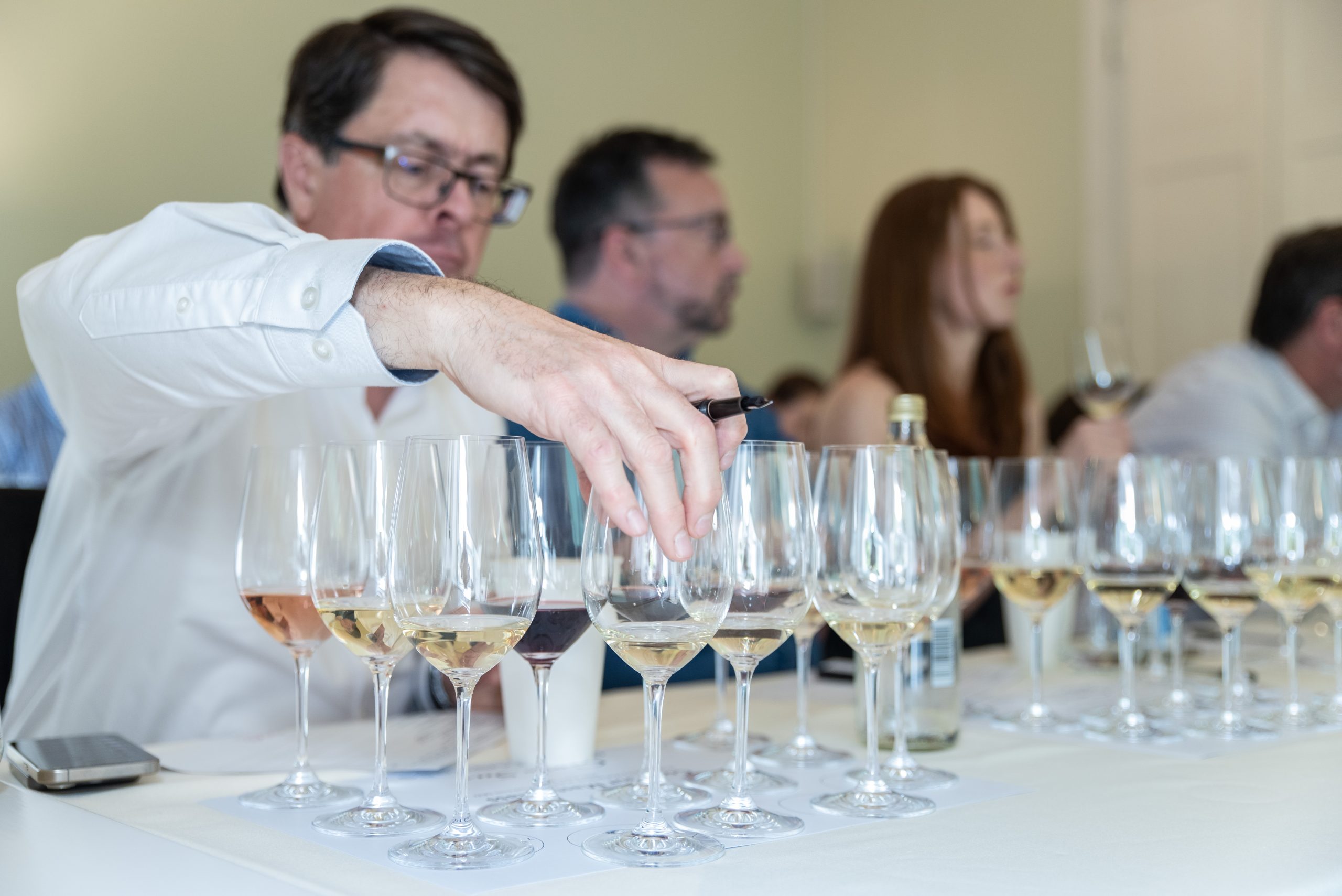
Town uses a wider-based Riedel flute with greater surface area than a straight-necked version. For vintage wines or those with notable finesse, Ramos opts for a thin-stemmed, wide-bowled glass such as the Jancis Robinson/Richard Brendon design: “If you have vintage Champagne, or something with real finesse, a thin-stemmed, wider surface area glass is always going to win.”
Enhancing service, enhancing wine
For Gearoid Devaney MS, director at fine wine merchant Flint Wines, the shift has improved both guest experience and service flow. “There’s nothing new about wine-focused restaurants serving prestige cuvées and other top Champagnes from larger glasses, but it’s definitely become more widespread across the on-trade,” he told db. “Clients today are more aware of the advantages of a larger glass.”
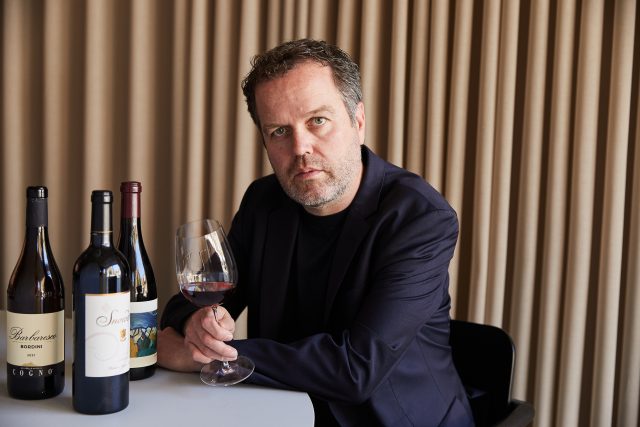
Cabotte, the City restaurant of which Devaney is also director, now pours certain Champagnes into the L’Esthète by Sydonios, a versatile glass suitable for still and sparkling wines. “The feedback has been overwhelmingly positive,” Devaney said. “It gives staff an extra opportunity for positive interaction with clients, to explain how glassware can enhance a wine. It might also allow a restaurant to consolidate the range of glasses they use if the same model works for both sparkling and non-sparkling wines.”
Still, Devaney acknowledges that some guests remain attached to the theatre of the flute. “Though we might suggest an alternative, if the client wants a flute – because they find it adds to the sense of ceremony – who are we to argue?”
Practicalities and preferences
Some venues retain the flute for pragmatic reasons. At Sam’s Riverside, bar manager Ivan Ramos told db: “On most occasions, Champagne is a welcome celebratory drink, where guests will chatter away and clink glasses. Champagne served in a flute will be more difficult to spill due to its narrower opening. In addition, Champagne served in coupes will get warmer and flatter quickly than in flutes, and no one wants a warm and flat fizz.”
At Cuvée in Glasgow’s West End, Courtney Flynn embraces choice rather than uniformity. “When it comes to Champagne, personal preference is key,” she said. “That’s why we offer guests the choice of a coupe or a flute. The coupe brings vintage glamour and 1920s sophistication, while the flute is classic, keeps the bubbles dancing and adds to the celebratory theatre. Offering a choice enhances the experience – it invites conversation, gives a sense of luxury, and ultimately keeps the guest in control.”
Flynn recognises the benefits of larger wine glasses for aroma and upselling potential, but notes a limitation: “125ml can look a little lost in it. It might suit some settings, but we’ve found that offering a choice enhances the experience.”
From bow tie to open collar
Sommeliers appear to be united on one point: Champagne deserves to be treated with the same respect as still fine wines, with glassware chosen to enhance expression rather than preserve tradition for its own sake. The flute may still symbolise celebration, but to many in the trade, it symbolises a bygone era.
Taittinger may still see the flute as a bow tie, but in modern restaurants it is being replaced by something freer, more aromatic and, perhaps, better suited to how we enjoy Champagne today.
Related news
Champagne-baiting English wine brand invites public investment



#BootTheFlute