



New drink-driving limit could reshape hospitality habits
The UK Government is considering slashing the drink-driving limit in England and Wales to match Scotland’s stricter laws. The proposed move could profoundly affect driver behaviour, public safety and the hospitality industry’s bottom line.
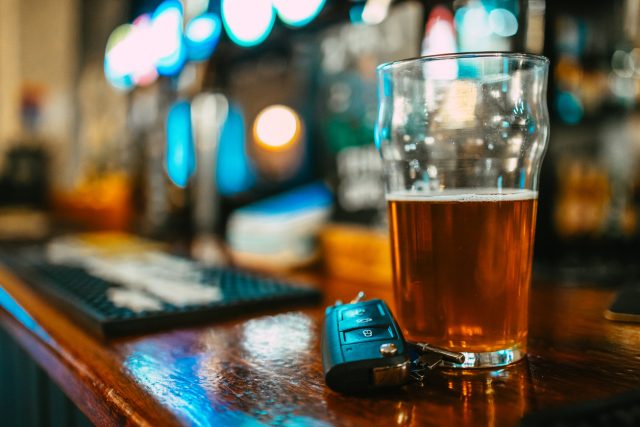
The change, if passed, would lower the legal blood alcohol concentration from 0.08% to 0.05%, a move that would bring it in line with Scotland and most of Europe.
At the heart of this shake-up lies a series of proposed measures: mandatory eye tests for drivers over 70, roadside saliva testing for drug driving, and tougher penalties for uninsured motorists. But the alcohol limit change has arguably caused the loudest stir, particularly among hospitality professionals who fear it could spell trouble for already-fragile post-pandemic revenues.
Scotland’s precedent
When Scotland introduced the 0.05% limit in 2014, police reported an immediate drop in drink-driving offences. Dr Katherine Severi, chief executive of the Institute of Alcohol Studies, said that “research shows you are six times more likely to be involved in a crash that kills someone if your blood alcohol concentration is 80mg/100ml compared to 0mg.”
But John Scruby, a trustee of the Campaign Against Drink Driving and a former traffic officer, insists legal clarity is lacking. He told the BBC, “Ask a member of the public and they’ll probably say the limit is two pints or two units, that’s wrong,” he said. “We have road signs for speed, weight and height restrictions. There’s nowhere that says what the legal limit is.”
The confusion is compounded by the fact that alcohol affects individuals differently. According to Drinkaware UK, it’s impossible to calculate precisely how much alcohol will tip someone over the limit, due to factors such as metabolism, body weight, stress and food intake.
Morning after blind spots and behavioural risks
The public’s grasp of alcohol absorption rates is patchy at best. A June 2025 survey by IAM RoadSmart found that 38% of motorists who drank several alcoholic drinks one evening stopped after 9pm but still drove before 9am the next morning. A further 21% had their final drink after 10pm.
Partner Content




Drinkaware UK estimates alcohol leaves the system at a rate of one unit per hour, meaning someone who stops drinking at 10pm after three large glasses of wine could still be legally impaired well into the morning.
“Drink driving is a killer,” said Nicholas Lyes, director of policy and standards at IAM RoadSmart. “Drivers may be unwittingly getting into their vehicle, unaware that they could be doing so illegally. Even if inside the legal limit, their reaction times will be impaired.”
Hospitality sector braced for the fallout
While public health advocates praise the proposed changes, bar and restaurant operators are increasingly uneasy. Scotland’s on-trade venues saw a noticeable dip in alcohol sales following the 2014 limit change, particularly in rural pubs where patrons tend to rely on cars. The concern is that a lower limit in England and Wales could discourage casual diners from ordering wine with their meals or staying for another round in beer gardens during summer.
Despite growing enthusiasm for zero-alcohol alternatives, 62% of drivers believe they help reduce drink-driving, but the trade-off for licensed venues is far from one-to-one. Alcohol-free beverages often have lower profit margins and aren’t always seen as a viable substitute by consumers seeking a social buzz.
Policing
Edmund King, president of the AA, said the proposals are “much overdue” but warned that enforcement is key. “These new measures will not only modernise our approach to saving lives but also provide renewed momentum in making our roads safer,” he said.
With the consultation set to launch this autumn, this debate has the potential to ripple into every part of British social and economic life, from breakfast meetings in hotels to last orders at the bar.
Related news
Trade bodies urge Welsh Government to rethink glass in DRS


