



How is La Place’s Hors Bordeaux autumn collection shaping up?
On the eve of the first releases, db’s Bordeaux correspondent Colin Hay gives a sense of what to expect from La Place’s hors Bordeaux autumn collection and the wider implications for the global fine wine market.
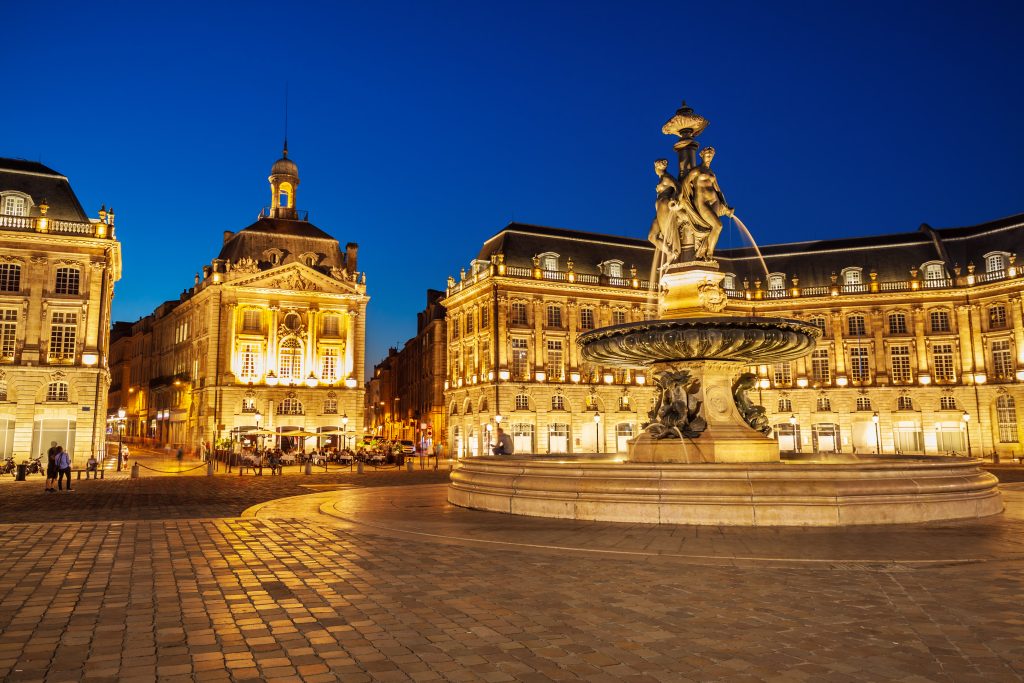
I began my report on La Place’s 2024 autumn collection this time last year with the thought that the September releases have acquired an almost symbolic significance – providing as they do an increasingly key test of fine wine market sentiment.
A year may have passed and we are, once again, on the eve of the first releases. But, whilst so much has changed in the last 12 months, it has only served to make what was true then even more true today. At least in part that is because, following the perceived failure of the Bordeaux 2024 en primeur campaign and in a context that is worryingly reminiscent of earlier phases of deglobalisation, the market remains dormant and market actors have become increasingly anxious.
That anxiety is likely to bring with it a rapt and focussed attention on an autumn campaign that will give important clues as to the genuine state of the fine wine market globally now that the summer recess is over.
Good news; bad news
As ever, there is likely to be good news and bad news. The good news is that I expect the campaign to be judged more of a success than its predecessor a year ago. The bad news is that such a success is unlikely to see a significant increase in the volume of hors Bordeaux wine sold through La Place in the next couple of months in comparison to last year and that a comparative success of such a kind cannot really be taken as an indication that the market has turned a corner – though it certainly won’t do any harm.
Let me explain. Paradoxically perhaps, for the autumn campaign to be judged a success does not require any of the wines that will be released in the course of the next month to sell out quickly in Bordeaux. What it does require, as the properties, their courtiers and the leading négociants all know well, is that the release prices of these wines are accepted by the secondary market, providing confidence to buyers that prices will not fall subsequently. And the key to that is the combination of competitive pricing and the careful management of allocations, with properties prepared to hold back stock and to offer through La Place in the first instance only what they know the négociants can sell.
That is the best way to manage a campaign like this set to take place in a context of systemically depressed demand. If demand turns out to be greater than expected then the négociants will simply deplete the property’s stock more rapidly (and Champagne corks will pop on la place and beyond). If it doesn’t, at least a stable price point for each wine will have been established since the market has not been saturated with stock that it cannot sell. Crucially, potential demand is much more likely to turn into actual transactions with buyers confident that the secondary market price is not set to fall below the release price.
Needless to say, that is not at all what happened for the 2024 Bordeaux en primeur campaign. This is largely because of the sheer volumes involved (much smaller and more easily absorbed in the case of the hors Bordeaux releases) and the need of many Bordeaux properties – reliant on en primeur revenue – to sell a significant quantity of the wine they had produced. In short, the Bordeaux 2024 en primeur campaign saturated the market at a time of low global demand; the key to the success of the autumn releases is not to do the same. But the good news for the autumn releases is that La Place is good at that when given half a chance.
The campaign itself
So, other than the very careful management of allocations, what can we expect from the September releases?
The campaign itself begins in earnest in the first week of September, following the release of Domaine de Baronarques’ wines on the 28 August. It will conclude, or at least pause, around the 26 September, following a flurry of exciting Champagne releases – with a later Riesling week (and a still prospective Loire week) in mid-October. September will also see the release of Yquem’s Ygrec 2023 and Petit Cheval Blanc 2023 as well as historic releases from Latour (the 2012 vintage) and Palmer (the eagerly anticipated 2015).
Reflecting the greater (and still very welcome) degree of coordination between the leading hors Bordeaux courtiers, the modest reforms put in place last year remain. In short, the campaign is now rather more structured than it used to be. Following on from a week of ‘historical releases’ (wines like Opus One, Almaviva, Masseto and Solaia that have been sold through La Place for over a decade), the majority of the new releases will now come to the market by region – Australia, Spain and Italy (Tuscany, Piedmont and Sicily) in the second full week of the campaign (8-12 September), with the US (California and Oregon), France (Burgundy and Champagne), Argentina and Chile to follow. That said, at this stage the programme of releases is still being finalised with the properties.
‘Riesling week’, one of the great successes of last year’s campaign, will see releases, for the second time, from a number of Mosel and Rheingau legends and will take place in mid-October (20-23).
Wines like Giodo and Poggio di Sotto from Brunello di Montalcino will continue to stick to their now well-established December release dates. These I have yet to taste and they do not appear in my otherwise comprehensive set of tasting notes (to be published in the days to come, region-by-region).
Partner Content
Arrivals and departures
Given the hardly propitious conditions for bringing new releases to the market, the pervasively depressed state of market sentiment and the palpable anxiety of almost all local and global market intermediaries, one might anticipate there being rather more departures from la place’s autumn collection this year than arrivals.
But, reinforcing the truism that the quality of one’s global distribution system becomes more not less important as global market conditions deteriorate and demand falls, that is not really the case at all. There are, in fact, plenty of new offerings, though there are just as many projects currently on pause waiting for market conditions to improve. Needless to say there are many more where the property’s desire to come to La Place has simply been refused by the courtiers. And, perhaps most intriguingly, a number of properties that have left la place during the last 18 months are now talking (in private at least) about a potential return. The grass, it seems, is not always greener on the other side of the valley.
The new arrivals are a fascinating bunch, typically whites of exceptional quality and great diversity but also providing genuine value for money and often from regions (notably the Loire) previously absent or under-represented on La Place. If German Riesling was last year’s big thing on La Place (with all of the wines released in La Place’s Octoberfest of Riesling selling out almost immediately), then the new Loire offerings are likely to be this year’s new star attraction.
Wines no longer on la place: Montes Muse; Destiny Bay; Bibi Graetz’s tiny production Balocchi.
Wines changing their release date from September to March: Hermitage La Chapelle and La Chapelle blanc; Favia; Viñedo Chadwick; JFW’s Cardinale.
New additions this September:
Argentina (Mendoza): Zuccardi’s El Camino de las Flores
Australia (Clare Valley) – Jim Barry Florita
Australia (Tasmania) – Arras Grand Vintage
France (Loire): Vincent Delaporte (Sancerre); Domaine Luneau Papin (Muscadet); Laurent Lebrun (Pouilly-Fumé); Sébastien Brunet (Vouvray)
Spain (Ribeira Sacra): Cornamús (F. Algueira)
US (California) – Flowers (Pinot Noir & Chardonnay).
Wines not produced in the vintage: Penfolds Bin 169 (2023); Cloudburst Malbec (2022).
Finally, Bibi Graetz’s white Testamatta and Colore were produced in such small quantities that they will not released through La Place this year.
The stars of the autumn collection
And what of the quality of the offer? With wines now being brought to the market through the intermediation of La Place from, essentially, all corners of the globe and 11 different countries, it is rather difficult to generalise. But having now tasted over 150 wines to be released during the campaign, the following immediately stand out for me as the most notable stars.
- The new and older Italian masters: Masseto, Petrolo’s Galatrona, Solaia, Bibi Graetz’s Colore and Parusso’s Barolo Riserva Bussia Vigna Munie;
- … but also: La Massa’s Giorgio Primo, Orma, Sette, Siepi and Allegrini’s Fieramonte;
- The Californian superstars: Opus One, Maya, Pym Rae and the Vérité trilogy (above all Le Désir);
- … but also: Stag’s Leap S.L.V, Morlet’s Coeur de Vallée and Paul Hobb’s Cristina’s Signature (not for the first time);
- From Spain, Matallana (from Telmo Rodríguez), Tapias (from Marquès de Riscal) and VivaltuS;
- From Chile, Seña, VIK and Clos Apalta;
- From Argentina, Cobos, Cheval des Andes, Zuccardi’s Finca Canal Uco and Adrianna Vineyard’s Mundus Bacillus Terrae;
- From Australia, Cloudburst’s Cabernet Sauvignon and Penfold’s Grange;
- Turning to the whites, it is the new rising stars of the Loire that come first to mind. The wines from Vincent Delaporte, Domaine Luneau Papin, Laurent Lebrun and Sébastien Brunet are all worthy ambassadors for a region that I think we will see a lot more from on la place in the years to come;
- And the entire portfolio of German Riesling is again fabulous and likely to offer superb value for money;
- Beyond Germany and the Loire, I’d single out the spectacular new additions from Zuccardi (El Camino de las Flores) and Algueira’s Cornamús and, of course, the latest edition of the Kracher Kollektion case and Klein Constantia’s Vin de Constance;
- Finally, from Champagne, it is difficult to look past Clos Lanson 2011 and, inevitably perhaps, the trilogy of releases from Philipponnat.
Related news
Garcés Silva: fresh thinking from Leyda
Christie's to sell Burgundies from renowned British collector Ian Mill KC


