



English wine producers ‘optimistic’ for harvest
Thanks to warm weather this year, wine winemakers in the southeast of England have high hopes for the 2025 vintage, drawing parallels to the stellar harvest of 2018.
Following a very warm and sunny spring for the UK, then a hot and dry June, flowering conditions in the southeast of England have been optimal for the region’s winemakers.
One of these is Tinwood Estate, a sparkling wine producer in the Sussex countryside. “2025 is shaping up to be one of the best harvests, in terms of quality, that we have seen for quite some time,” the vineyard’s owner Art Tukker told the drinks business. He hopes to start the Pinot Noir harvest on 18 September, and to end with Chardonnay by the end of the month.
“Yields are just a touch above average, but ripeness and flavour are predicted to be very high this season due to long spells of sunshine we’ve had,” he continued. “Bud break, flowering and now veraison are two weeks ahead of average.”
This year has been “considerably drier” than last year, where the Chichester-based vineyard battled high downy mildew pressure, and cooler weather conditions hampered floral initiation.
Planning for unpredictability
Climate variability was something Tukker always expected when growing grapes in England. “As we only produce single vintage sparkling wines it allows each vintage to express its season,” he explained. “We celebrate the differences rather than trying to hide them – we feel it makes our wines interesting and full of character.
“As sparkling wine producers, we always have plenty of stock in our cellars which can take away some of the pressures of large or small vintages.”
These projections follow recent research from Wine GB that showed that English wine achieved 3% sales growth in 2024.
At another Sussex-based producer, Nyetimber, the outlook is also positive. Although the next few weeks will still prove crucial to determining the quality of the wines at the West Chiltington vineyard, comparisons have been drawn to the record-breaking harvest of 2018, which provided outstanding grape ripeness and yields.
Nyetimber predicts bumper year
Speaking to db, Nyetimber senior winemaker Brad Greatrix said: “The cumulative heat to-date in this season is very similar to 2018, with flowering and veraison having happened at similar times; indicating that the harvest is likely to start earlier than normal.
“That puts time on our side, as it allows us to tailor and optimise the picking timing when the grapes are at their ripest. In a very cool season where picking starts in mid-October, our hands would be more tied, in that leaving grapes any longer would bring more risk than benefit.”
The forecast also makes it likely that 2025 could be a vintage year for Nyetimber, which produces seven styles of sparkling wine, with four of these being vintage-dated. This year, the producer expects to be able to craft a Blanc de Blancs (made from 100% Chardonnay grapes), Tillington Single Vineyard (the first single-vineyard wine to have ever been released in the UK), and 1086 by Nyetimber.
The 1086 by Nyetimber wines were the first prestige cuvées ever to be released in the UK – only made from the best parcels of grapes in years when the quality is at its peak.
The ripple-effect of rain
In terms of quantity, Nyetimber expects this to be modest due to the repercussions of a cold, rainy summer in 2024. However, even a modest harvest is still likely to yield around 1.6m to 1.8m bottles of sparkling wine, nearly triple the number produced in 2015.
“The 2024 conditions have impacted upon the quantity that we can make this year, as vines initiate their crop formation the season prior,” added Greatrix. “They were low on carbohydrates, which we have managed through nutrition and pruning. It’s likely that the converse will be true in 2026 due to the warm spring we experienced this year.”
The Nyetimber 2025 harvest is expected to begin within the next five to six weeks, and will be headed up by Nyetimber’s head winemaker, Cherie Spriggs alongside Greatrix; both of whom have led the winemaking at Nyetimber for almost two decades.
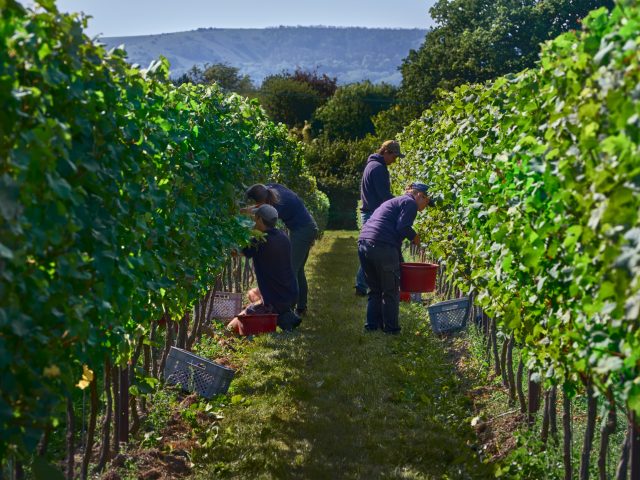
Picking will take between two to three weeks and will involve 400 seasonal pickers, many of whom travel from abroad to take part in the English wine harvest.
‘Quietly optimistic’ for harvest
Geatrix continued: “The reality of producing wine in a cool climate like ours means that the vintage has a strong impact on the style of the wine year-by-year. To mitigate this, back in 2007, we started collecting reserve wines as a way of working with nature to continue achieving our goals for our multi-vintage wines.
Partner Content
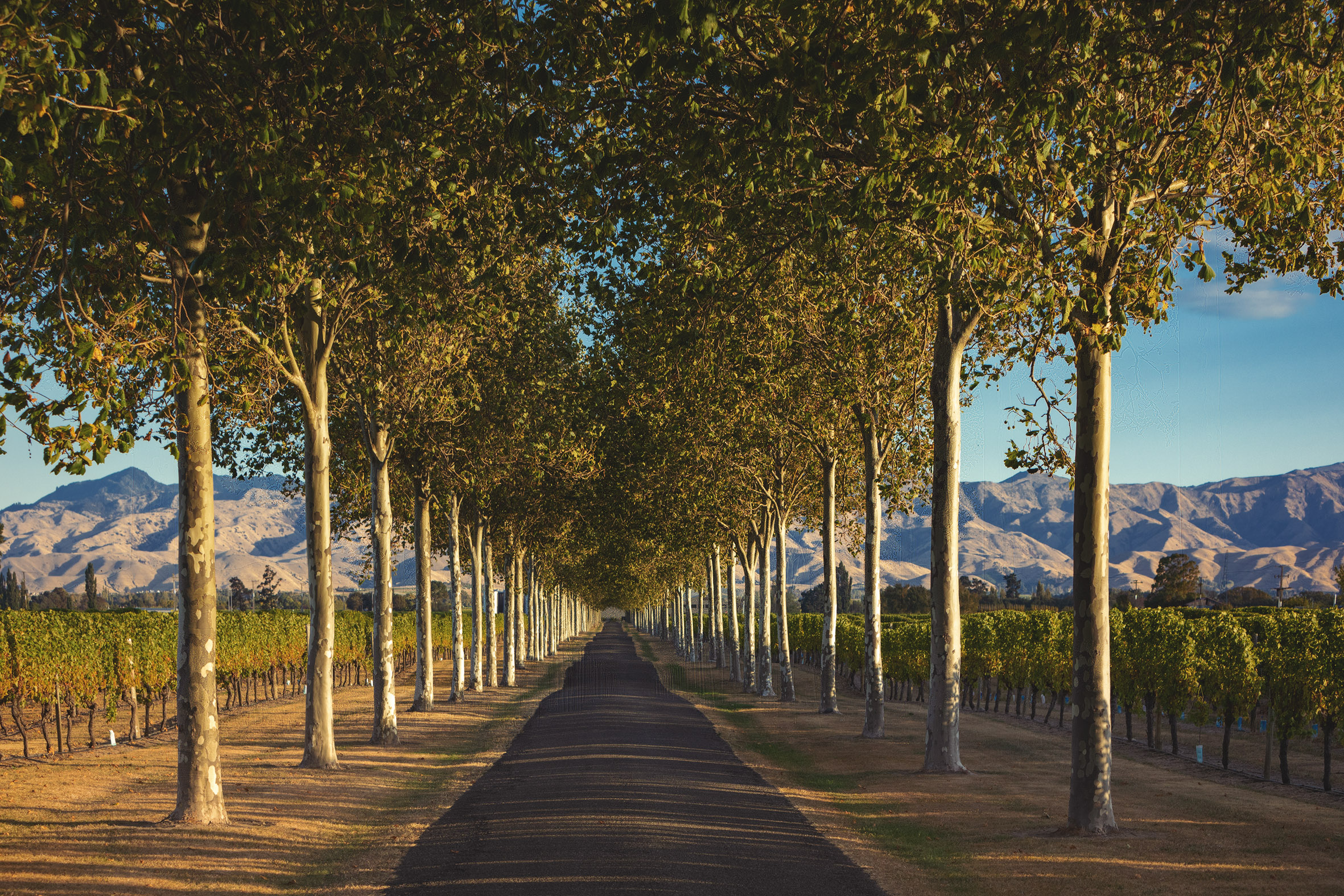

“It also helps that we have 11 vineyards encompassing two soil types – chalk and greensand – which allows a degree of climate mitigation. Our vineyards are all estate-owned which allows us to keep an open mind and a degree of flexibility to adapt our practices as we need in order to achieve our quality standards. Everyone in the vineyards and winery is working with a unified goal of producing the best wines we can.”
At Nyetimber, the focus is always on fine-tuning and adjusting even minor details, if they help nudge quality upwards. In warmer years, this looked like minimising vine stress, said Geatrix. This year, the team has increased soil carbon in the soils to improve water retention, and has used seaweed tonics to encourage root growth.
Cherie Spriggs, head winemaker at Nyetimber, said he was feeling “quietly optimistic” about the upcoming harvest, as long as Mother Nature remained on side. “2025 is definitely looking like it could produce some fantastic vintage wines, so we’re very excited to start exploring each parcel and hopefully discovering some outstanding potential,” he said.
Still versus sparkling
Nyetimber CEO and owner, Eric Heerema, can’t wait to taste what his winemakers will craft. He said: “The approach of the English grape harvest is always a slightly nervous time; however, this year we have more reasons to feel confident in the quality of our grapes.
“At Nyetimber, our priority is always producing the absolute best quality sparkling wines that we can, and it is fantastic when we are blessed with conditions that allow us to make our vintage-dated wines as well.”
Stephen Skelton MW, one of Great Britain’s leading viticultural consultants, agreed that the forecast was “looking very good”. One of the most recent vineyards he has helped with is the 62-ha estate, Domaine Evremond, majority owned by Champagne Taittinger, in Kent.
“Still wine is probably better than sparkling, but sparkling has the benefit of having to be aged, blended and visaged. So there’s a lot with sparkling which you can’t do in still wine. Pinot and Chardonnay, they’re our two biggest varieties by far. They’re going to be good still wines,” he told db.
Cross-country predictions
Skelton, too, put this forecast down to the consecutive early summer heatwaves, with June now the “make-or-break month” for vines.
He added: “The volume will depend on a number of factors, so it’s likely to be above average in terms of yield, but below maximum because of a lack of water. But that will be made up with people who don’t typically get huge crops, and vineyards in the southwest, west and north, who perhaps don’t have the best growing conditions, have had great years.”
Counties on the Welsh border, Worcestershire and Gloucestershire “seem to have done very well” according to Skelton, and he suspects it’s because they have been sheltered by mountains in Wales; “when there is warmth, they pick it up”.
He concluded: “It’s going to be a good year, there’s no doubt about it, and all the fruit growers are saying that, so we’re not alone”
Hope for ‘biggest harvest yet’
And at Black Chalk winery in Hampshire, winemakers are also feeling “incredibly confident” about this year’s vintage, which is expected to be the vineyard’s biggest harvest yet, and hopefully one of its best.
According to the Test Valley vineyard manager Gwil Cooper, the vineyards have stayed almost 100% disease-free all year, with the weather conditions perfect for grape growing.
Cooper shared his reflections from veraison: “The bunches are ripening relatively evenly across their clonal block and with this being an early year – up to three weeks earlier than previous years – we have the privilege of holding them on the vine a bit longer with the canopy being fully intact and clean, meaning our lovely flavours can develop as far as we can push them.”
But, of course, the English climate is notoriously predictable, with hot spells a question of luck. How does the winery prepare for changeable weather conditions? Speaking to db, winemaker Zoë Driver says: “At Black Chalk we only create vintage wines – we don’t hold back any reserve wine. This means every wine we make is a true reflection of the growing season; there is no recipe in our winemaking.
“Variation isn’t a bad thing, in fact it means we are constantly learning and adapting to ensure our vines are happy, instead of following the same method year after year. Long-term sustainability is incredibly important to us, and that has been a huge focus in our vineyards.”
And the story’s the same at Albury Vineyards in Surrey Hills. Speaking to db, owner Nick Wenman says: “It’s been an excellent year so far so we are very optimistic but until the juice is in the tank we have learnt not to get too excited.
Related news
English wine’s golden age faces a tiny villain
English producers show biggest support yet for London Wine Fair
Leonardslee partners with Schenk to boost English wine distribution


