



Climate extremes force change in Lirac’s vineyards
Producers in AOC Lirac are adapting to climate change through organic practices, vineyard innovation and reforestation, while also working to meet rising consumer demand for sustainable wines.
Climate challenges shaping the vineyard
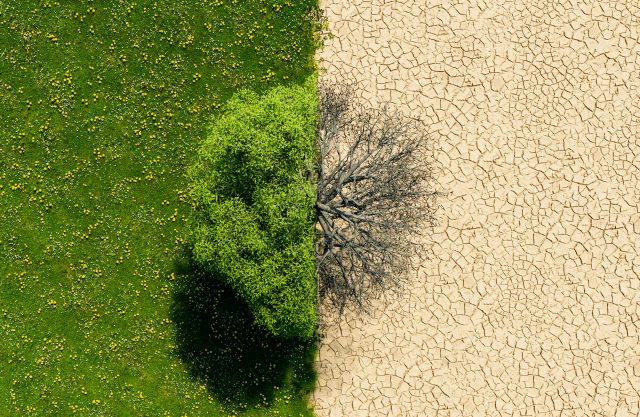
Lirac’s winemakers are increasingly having to contend with the realities of climate change, where unpredictable weather patterns and shifting conditions are shaping the way vines are managed. Producers across the appellation report that extremes of heat, drought, and sudden rainfall are disrupting the natural rhythm of the vineyard, forcing them to adapt their approach almost every year.
“Each year we face extremes – too much water in a very short time or, conversely, too much heat,” said Grégory Sergent, co-president of the AOC Lirac. “These extremes cause disruptions in the vine’s vegetative cycle and consequently affect the balance of the berries.”
Episodes of hail have become more frequent, though less damaging in recent years than in 2020. For Sergent, however, the lack of water remains the most pressing issue. “A working group is considering solutions ranging from simple irrigation to enhancing our ability to protect our green capital, which is an excellent thermal buffer,” he explained. The appellation is also revising its specifications to allow drought-resistant grape varieties and adjusting planting density to suit future conditions.
Maurice Goetschy, vice president of the Lirac Syndicate, pointed to the twin issues of warming and drought, which he described as “two different but related phenomena.” Warming, he noted, accelerates ripening, driving up sugar levels while reducing acidity, while drought not only affects maturity but also threatens the long-term health of vineyards and complicates replanting.
Goetschy added that growers are dealing with “a greater prevalence of extreme weather phenomena (heatwaves, hailstorms, late frosts, springs that are both wet and warm, favouring cryptogamic diseases).” Rising pest pressures, the risk of fire, and damage from wild boars have further complicated vineyard management.
Organics gain ground
Against this backdrop, producers are increasingly looking to organic certification. Nearly 70% of the 2024 harvest carried an environmental label, a development Sergent credits to both consumer expectations and grower ambition. “An awareness that quality can only reside in excellence, the younger generation has something to do with it, but not only,” he said. “Many producers, whether established or new winemakers, have taken this turn towards competitiveness, especially since organic or other certifications are values that consumers increasingly favour.”
Partner Content
Goetschy observed that attitudes have shifted. “Farmers are generally no longer opposed to organic farming in principle. However, they will not convert if they consider the technical difficulty too great or if they do not see a return on the additional costs,” he said. In Lirac, he added, “there have been many examples to show the way to others.”
While government support is available, Sergent noted that the syndicate itself does not provide formal assistance beyond encouragement. The region’s climate, however, lends itself well to organic production. Biodynamics, he said, is practised more selectively, but its study “could address future issues in support of current know-how.”
Planting for the future
Reforestation has also become an important part of Lirac’s environmental strategy. The appellation has planted 5,000 trees, using seeds collected from local flora and propagated by a partner nursery to ensure the species are adapted to the area.
Their role is multifaceted, Sergent explained, from creating shade and biodiversity corridors to regulating vineyard temperatures. “The wooded belt surrounding the AOC helps cool the vineyard’s atmosphere, thus compared to the left bank of the Rhône (Vaucluse) we gain about 0.5 to 1 °C difference, and early in the morning during the summer period, our soils warm up more slowly thanks to our woods.”
He stressed that the initiative is not about short-term metrics but long-term stewardship. “We act more as a duty of preservation and sustainability rather than in a notion of calculation. It starts with educating everyone to change our mindsets so that planting and preserving become natural.”
Connecting with consumers
Sustainability efforts are also being driven by the market. Demand for organic and biodynamic wines is on the rise, according to Sergent. “Today the consumer drinks less wine but consumes better, asking questions about methods, traceability, etc. In conclusion, I would say yes.”
To communicate this commitment, the appellation is placing sustainability at the heart of its messaging. “We aim to create a conservatory of the Lirac AOC grape varieties to preserve our plant genetics but also to better value and highlight our old vines,” Sergent said. The syndicate has also updated its logo to reflect its environmental focus and is using trade shows, wine cellars and social media to raise awareness both in France and abroad.
Related news
Areni Global: 'We have to find a way to make wine consumption safer' for women amid spiking fears
All the medallists from The Global Cabernet Franc Masters 2026


