



Class of 2025: EU approves three new grape varieties
We could soon be hearing much more about Calardis Blanc, Magdeleine Noir and Négret de la Canourgue, as the three varieties have officially been added to the list of authorised grape varieties in the European Union.

Three grape varieties (one white and two red) have been added to the Official Catalogue of species and varieties of plants cultivated in France, which are permitted to be marketed within the EU. These are: Calardis Blanc, Magdeleine Noir, and Négret de la Canourgue.
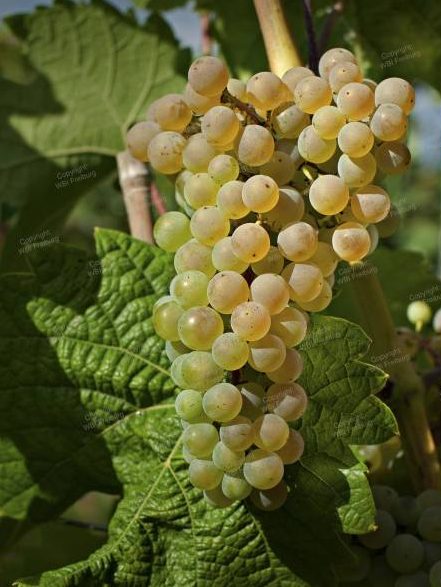
Hybrid white variety Calardis Blanc combines excellent growing qualities with resistances to powdery mildew and downy mildew, as well as black rot. Approved for viticulture in southwest German state Rhineland-Palatinate since 2020, Calardis Blanc can now be legally cultivated across France, where it is likely to produce wines with rich, spicy aromas, exotic fruit flavours and “tangy acidity”. The latter characteristic also makes Calardis Blanc suitable for making sparkling wines.
Magdeleine Noir, or ‘Black Magdeleine’, originated in Brittany but has also been found in Charentes. A parent of Merlot, it is said to be quite complex with good balance.
Négret de la Canourgue, on the other hand, hails from the Tarn Valley and is a vigorous, productive, late-ripening variety, thought to be ideal for the production of rosé due to its lightness of body and pale colour.
Diversification push
The new additions have been approved by the Minister of Agriculture and Food Sovereignty following an application in December 2024 as part of a a broader effort to modernise and diversify wine production within the European Union.
Partner Content

Ahead of the latest additions, 357 grape varieties were authorised to be planted in France for the purpose of wine production and labelling. This number compares to the nearly 700 varieties approved in Italy, 260 in Spain and 343 in Portugal. As of last year, Greece is permitted to plant 206 varieties, while Germany has a more substantial toolbox of 465.
Hybrids on the rise
Even the most prestigious European regions, like Champagne and Bordeaux, that once outlawed hybrids, are now starting to welcome them with open arms.
According to a study published in Nature Reviews Earth and Environment, following decades of research tracking the impact of climate change on grapes, the world is on track to lose 70% of its winemaking regions if the average temperature continues to climb. Therefore, Hybrid grapes such as the newly minted Calardis Blanc are becoming increasingly popular due to the resilience they offer to disease, pests and extreme climatic events such as frost. They are also generally less intensive and less expensive to farm, with many bred to be productive, meaning more volume for less money.
Calardis Blanc is a crossing of Calardis Musque and Seyve Villard 39-639, and was bred by the Julius Kühn Institute in Geilweilerhof, Germany. Calardis Blanc reaches maturity about a week before Riesling and is therefore classified as a medium-late variety, which suits winemakers who need to start harvesting earlier as a result of climate change. So far, around 3.8ha of Calardis Blanc have been grown in Rhineland-Palatinate.
Related news
VIK releases rare vertical of its iconic wines
Canadian MP moves to scrap law banning inter-province wine sales


