



‘B Corp isn’t a badge, it’s a mindset’, says English winery
Despite industry headwinds, more EU wineries are embracing B Corp certification as a means to bolster business, writes L M Archer.

“The wine industry is facing challenges – from climate change to evolving consumer habits,” says Tamara Roberts, CEO of Ridgeview winery in Sussex, England. “Balancing environmental responsibility with business resilience is an ongoing focus.”
Ridgeview earned B Corp certification in 2022, becoming the first winery in England to complete the exacting programme. “What we liked and respected about B Corp was the 360-view of sustainability,” says Roberts. “Looking at it across every area of the business, not just environmental impact.”
Elevated standards
Simply put, B Corps requires for-profit companies to maintain elevated standards of environmental and social performance, accountability, and transparency, while identifying areas of improvement.
Applicant assessments tally efforts in areas of governance, people, community, customers, and environment, requiring a final ’impact score’ of 80 points or above. According to B Corp, the median score for businesses taking the assessment falls at 50.9. The ultimate goal? Eventually earning 100 points.
“From the start, we saw B Corp as an opportunity to embed change across the whole business, and bring the entire team on the journey,” says Roberts. “Having a tangible impact score gives us a clear sense of progress, with the 100-point goal inspiring us to keep pushing forward.” In 2024, Ridgeview received a 92.9 aggregate score.
B Corp certification also produced some unexpected benefits. “B Corp gave us a shared language and purpose,” says Roberts. “It’s helped connect people to something bigger than themselves, beyond just making world-class sparkling wine.”
Rigorous process
But obtaining B Corp certification isn’t for the faint of heart. “The B Corp process was rigorous,” admits Alberto Tasca, eighth-generation CEO and proprietor of Sicily’s Tasca d’Almerita, which achieved B Corp certification in 2023.
“Tasca d’Almerita underwent several internal and external reviews before even qualifying for official B Corp analysis,” he recounts. “The entire process required a significant investment of both time and money.”
Tasca has served as president of SOStain, Sicily’s own pioneering sustainability programme, since 2020. “Sustainability has always been at the heart of everything I do,” says Tasca. who adopted SOStain guidelines across his five island estates after its introduction in 2010.
These include prohibiting chemical herbicides, promoting only eco- friendly products in the vineyard, and light-weighting bottles.
Tasca subsequently applied for B Corp certification “with the dual goal of promoting my winery, and elevating the profile of Sicilian wines globally,” he says. “It was a way to show the world that Sicily is a serious player when it comes to sustainability.”
Natural step forward
For Portugal’s Symington Family Estates, B Corp certification presented “a natural step forward,” says Marta Mendes, senior sustainability manager for the company. Symington has produced Port wine in the Douro Valley for 140 years.
Partner Content
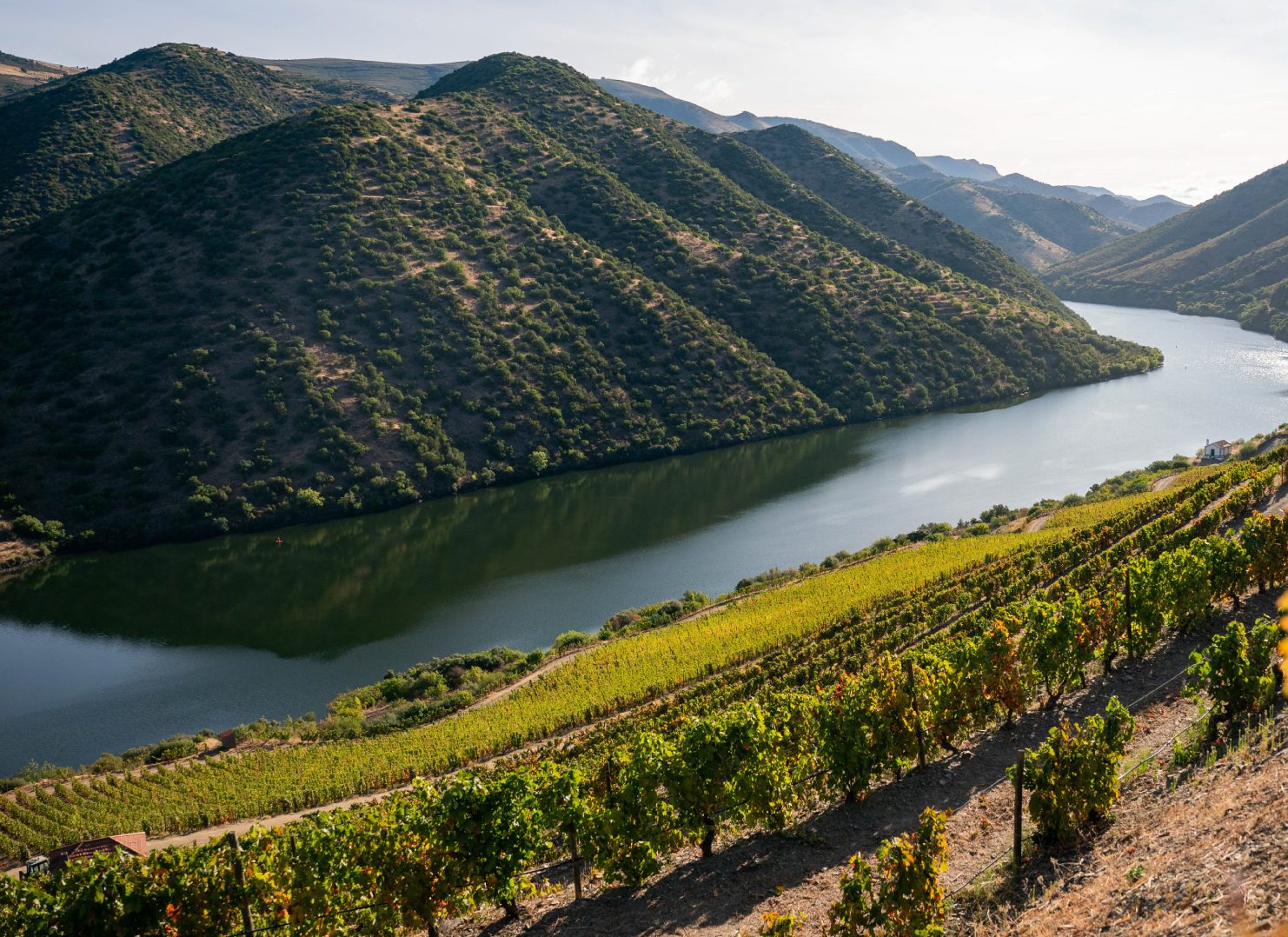
Longtime sustainability champions, Symington achieved Portugal’s first ISO (International Standard for Organisation) 14001 environmental management system certification in 2001, as well as the country’s first Sustainable Winegrowing certification.
Symington also helped establish The Porto Protocol in 2018, a non-profit global wine community that promotes climate change mitigation and sustainability best practices.
“We believe that all wine businesses face similar challenges,” says Mendes. “And that we will be more effective if we work together.”
But the Symington family wanted to do more. In 2019, Symington achieved B Corp certification – the first in Portugal – and re-certified in 2024.
“The self-assessment we undertook validated much of our existing work, while also identifying areas for further progress,” says Mendes. ”It is not a task with an endpoint, but rather, a continuous journey that affirms that we are on the right path.”
Dizzying array
That path proves ambitious. Symington’s dizzying array of environmental projects include terracing preservation, forest regeneration, preserving wildlife sanctuaries, and partnering with local environmental groups like Rewilding Portugal to promote biodiversity.
Symington also collaborates with universities and tech companies on climate change resilience research and development studies, such as the VineScout vineyard monitoring robot, and VISCA (Vineyard Integrated Smart Climate Application) vineyard climate forecasting software.
Additionally, Symington’s newest winery, Quinta do Ataíde, earned Portugal’s first LEED (Leadership in Energy and Environmental Design) Gold certification in 2023, the first winery in Europe to exceed the 60-point threshold.
Equally important is Symington’s continued investment in the local community. “We have also sought to improve local conditions in the communities where we operate, from sourcing goods from nearby small businesses, to donating emergency support vehicles to towns throughout the Douro,” says Mendes.
Ultimately, she says, “We see ourselves as custodians of both a unique product, and a remarkable region.”
A mindset, not a badge
So is B Corp certification worth the time and treasure?
“I truly believe B Corp is the gold standard for sustainability certification, so the effort was worth it,” Tasca contends. “It’s given us the chance to be part of a dynamic, diverse international community, and introduced Tasca d’Almerita to a global audience that truly values purpose-driven brands.”
It’s also garnered the attention of non-certified wineries. “We’re seeing growing interest and curiosity across the industry, which is so encouraging,” says Roberts. “Since our B Corp certification, two other English wineries have followed suit, and several more are exploring the path. It’s brilliant to see that momentum building, and encourage every business to consider joining B Corp if they can.”
“B Corp isn’t a badge – it’s a mindset,” Roberts concludes. “It’s in our vineyard practices, our management decisions, and our daily working life. We believe in building a legacy that goes beyond the bottle, and we’re grateful for the opportunity to lead by example in the wine world and beyond.”
Related news


