



A robotic revolution is transforming the way closures are made
From bionic eyes to robotic inspection lines, James Lawrence discovers how cutting-edge technologies are taking bottle closures to the next level.

Once viewed as a static commodity, wine closures are now at the cutting edge of technological innovation. But in today’s climate, R&D isn’t a luxury – it’s essential to staying competitive.
From cost-saving robotic inspection lines to machine-learning algorithms predicting cork performance, stakeholders are deploying impressive new technologies to solve historic problems.
“At Diam Bouchage, we are leveraging material science extensively to enhance our technical stoppers in terms of sensory neutrality, performance stability and sustainability,” says CEO Eric Feunteun. He continues: “For our new Diam Collection, which combines the traditional technology of Diam stoppers with the aesthetic of natural cork, we have implemented high-precision machining techniques for the first time in the cork industry. Material science is also central to our offerings in terms of oxygen permeability, which we plan to expand by the end of the year.”
Precision engineering
Indeed, precision engineering is increasingly taking centre-stage in the production line. Portugal-based MA Silva, for example, has pioneered a flagship innovation, the Bionic Eye, which uses ultra-sensitive imaging with AI to inspect every cork individually. As a result, defective stoppers are eliminated with 99.5% accuracy, helping to ensure batch uniformity while reducing waste.
Meanwhile, the company’s Onebyone gas-phase spectroscopy system is described as “a fully automated platform that inspects corks for potential TCA contamination” at the individual level.
“MA Silva uses all the cutting-edge technologies available in the market to elevate quality performance. If they do not exist, we try to develop our own,” explains marketing manager Nuno Silva. “From pioneering new algorithms and computational methods to developing eco-conscious products such as our Neoselect offering, we are reshaping the boundaries of what is possible in modern winemaking. These achievements not only elevate product quality, but also align with the evolving expectations of global consumers.”
Predictive models
However, MA Silva’s investment in innovation isn’t confined to production. A longstanding academic partnership with the University of Aveiro led to a peer-reviewed study exploring how different closure systems affect wine’s sensory and chemical evolution over time. “These achievements were supported by advanced chromatographic equipment and statistical tools – the base for the construction of predictive models,” observes Silva.
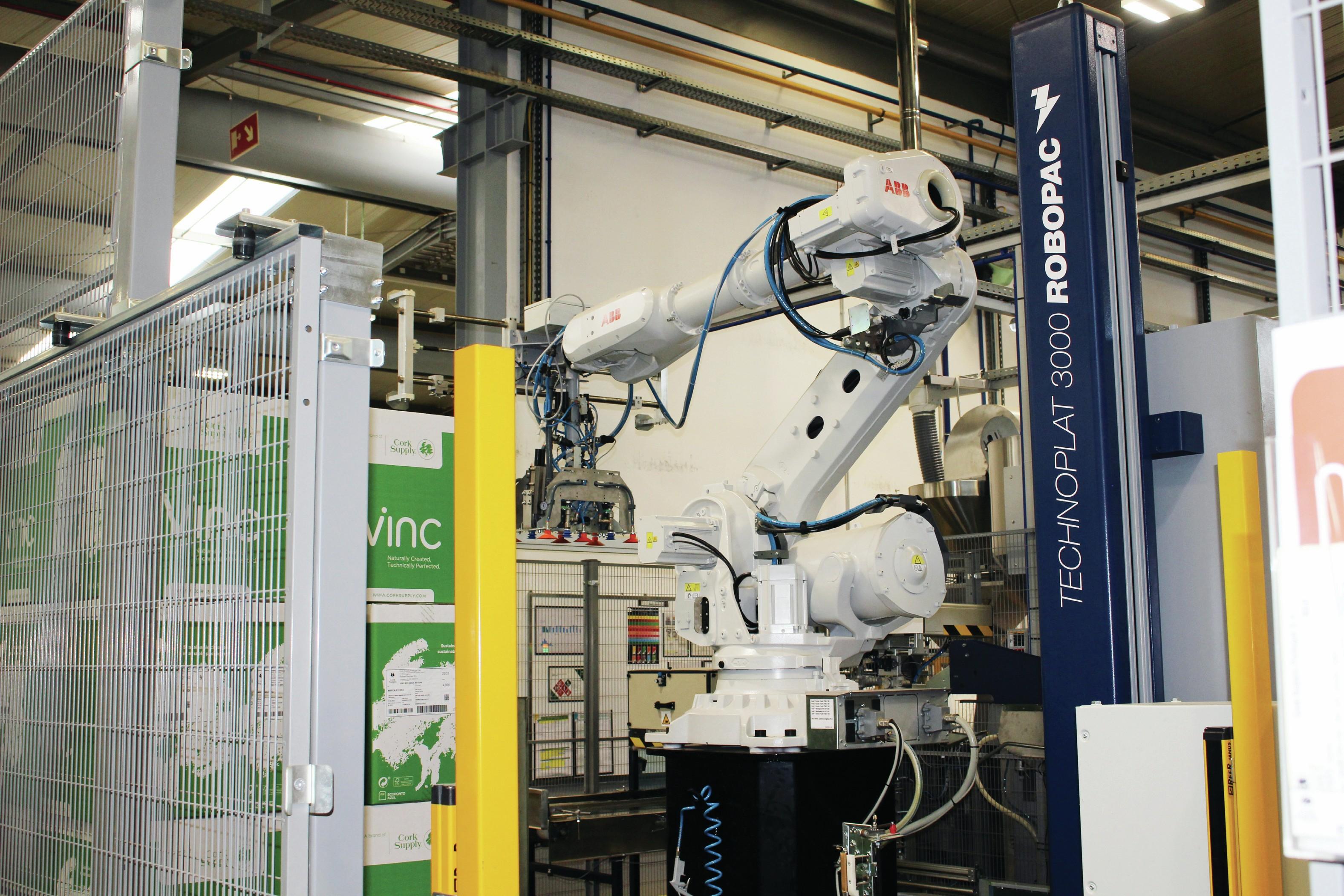
Automatic for the people: Cork Supply uses robots for physically demanding tasks
Meanwhile, the development of new closure systems, buoyed by significant R&D investment, continues to reshape the wine industry. Also in Portugal, Cork Supply has introduced the Legacy cork using newly patented technology. According to the firm: “The closure harnesses AI and electromagnetic imaging to analyse the internal structure of each cork for consistency, predicting oxygen ingress rate.”
Legendary Portuguese winemaker Dirk Niepoort has already sealed his Vinha do Carril 2023 with the new closure. He is likely to be the first of many.
“The Legacy is the perfect choice for winemakers who want to guarantee their wines can consistently be enjoyed exactly as they intended – now and in the decades to come,” says Jochen Michalski, founder and president of Cork Supply.
Phenolic profile
Yet advancements in the management of oxygen transmission rates (OTR) – and therefore a wine’s ageing potential – are not limited to cork manufacturers. New research by closure firms reveals that a wine’s phenolic profile interacts uniquely with each closure type, advancing the notion that chemical composition should guide the choice of seal. The findings of the report, screwcap companies hope, will help to shift attitudes to screwcaps among producers of fine wine.
“At Domaine Bousquet, the decision to bottle under screwcap or cork depends on the wine’s target audience, its intended drinking window and market preferences,” reports the Argentinian winery’s co-founder, Anne Bousquet. Ricardo Baettig, chief winemaker at Chilean producer Viña Morandé, explains: “Wines designed for early consumption, where preserving freshness and vibrant fruit expression is a priority, are typically bottled under screwcap. However, many importers still prefer corks for higher-priced wines, because they align with the expectations of their clientele.
Entrenched perceptions
“Resistance to premium and super-premium labels bottled under screwcap is driven largely by factors such as aesthetics, tradition and the longstanding association of cork with the ageing potential of fine wine. Given these entrenched perceptions, I don’t anticipate a significant shift toward screwcaps for higher-priced wines in the foreseeable future.”
But this may be an outdated view. Both Guala and Amcor have released closures that offer different oxygen transmission rates – such as the Stelvin Inside range – giving winemakers control over micro-oxygenation. Indeed, key stakeholders are leveraging R&D to deliver major advancements in the reduction of carbon footprint, premium branding and performance in sparkling wine; Cap Classique producer Graham Beck has been experimenting with alternatives to the classic stopper.
In 2025, cork’s fiercest rival is marketing more precise levels of control and differentiation than ever – while claiming that this can be done without sacrificing convenience or quality. It’s a seductive proposition for progressive wineries – and for consumers.
Robotics revolution
Today, closure firms are under immense pressure to increase efficiency and control costs in light of rising materials prices and logistical challenges. Energy costs in particular have surged in recent years, putting strain on production-intensive processes such as cork harvesting.
There is also a growing expectation of sustainability, traceability and customisation – all of which raise costs.
However, by harnessing technological innovation – particularly automation and robotics – firms are increasingly able to boost efficiency and reduce overheads. “Automation and robotics play a vital role in enhancing efficiency, safety and quality control across our production facilities,” says Rodrigo Estelita, communications director at Amorim. “For example, in the cork punching stage, robotic arms transport cork strips into punching machines, replacing repetitive and ergonomically challenging tasks previously performed by humans.
“Robots also support quality control by using vision systems to inspect corks for consistency and defects. Operating within enclosed environments, these robots minimise human exposure to potential hazards.
“In our cork washing processes, automation ensures precise dosing and timing of cleaning agents, similar to a household laundry system. This not only improves consistency, but also enhances safety by reducing human interaction with machinery and chemicals.”
According to Jochen Michalski, Cork Supply has installed a packaging robot at its cork finishing unit in Portugal. The robot was designed to carry out repetitive and physically demanding tasks, such as smoothing bags, closing boxes, applying labels and moving pallets.
Michalski says: “By automating these operations, we were able to reduce the physical strain on employees and minimise the risk of injuries associated with repetitive movements and heavy lifting. Additionally, the robot’s ability to pack more boxes per pallet led to an annual reduction of approximately 1,500 pallets, contributing to more efficient logistics and a lower environmental impact from transportation.”
Transportation robot
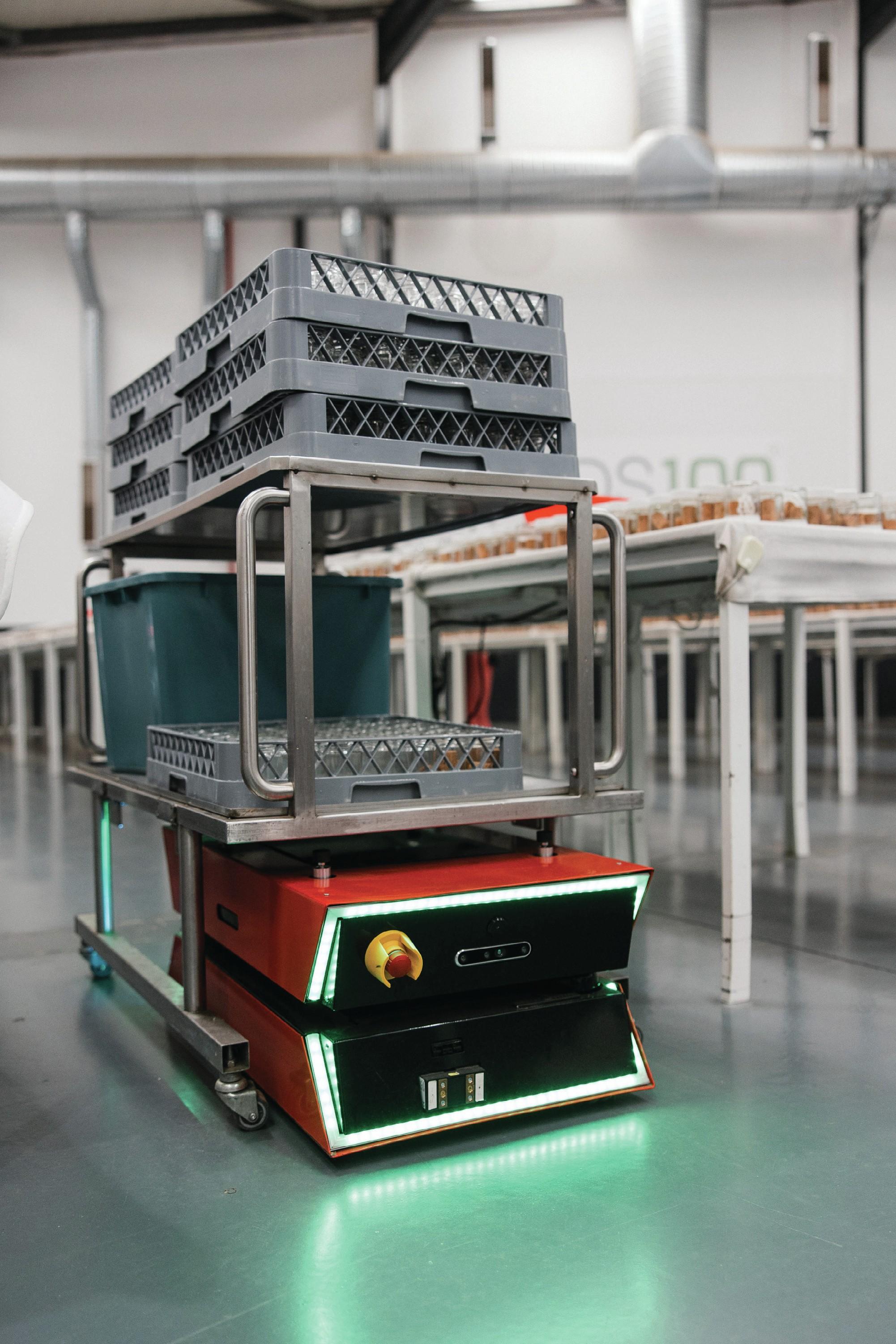
The firm has also introduced a transportation robot or Automated Guided Vehicle (AGV), at its natural cork unit. “This robot was implemented in the DS100 process, a rigorous quality control procedure that involves sensorial analysis of approximately 14.5 million cork stoppers per year. The AGV automates the transport of empty and rejected bottles from inspection tables to the washing area and then to the sensorial analysis section,” Michalski explains.
By replacing these repetitive tasks with automation, Cork Supply was able to reallocate employee time to “more demanding and value-added responsibilities, with an estimated savings of 222 hours annually in non-value-added transportation”.
Data-driven manufacturing platforms in both the screwcap and cork industries are also gaining traction, allowing firms to monitor machine performance in real time. As a result, energy usage and production levels can be adjusted to a level of precision that would have been unthinkable in the 20th century.
These innovations naturally come with high upfront costs but, for many companies, the gains in efficiency and quality assurance make the expenditure worthwhile – if not essential.
Artificial intelligence
Artificial intelligence and machine learning are also playing an increasingly strategic role in the processing plants and boardrooms of closure manufacturers. Machine-learning algorithms, for example, have proven to be incredibly adept at identifying defects in both natural and composite cork, as well as screwcap, reducing waste and carbon footprint. Moreover, as the technology becomes more accessible (and affordable), its usage is shifting from experimental to essential as companies fight to stay ahead of the curve.
“We actively leverage AI and machine learning to optimise cork selection and quality,” says Amorim’s Estelita. “Our sorting machines analyse thousands of images of cork bodies and heads to detect imperfections and classify stoppers based on visual criteria. This ensures optimal sealing performance, mechanical integrity and aesthetic appeal.

“We are expanding AI applications to upstream processes, including raw material assessment and predictive maintenance, further enhancing efficiency and product quality.”
Cork Supply, meanwhile, is leveraging AI to fine-tune levels of oxygen ingress, “systematically performing oxygen transfer measurements” in its internal laboratories. Michalski explains: “These measurements play a crucial role in three key areas: keeping our AI models well-trained and accurate as continuous data collection ensures our predictive models remain reliable; exploring further oxygen transfer rate (OTR) product segmentation; and evaluating and optimising the performance of surface treatments, ensuring consistent product quality and performance characteristics.”
A new high
Deploying advanced AI-powered visual inspection systems, Cork Supply is raising the standard of defect detection to a new high. “These new machines use high-resolution imaging, combined with machine-learning algorithms trained on thousands of defect patterns. The AI continuously learns and improves its classification accuracy, enabling the system to detect complex or marginal defects that were previously only identifiable by the trained human eye,” says Michalski.
“The combination of AI technology and internal expertise allows us to consistently deliver superior-quality cork products designed to meet the demanding standards of the wine industry.”
The benefits of the AI revolution, however, extend beyond quality control and product performance. Companies are also using high-tech innovation in the fields of marketing, communicating the technical and environmental benefits of closure systems to winemakers, distributors and consumers.
“We have developed an app that can help both our customers and our commercial teams,” says Nuno Silva. “The goal is to help our stakeholders be more prepared and knowledgeable about cork stoppers, our technologies and the ecosystem of MA Silva’s cork industry.”
Man and machine: companies are striking a balance between people and technology
“Deeply human experience”
Yet Amorim’s Estelita is wary of over-emphasising the application of technology at the expense of human interaction and communal learning. “We do use a range of digital tools – webinars, social media, podcasts and influencer collaborations – to communicate the technical and environmental benefits of our closures,” he says. But he adds that “wine remains a deeply human and sensory experience, and cork embodies the essence of nature”.
To that end, Amorim relies heavily on personal workshops, face-to-face seminars, attending trade shows and welcoming personalised visits to its facilities. Estelita likely speaks for the majority, recognising the obvious advantages of technological innovation while expressing caution over excessive reliance on it.
Over the past five years, a profound change has taken place in the global wine industry: consumption is falling, vineyards are being grubbed up and non-alcoholic alternatives are on the path towards strong market positioning – or perhaps even hegemony in the future. “These changes,” observes Nuno Silva, “signal the arrival of a new era – one that demands agility, foresight and purpose.”
He continues: “As a forward-thinking institution, we are committed to aligning ourselves with these emerging paradigms. That means preparing with stronger talent, more reliable resources, smarter technologies and a deepened dedication to environmental responsibility. The future of wine is being shaped today, and we are proud to be at the forefront of that transformation.”
A new world
For Silva, the future of the wine industry is now closely linked to the technological revolution – the integration of AI across various stages of production, allied to the advancement of operational efficiency. For other stakeholders, including Amorim, the future of wine closures will be shaped not only by technological innovation, but by “a deeper understanding of the cork stopper as a true oenological tool”.
According to Estelita: “At Amorim, we are focused on advancing the performance of cork closures to support the evolving needs of winemakers and the growing expectations of consumers. Cork is no longer seen as a passive seal; it is an active component in the wine’s ageing process.”
Closure systems, hitherto taken for granted, have become a dynamic interface between tradition and technology. By investing in AI, robotics and material science, closure manufacturers have become vital agents in the wine industry’s fight for survival.
Related news
Guala Closures expands Mexican manufacturing


