



Why Jeremy Clarkson’s ‘banned’ beer ad is marketing genius
The former Top Gear host may not have fooled the regulators, but he’s certainly captured the public’s imagination. Jeremy Clarkson’s so-called banned Hawkstone lager ad is a masterstroke in guerrilla marketing, whether or not it was ever really ‘banned’.
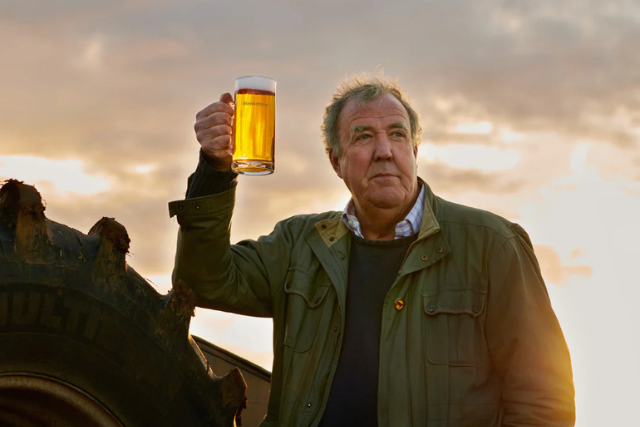
In a move more strategic than it first appears, Jeremy Clarkson has managed to stir up a media frenzy with claims that his first TV advert for Hawkstone lager was banned by regulators. Only, it wasn’t.
Despite his colourful lament that the “fun police in their beige offices” had stifled his magnum opus, an ad featuring a choir of 34 farmers belting “F*** me, it’s good” to the tune of Delibes’ Flower Duet, the Advertising Standards Authority and Clearcast have both stated that they never received the ad in the first place.
As revealed by The Grocer, neither the ASA, Clearcast, nor Radiocentre had seen the advert or assessed it against any broadcasting codes. In other words, no one banned it because no one was ever officially asked to approve it.
So what’s going on here? Simple. It’s classic Clarkson: provocative, performative and precisely targeted.
More effective than prime-time placement
To be clear, the ad wasn’t banned because it was never officially submitted. But by proclaiming that it was, Clarkson has engineered the kind of attention that even a six-figure TV spot couldn’t buy.
Within 24 hours of his Instagram post calling out the mythical regulators, the ad racked up over half a million views. That’s more than many traditional campaigns manage in a month — and without paying a penny in broadcast fees.
It’s marketing by controversy – and no one does it quite like Clarkson. Every August, he reminds students that he got two Cs and a U at A Level – and still ended up with a farm, a hit TV series and now a bestselling lager. He’s made a career of failing upwards, and this “banned” ad is simply the latest lesson in how to turn rejection into reach.
Culture loves a villain
Clarkson has spent the better part of two decades cultivating his anti-establishment persona. So when the so-called “fun police” come knocking, it only fuels the narrative. Whether it’s West Oxfordshire District Council shutting down his restaurant plans or the vague spectre of unnamed ad regulators, the conflict plays perfectly to the crowd.
Partner Content
This ‘banning’ plays straight into that script – the misunderstood farmer, just trying to sell his lovingly made lager, silenced by bureaucrats who wouldn’t know a decent pint if it was poured for them.
The art of the viral backlash
Much like the bottle-fermenting Hawkstone cider that once exploded on shelves (literally), Clarkson has proven that chaos can convert to clicks – and clicks to sales. His ability to spin every misstep into a headline is a lesson in modern beverage branding.
Far from being a marketing mishap, the ‘ban’ is a textbook example of event-driven campaigning: manufacture a problem, rile the audience, then sell the solution.
Or in this case, a 4.8% ABV lager with a thick head and a thicker accent.
As reported by db, even Hawkstone’s product recalls, whether overfermentation or undeclared allergens, generated more online interest than many product launches, thanks to Clarkson’s unapologetic and often hilarious approach to damage control. It’s proof that when the story’s good enough, the message spreads.
Manufactured outrage
There’s also something oddly honest about the Hawkstone approach. Unlike the overly polished influencer campaigns hawking blush-toned rosé or small-batch gin, Clarkson’s effort is as rustic as the Cotswold clay he tills.
It’s British beer, made with British barley, flogged by a man who genuinely cares, even if he cares with all the subtlety of a tractor through a vegetable patch. There’s authenticity in his irreverence, and the audience, perhaps jaded by corporate polish, sees it.
It also helps that Hawkstone is one of the UK’s fastest-growing drinks brands. With 142.88% sales growth over three years and nearly £8 million in turnover, it may talk like an underdog, but it sells like a leader.
Related news
Jeremy Clarkson faces legal claim over alleged car park fall at The Farmer’s Dog
Jeremy Clarkson slams ‘fraud epidemic’ after £50k scam at his pub


