



Wales pushes ahead with glass-inclusive deposit scheme
Wales is accelerating plans to roll out its own Deposit Return Scheme (DRS) by October 2027, diverging from the rest of the UK with the inclusion of glass and a focus on reuse. While the Welsh Government says this is essential to tackling litter and improving circularity, industry groups warn of rising complexity and operational headaches.
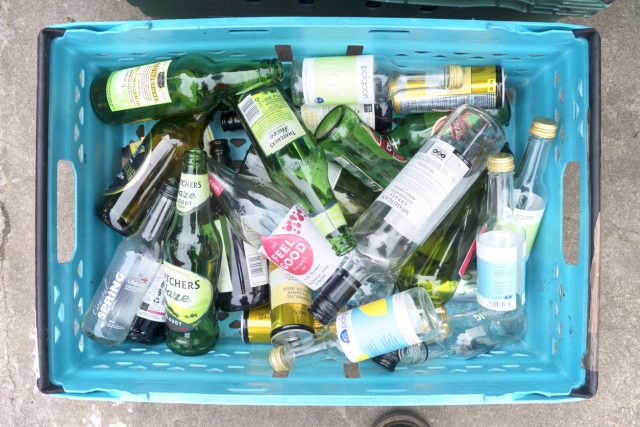
With a reputation as a UK frontrunner in recycling, Wales is preparing to go a step further by designing a DRS that includes glass and builds in reuse from the outset. Deputy First Minister Huw Irranca-Davies says the scheme will build on “the world’s best” and reflects “positive and constructive collaboration with industry”.
While remaining broadly aligned with the rest of the UK on materials like plastic, aluminium and steel, the Welsh scheme stands apart in scope and ambition. “Reuse is not just an ambition — it is essential to delivering further progress,” said Irranca-Davies, whose portfolio includes climate change and rural affairs.
As previously reported by db, the UK’s DRS has faced repeated delays and political turbulence. Wales had initially been part of the joint UK vision but withdrew from the common approach in late 2024, citing the UK Government’s decision to exclude glass as a core concern.
According to Keep Wales Tidy, drinks-related litter was found on 43.6% of Welsh streets in 2023–24, with glass bottles more than doubling in presence over four years. Broken glass in parks, playgrounds and coastal areas has become an increasing safety concern, lending urgency to the Government’s insistence on keeping glass in scope.
Glass sparks division in the DRS debate
Glass, however, remains the major point of contention. Across England, Scotland and Northern Ireland, the UK Government-backed scheme — due to launch in October 2027 — excludes glass entirely, focusing instead on plastic, aluminium and steel. The scheme will be overseen by the newly appointed UK Deposit Management Organisation (UK DMO), a non-profit industry body backed by the likes of Tesco, Coca-Cola, Heineken and Co-op.
The UK DMO has been tasked with running what is being described as a £1.13 billion infrastructure programme, one expected to create over 4,000 jobs across the UK. But Wales’ insistence on diverging from the agreed format has raised eyebrows, particularly as the Welsh Government rejected an offer from the DMO to run a reuse trial under a common UK umbrella.
James Lowman, chief executive of the Association of Convenience Stores (ACS), said the move had introduced “unnecessary operational complexity”. “This becomes exponentially more challenging when there are fundamentally different approaches in different parts of the UK,” he warned.
Industry warns of fragmentation and cost
The decision to include glass on a reuse basis — meaning bottles are refilled rather than recycled — has drawn criticism from several corners of the drinks industry. While the Welsh Government sees this as essential to cutting waste and boosting environmental performance, groups like the ACS argue that it will add cost and complexity, particularly for retailers and producers straddling the Welsh and wider UK markets.
Partner Content



Glass is already one of the most recycled packaging materials in the UK, with around 75% of all glass recycled, according to British Glass. The fear is that requiring different labelling or handling for Welsh-bound products will fracture supply chains and burden small producers with new logistical hurdles.
Retailers in Wales, under the proposed model, would need to collect glass separately and keep it intact for refill, a step away from standard crushing and recycling processes elsewhere. “There are no answers available yet” on how this will work in practice, said Lowman.
A pragmatic push for alignment
Despite the divergence on glass, the Welsh Government insists it is committed to interoperability. Irranca-Davies has proposed accelerating Wales’ implementation timetable to match the October 2027 start date elsewhere in the UK. The aim, he says, is to minimise disruption and avoid duplicative systems.
To address concerns over fraud and inconsistent labelling, the Welsh scheme will incorporate a phased approach and pragmatic labelling rules, allowing businesses time to adapt. Exemptions for low-volume products are also on the table, recognising the strain that added regulation could place on SMEs.
Irranca-Davies emphasised that the break from the UK-wide model was not of Wales’ making. The divergence stems, he says, from the previous UK Government’s decision to exclude glass — a decision he believes undermines the environmental potential of a truly circular DRS.
A £3.8bn opportunity or a costly misstep?
Beyond its environmental aspirations, the Welsh scheme is also framed as an economic opportunity. Independent analysis suggests a shift to a circular economy could unlock £3.8 billion in savings for Wales, while creating jobs, driving innovation and building resilience in the supply chain.
The Welsh Government’s focus on reuse is pitched not just as a green move but as a future-proofing strategy. “We will continue to play an important role in helping to shape a more coherent and sustainable approach for the whole UK,” said Irranca-Davies.
Whether this coherence can be achieved remains an open question. With less than two and a half years until rollout, the UK now faces the challenge of coordinating multiple schemes with diverging rules and ambitions, with glass, once again, proving both the clearest and most brittle fault line.
Related news
Wales becomes first nation to adopt digital deposit return scheme
Deposit return scheme body gets the green light
England moves forward with Deposit Return Scheme, set for October 2027 rollout


