



The highs and lows of the US craft beer industry
US craft breweries have suffered closures and declines, yet nearly half of brewers insist they’re seeing growth. Jessica Mason reports.
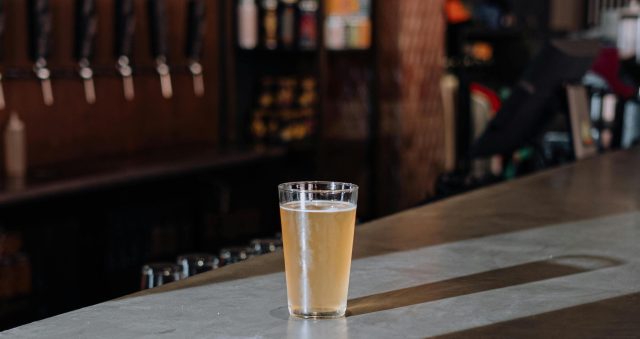
Insights from The Brewers Association’s midyear survey have given the most up-to-date data on the state of the craft beer sector in America. But some of it is quite revealing.
The findings offer a broad perspective on the state of the craft beer industry and, although the research shows that closings are continuing to outpace openings, there are green shoots emerging, even whilst geopolitical tensions between America and Canada are starting to shake up the sector.
Beer is an economic lifeline for millions across America, in fact, as a whole, the US beer industry generates US$471 billion in economic activity annually, according to research from the Beer Institute and the National Beer Wholesalers Association (NBWA). In Ohio alone, craft beer brought in US$1.29 billion in 2024 and is forecast to grow further.
The number of craft breweries operating in June 2025 (9,269) was down 1% from the number operating in June 2024 (9,352). By business type, the smaller distribution-focused microbreweries experienced the largest drop-off at -3%, followed by taprooms at -1%, and brewpubs and regional breweries with no change year-over-year.
According to the results, this decline in the number of breweries is accompanied by a somewhat larger drop in volume produced as well. None of the news looks good, until a closer examination of the scene. For instance, increased demand for premium and innovative flavoured beer have also been forecast to drive sales for US breweries.
Although the Brewers Association estimates craft volume will be down 5% year-over-year compared to 2024, there are a few notable elements of interest. Despite this forecast, the sample in the survey still outperformed this estimate, even though the result represents an adjustment for response bias and triangulation with other supporting data. Essentially, people are feeling more optimistic, especially among the smaller brewery tap venue owners.
Unlike a year ago when there wasn’t much variation between business models, the data has revealed how on-site models in 2025 — such as taprooms and brewpubs — have slightly outperformed distribution models — such as microbreweries and regionals — by 1-2% in the first half of 2025.
According to the BA, there were negligible changes in channel share, without much motion among distributed draught, distributed package, or onsite sales.
Taking a closer look, Scan data tracks with Brewers Association survey results, with Nielsen IQ showing BA-defined craft down 4.1% in volume for the first half of 2025, only marginally better than beer overall (-4.2%).
The data also shows retailer and wholesaler rationalisation, with increased competition for limited shelf space, and consumers spending less all being contributing factors to craft contraction in the off-trade where the majority of beer is sold stateside.
Partner Content


This has also been reflected in the Beer Purchasers Index where craft has remained in contraction territory for more than three consecutive years.
The BA has outlined how this decline in beer volume occurs in a difficult moment across the beverage alcohol universe.
For instance, looking at wine and spirits wholesale in the US using SipSource data, it shows how spirits volume was down 4.2% over the 12 months ending May 2025, while wine was down 7.7% for the same period.
The results of this midyear survey overall have shown that, for many breweries, the challenges they’ve faced over the past few years have either continued or accelerated.
Still, amid this, some breweries that found marginal growth in 2024 have still experienced slight decreases in the first six months of 2025 too.
There are, however, still plenty of positive signs in the industry. Wildly, 49% of survey respondents reported growth while 47% reported a decline in production (while the rest stayed flat).
Added to this, many of the growth stories came from some of the country’s smallest taprooms and brewpubs. That two-point spread becomes seven points (50% growth, 43% decline) for breweries producing fewer than 1,000 barrels annually.
This means that, although taprooms and brewpubs make up just a small part of the overall volume in the industry (15% in 2024), they still represent an outsized 73% of craft businesses. This makes them significant and it teaches us something about what is working well within the sector too.
On the consumer side, there are, for instance, more craft beer drinkers than ever before. As per the 2024 data from Scarborough, 9.8% of legal drinking age adults said that they had consumed craft beer in the past 30 days, a figure that was up from 6.6% in 2013.
Notably, frequency of consumption has been on the decline, but the reach of craft beer in general has in all other terms “never been greater,” the association has observed.
It is also worth mentioning that many US craft brewers have expanded beyond beer production, the volume of which is not captured in the midyear survey. Examples of this ability to flex between drink styles as well as adapt the space for all kinds of consumers from families through to groups of friends, craft breweries have shown they have many ways to stay relevant in a sector that is fraught with challenges. It has, some might state, become a case of survival instinct.
As such, this versatility and ability to swap some of the beer production for other products while the category wanes and finds its footing has essentially been a way for brewers to diversify their revenue and stay afloat.
Related news
Siren’s International Women's Day beer goes on sale next week
Beer sector in India invests in Uttar Pradesh
Molson Coors to close Sharp’s, Brewery putting 50 jobs at risk


