



Sogevinus sheds ‘corporate’ identity in Kopke Group rebrand
Sogevinus has historically had perhaps the lowest profile of the Port industry’s top five operators – but the company’s rebirth as Kopke Group, alongside a fresh focus on tourism, aims to change all that. Richard Woodard reports
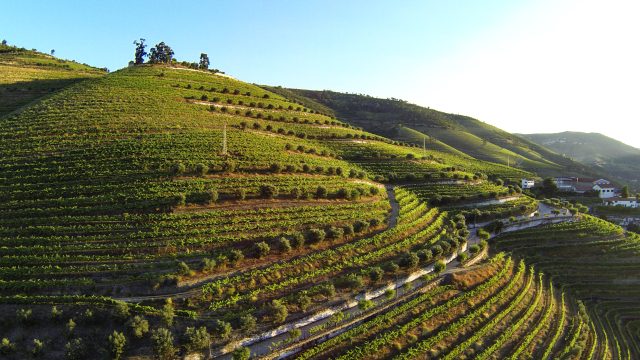
It’s tempting to think of Sogevinus – rebranded this year as Kopke Group – as a newcomer to the Port trade, given that trade’s centuries-long heritage. But it’s more than 20 years since Galician bank Caixanova acquired the Cálem Port house in 2003, before buying Kopke and Barros three years later. The business now spans Port and unfortified Douro wines, including among its brands Barros, Burmester, Cálem, Kopke, Quinta da Boavista, São Luiz and Velhotes.
Nonetheless, Kopke Group remains perhaps the least well-known of the top five businesses that account for roughly four-fifths of today’s global Port trade, ranking behind Porto Cruz, Symington Family Estates, Sogrape and The Fladgate Partnership in volume terms – and that may be part of the rationale behind the name change.
The group is now ultimately owned by Banesco International, founded by Spanish-Venezuelan billionaire banker Juan Carlos Escotet, who is also the majority shareholder of the Spanish Abanca Corporación Bancaria business that absorbed Caixanova, along with other local banking assets.
Kopke Group’s revamped logo – eight bunches of grapes clustered to form a star, each representing both a stage in winemaking and a core value of the group – is accompanied by the tagline “By Escotet Family Estates”, itself a reflection of an attitude shift on the part of the owner: “I will be honest: at first, we came as investors, with a financial rationale,” Juan Carlos Escotet admits.
And now? He professes that the family “fell in love”, and was “captivated” by the Douro, the company and its wines. Escotet adds: “Escotet Family Estates is more than a name – it’s a promise, a commitment to the heritage, sustainability and vision of the Kopke Group.”
Reviving the Kopke name
The new business takes its name from its most historic brand – indeed, the oldest name in Port, Kopke having been founded in 1638 – and is a recognition of the shortcomings of the Sogevinus identity, as Kopke Group CEO Pedro Braga readily admits. “It was widely agreed that the name Sogevinus itself did not have a rich meaning,” he tells db.
“In fact, many people did not know it; it is difficult to pronounce, both in Portugal and our international markets, and even among industry members. Sogevinus was a cold, corporate name, and, as a brand, it was not seen as valuable, while the brands within the group were.”
The timing of the announcement in late May this year was no coincidence, marking the official opening of the new Tivoli Kopke Hotel in Vila Nova de Gaia, a luxury venture created in collaboration with Tivoli Hotels & Resorts that integrates Kopke’s historic cellars and promises its guests “breathtaking” views of Porto across the Douro.
Partner Content


As with other Port businesses – including, most notably, The Fladgate Partnership, owner of the nearby Yeatman Hotel – tourism has become increasingly important to Kopke Group in recent years. The company opened The Vine House, an 11-bedroom boutique hotel, at its Quinta do São Luiz estate, overlooking the Douro downstream from Pinhão, in 2022. Tasting facilities have also been improved at the bases of Burmester and Cálem in Vila Nova de Gaia.
Braga says there are currently no plans to add to these ventures, before adding: “However, we recognised that for us to remain relevant and competitive, it was necessary that we adapt our portfolio to evolve with changing consumer trends.”
Brand identity remains distinct
As for that portfolio, Braga insists that the new corporate identity “changes nothing” about Kopke Group’s constituent parts. “Their names, brands and distinct personalities remain,” he says. In the UK, the three core brands are São Luiz – the unfortified table wines of Kopke, including the experimental São Luiz Winemaker’s Collection; Burmester (its Ports and its unfortified wines from the Douro Superior); and Quinta da Boavista, a name that covers both the historic property in the Cima Corgo and two brands: Boa-Vista and Quinta da Boavista.
Kopke Group has a number of Douro properties on its books – Quinta de São Luiz, Quinta da Boavista, Quinta do Arnozelo and Quinta do Bairro – but Boavista was a landmark acquisition in 2020, a move designed to significantly boost the company’s presence in unfortified Douro wines.
An 80-hectare property occupying a dramatic position on the Douro’s north bank downstream from Pinhão, Boavista is famed for its stunning, hand-built terraces. Part of the first delimitation of the Douro region in 1756, it was also home to one of the valley’s key historical figures, Baron Joseph James Forrester, during the mid-19th century. After a chequered history in the interim period, it was sold to what was then Sogevinus by Sogrape-owned Offley five years ago.
Future growth and rare releases on the radar
Will the fresh start for the Kopke Group spark a new spate of acquisitions to expand the business further? Braga is coy about this, emphasising that “growth is always on our minds”, whether organic or acquisition-driven. He points out that such considerations were not the main objective for the name change, but adds, “We are aware of opportunities.”
Opportunities are also likely to present themselves in fine wine terms. In March 2024, the company launched The Library Collection by Kopke – a remarkable trio of century-old bottlings comprising a vermouth, a quinine/quinado and a Very Very Old Tawny Port (the latter a blend of wines spanning 1890-1937), and priced at £3,000 a set.
Braga hints at more rare releases to come, but also emphasises the need to cover both ends of the price spectrum, recruiting new consumers to the Port category while simultaneously satisfying connoisseur demand.
“Kopke has a wide library of old Ports, so we are always looking for opportunities that match both our stock availability and Port lovers’ expectations,” he says. “On the other hand, we are also working on new projects that aim to take Port to another level of consumption – new consumers and new consumption moments.”
Related news
EU Council signs off sweeping reform to support wine sector
Joseph Berkmann, restaurateur turned wine importer, dies aged 94


