



Rosso di Montalcino: no longer in the shadow of Brunello
Producers of Rosso di Montalcino – long regarded as the lesser sibling of the more famous Brunello – have found a renewed energy in recent years, with two distinct styles of the famous Sangiovese emerging. Arabella Mileham reports.
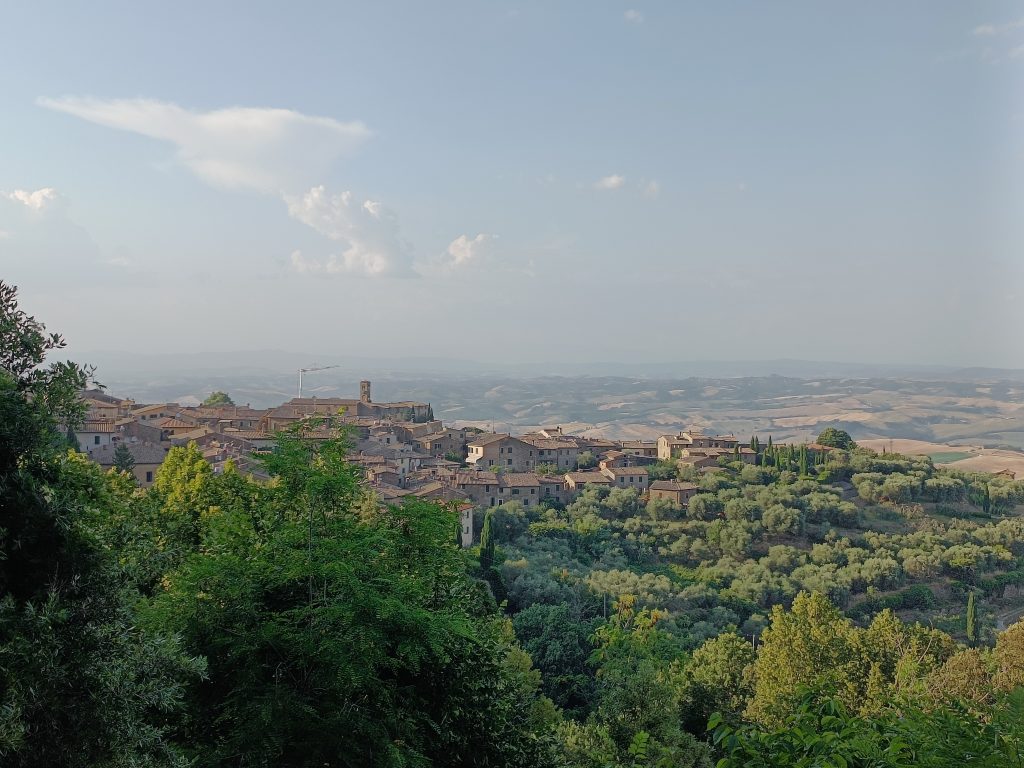
A recent visit to the appellation last month revealed how much the often overlooked Rosso – a wine made from 100% Sangiovese from the small appellation in Tuscany – has developed in recent years.
Rosso’s history developed alongside that of Brunello, essentially to create a wine that was that was ready for earlier consumption earlier.
However, Rosso is no longer perceived as a way for producers to use up declassified Brunello’s, as might have been the case maybe ten years ago.
“Rosso is often seen as a second step, but to us, it’s a wine with its own character that deserves its own attention,” the export manager of Rosso and Brunello producer Collemattoni told db when we visited the winery last month. As she pointed out, “you can’t drink a Brunello every day”, and the Rosso had for a long time been “the first step to get into Brunello”.
Having potential importers willing to take both Rosso and Brunello is therefore a key consideration at Collemattoni. “If you like our Rosso, you’ll love the Brunello!” she grinned. The 2023 vintage, for example was potentially the best vintage the estate has ever done. “The comments were ‘super wow’ – it had the fruitiness and balance of a true Sangiovese.”
And this seems to be something that is emerging across the appellation. As Giacomo Bartolommei, the new President of the Consorzio Vino del Brunello di Montalcino noted when introducing a masterclass ahead of the now annual Red Montalcino event las month, Rosso has gained increasing recognition in recent years, “not only as a headline in Montalcino, but as a wine of distinction capable of showing real elegance, structure and authority”.
Winemaker Cecilia Leoneschi at Castiglion del Bosco, a vast estate in the north-west of the appellation, produces three Rosso’s from single vineyard at a time when not many others are producing a single vineyard Rosso expression.
“Each has a different identity,” she explained. “If you work with the raw material, if can be a different wine.”
Two styles
And according to Sarah Heller MW, who led the masterclass, there are two distinct philosophies behind the styles now emerging; an ‘always Rosso’ – a wine conceived and created with its own distinct style, typically easier drinking and more approachable (but many capable of ageing), perhaps aged not in oak but in glass, so it retains its fruit characteristics; and a ‘Baby Brunello’, designed more as a stepping stone, with perhaps more serious extraction and use of large or small (often Slavonian) oak barrels – “with its ambition baked in the price”.
“Territorially, Montalcino is a complex place, and there’s a growing recognition that there is expressing itself in single vineyard sites rather than communes or faction based demark
The new ‘always Rosso’ style, has, Heller argues, “great appeal to the contemporary wine drink, the kind of person who’s drinking it, but also the kind of person who is seeking out a new style of wine for whom, perhaps even a [‘baby Brunello style] Montalcino seems out of reach, or a style that’s doesn’t really fit into their lifestyle.”.
As such it is an “intellectual style of wine”, she said, which is not overly extracted to avoid pushing it too hard or austere a direction and which does not necessarily have any oak ageing. It is, she notes exciting as it is “a different product altogether that’s designed for different occasions” and one that is “already full of pleasure to drink”.
Poggio di Sotto, based in the South side of the appellation, is a pioneer of this style. For example, winemaker Leonardo Berti refuses to predetermine which plots will become Rosso and which Brunello, unlike a lot of producers who produce Rosso from their youngest vines and reserve the older ones for Brunello. Instead, the wines are vinified plot-by-plot and it is only after two years of ageing and a blind tasting that a Rosso “is born”.
“After two years, we decide whether to continue ageing in barrel or if it is a better Rosso,” Berti says. By doing it this way, the team don’t second guess the final decision of the blind tasting. “If you know what is inside your brain, it works fast and you choose before you taste it,” he shrugs.
Partner Content


In an average vintage, the Rosso makes up around 40% of total production at Poggio di Sotto, compared to around 50% Brunello and 8% -10% Riserva “if the vintage is right”. However in a more difficult vintage, such as the 2014 or 2017, Rosso can make up 70-75% of the total production.
However, for Berti, the Rosso also provides “a polaroid of what you can achieve for the Brunello, it’s an idea of the wine,” he says. “Lots of people like the Rosso, not just because of the price but because it is ready and approachable. With Brunello, you need more time.”
Elisa Sesti of Sesti, near Sant’Angelo, agrees, noting that it “it is like giving you the heartbeat of a vintage, something is here at an earlier stage, so you could read it.”
Rosso, however “has always been misunderstood”, she argues, but is now starting to “find its feet”.
Sangiovese, she argues is a very complex grape that needs to be looked according to the various soils and aspects it is grown on, regardless of whether it is for Rosso, Brunello or Riserva. “You’re looking for a finished wine in two years, so it is [about] the quality of the grape.”
One producer told db that it was “a stereotype” that better quality grapes would go on the Brunello and the inferior quality on the Rosso di Montalcino – even though many use older vines “with more age and complexity” for Brunello, and younger vines for Rosso. This s isn’t to throw any shade however – in many cases it is more of a case of style. Rather than the grapes being “inferior”, they are simply not suited to the lighter, more approachable style of Rosso.
Luciano Ciolfi at San Lorenzo points to one particular vineyard at San Lorenzo for example which produces wine that “is too tannic when young but powerful and very nice [for Riserva]”. This, he adds is in part due to the steepness of the slope and the western aspect which means that particular plot gets lots of sun, the water runs down, with the rocky subsoil means the roots have to go very deep to find water. This all contributes to tannins that needs longer aging to soften them – if the quality of the vintage isn’t that of a Riserva, it is blended into the Brunellos.
Potential for ageing
Perhaps one of the most surprising aspects that emerged during db’s visit to the region was the potential for ageing the Rosso, something Sesti called “exceptional” even if only a few people currently doing so.
“We say five years drinking window but clearly it can keep longer,” Ciolfi agrees – up to 20 years in many case. You don’t have to wait long for the tertiary aromas to come out, but even young, it is better after a year, he argues.
A 2005 vintage Rosso at Poggio di Sotto proved the point. It was, Berti said, a year “where it was easy to get acidity” but the wine was still full of fruit and freshness and garriue, albeit tempered with a delicious gaminess and other tertiary notes.
Heller sees this opening an exciting opportunity in the market, particularly in the on-trade and Horeco. Where a customer might baulk at opening an older Brunello, a Rosso with some age could provide a more affordable alternative, she explained.
“There are producers who are looking to hold on to some of the Rosso, which I hope they will right because of its ability to age in glass, but even a restaurants that has some space for storage may be able to hold on to some and put it on the wine list at a price point where people who are not yet collectors of wine are comfortable taking a raise,” she said.
“If you can have a Rosso [even with age] it is still going to be more affordable.”
However the price of some of these Rossos is increasing. As Heller notes, some are now in the $80-100 range “where Brunello used to be”.
“It fills a space formerly filled by Brunello, filling in the upper premium levels.”
Related news
Talha tales: reviving Alentejo’s amphora wines
Justerini & Brooks: Asian collectors no longer 'satisfied with just the label'


