



Muscadet Côtes de Grandlieu AOP files for changes
Proposed changes to the Loire Valley region include an extension to the permitted lees-ageing period, which is a hallmark of Muscadet ‘sur lie’ wines.
The governing body of Muscadet Côtes de Grandlieu AOP has submitted a formal request for revisions to the appellation’s production rules, proposing changes that span vineyard management, ageing practices, and packaging regulations.
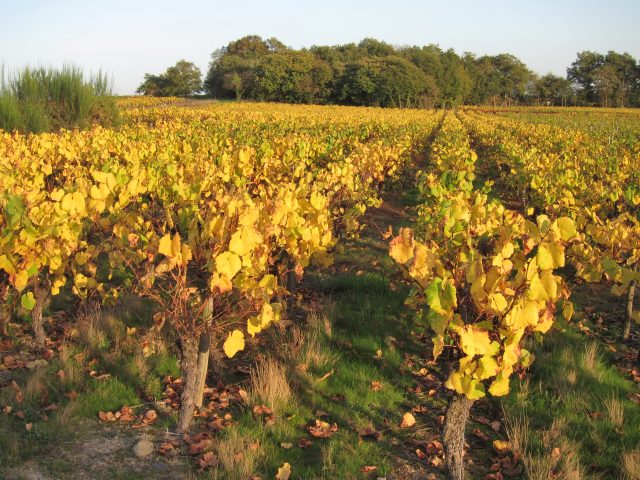
The area is the latest sub-regional Muscadet appellation, and has just over 300 hectares of vineyards spanning from the south-west of Nantes to the edge of Grandlieu Lake, encompassing 19 municipalities in Loire-Atlantique and Vendée.
Key among the proposed amendments is an extension to the permitted lees-ageing period, a hallmark of Muscadet ‘sur lie’ wines.
The group has suggested replacing the current stipulation that wines labelled ‘on lees’ must spend no more than “one winter” in vat or barrel with a new maximum of “one summer.”
Côtes de Grandlieu Muscadet is produced exclusively from carefully selected plots and mature vines aged over seven years, a practice that naturally results in higher quality wines.
Vineyard and training modifications
The proposal also includes significant revisions to vineyard planting rules. The minimum planting density would be reduced from 6,500 to 5,000 vines per hectare, while row spacing requirements would be relaxed from a maximum of 1.50 metres to 2.20 metres.
Partner Content



Several rules relating to trellising and vine training systems would be eliminated or revised. Notably, current restrictions specifying the maximum height of tie-wires for Guyot-trained vines and the minimum height of lifting wires in raised flat trellis systems would be removed.
In their place, new proportional foliage-height rules based on row spacing have been proposed. For example, when row spacing is less than or equal to 1.50m, the foliage height must be at least 0.6 times that distance; when spacing exceeds 1.50m, the ratio must be at least 0.65.
A new clause has also been introduced to protect soil sustainability, banning any substantial alteration to the morphology of the subsoil or the arable layer of plots intended for AOP production—excluding routine digging or tillage.
Harvest and packaging updates
Changes have also been proposed to harvest date regulations. A clause stating that the start date of harvest must comply with Article D. 645-6 of the Rural and Maritime Fishing Code has been removed.
On the packaging front, wines designated ‘sur lie’ would need to be bottled either within the geographical production area or in its immediate vicinity, between 1 March (or 31 December) of the year following the harvest and 30 June of the second year.
This would replace the current bottling window.
Related news
Master Winemaker 100: Cynthia Ortiz
Château du Tertre partners with Ulysse Cazabonne to launch 'iconoclastic' white blend


