



London leading Europe’s hospitality recovery
Warmer weather boosted trade in June, but wet-led venues continue to struggle. Punters are seeking “a whole occasion and a whole experience,” said Oxford Partnership’s CEO.
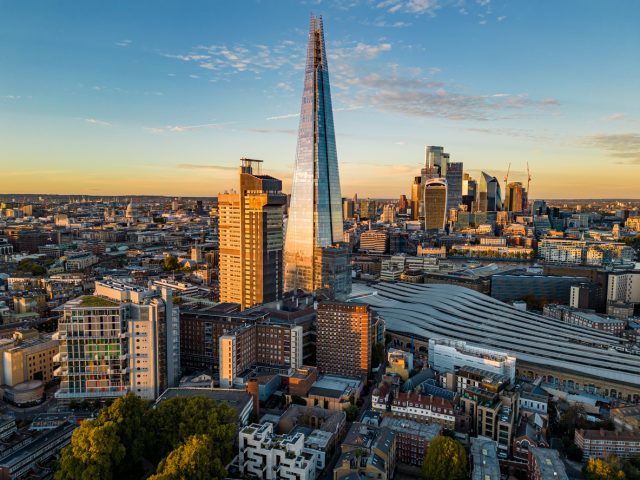
London’s hospitality sector shines bright in a new report, with strong spending and dwell times leading the way in Europe’s recovery.
In the publication, European City Spotlight: Hospitality trends, January to June, Oxford Partnership analysed live data from over 95,000 licensed venues across Europe’s capital cities, to flag key shifts in consumer habits.
The research focused on three key aspects of on-trade performance over the first half of 2025: dwell time, average spend per head and day-of-week usage.
England’s capital stood strong with high dwell time and premium spending, as well as strong Thursday and Friday trading, reflecting a thriving post-work drinks culture.
‘A gateway to the rest of the world’
According to Alison Jordan, chief executive officer of Oxford Partnership, London is one of two ‘alpha plus plus’ cities in the world, alongside New York.
Speaking to the drinks business, she said: “That’s because it drives so many cultural trends, whether that be in music, fashion or food; and it’s a real transportation hub – a gateway to the rest of the world.
“The clientele comes from such a different background than just the UK, so it’s tourism, as well, that’s driving it.”
When asked why London was faring better than other European cities, Jordan cited: “The political climate in terms of the war in Ukraine and what’s happening with energy and food prices, as well as the tariffs coming in from America, and the way the EU is being treated globally.”
Thank god it’s Thursday
Friday and Thursday trading dominated across Europe, but in London, Dublin and Amsterdam, it soared 20% to 30% above the European average.
This is true for independent pubs like Tapping the Admiral in north London. “Thursdays are busy,” assistant manager Eleni Cheetham told db. “Sometimes we need the same amount of staff from a Thursday to a Friday.”
Berlin’s hospitality sector also remained resilient, showing steady month-by-month growth. Consumer spending was moderate, with venue churn rates low. Trade peaked in the afternoons and early evenings.
By June, Madrid also emerged as a standout performer, driven by late-night trade, rising consumer spending, and strong weekend performance. Dwell times were up, with group dining trends particularly pronounced.
Paris was another steady player, marked by high average spend, moderate dwell times, and consistent weekday trade across both food and drink.
Raising a glass to June
Amsterdam also posted a strong performance across key metrics, with particularly high spend and dwell times in drink-led venues. The city maintained a healthy weekday–weekend trading balance, while late-night activity surged on Fridays and Saturdays.
Partner Content



Lisbon was one of the standout improvers over the period, with a sharp rise in performance by June. Increased spend was driven by strong late-evening and weekend footfall.
Across Europe, the year began slowly, with chilly weather, post-Christmas fatigue, and cautious consumer spending squashing average dwell times and spend-per-head well below the benchmark.
February and March marked the beginning of a gradual recovery, but April brought a notable uplift, coinciding with the Easter break and, in some markets, record-breaking weather.
By early summer, hospitality had found its feet. Dwell times and spending peaked in June, particularly in Southern Europe and Mediterranean capitals, where punters welcomed warmer weather.
Wet-led sites hit hardest
Jordan said drinks-led venues are struggling the most, especially ones that didn’t “do something different” or offer a premium experience.
“People want something more than just to go out for a drink; they want a whole occasion and a whole experience, and the younger generation is driving these cultural changes,” she said.
Jordan offered advice to drinks suppliers: “A lot of people think about the product range and how the brand is delivered, but it’s also how they work with the operators to build that ambience and that complete quality offer, as opposed to it just being about, ‘my perfect cocktail’, or ‘my perfect glass of wine’.
“It’s also, ‘how do they protect against volatility?’ Because they can invest lots into brand activation somewhere, but then the outlet closes, so it’s understanding how fit an outlet is, and how much you should invest in it from a supplier’s perspective.”
Highlighting cultural habits
The report also revealed that trading times vary widely across the continent. In southern countries, late-night trading dominates, while in cities like Copenhagen, Berlin, and Helsinki, peak footfall typically occurs between 5pm and 8pm.
What’s more, customers linger longer in venues in London, Vienna, Berlin and Brussels, whereas other cities have shorter dwell times.
Jordan said: “You’ve got this family meal time in Southern Europe that goes on for hours, whereas you’re seeing, in somewhere like Rome, this fast turnover where people are circulating around different places to make sure they don’t miss out.”
The average spend per head was highest in cities like Bern, London, Oslo, and Copenhagen – all 120–145% above the European benchmark.
And March and April saw the highest churn of venues, particularly in cities like Helsinki, Stockholm, Warsaw and Dublin, often in drink-led segments.
“Helsinki and Stockholm are some of the most expensive places to operate in Europe, as is Dublin. Warsaw, less so, but that is also impacted by the war in Ukraine,” said Jordan.
Related news
Pubs welcome business rates U-turn, but hospitality warns it doesn’t go far enough
Inside Desa Potato Head: How Bali’s creative hub is reshaping wine hospitality


