



Japan’s rice crisis: how a table rice shortage is taking a toll on sake
Price hikes are putting strain on Japan’s sake producers, many of whom are already feeling the pressure. But what, if anything, is the government willing to do? Eloise Feilden reports.
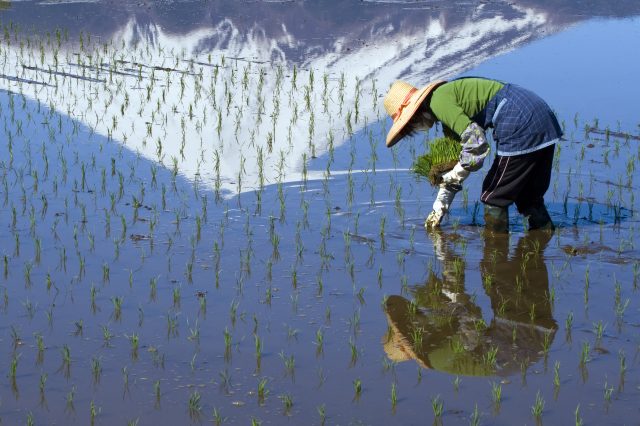
The average adult in Japan eats 51kg of rice a year, equal to about 140g of cooked rice every meal.
In contrast, annual consumption of rice in the US averages at 12.3kg. In the UK rice consumption is even lower, at 5.6kg per person per year, highlighting just how fundamental rice is as a staple food in Japanese cuisine.
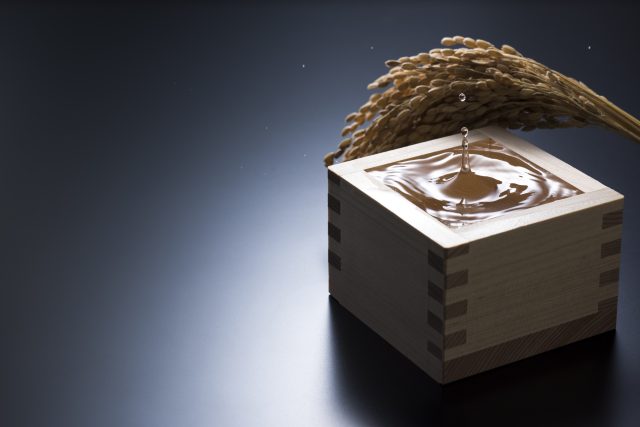
And rice’s significance in the country goes beyond food. Both sake, widely recognised as Japan’s national drink, and shochu, the nation’s domestic spirit, are also rice-based.
Japan has faced significant production shortages since last year, particularly in the case of table rice. The Japanese government has been forced to dip into its own stores, releasing stockpiled grain via auctions in the first half of 2025.
“We want to continue responding without slowing down so that the stockpiled rice can reach consumers quickly and at a low cost,” Japanese agriculture minister Shinjiro Koizumi said in a press conference in early June.
But consumers are not the only ones facing crisis if production woes continue; sake producers are also suffering.
Approximately 45% of the rice used in sake brewing comes from sake-specific rice varieties, or sakamai. The rest consists of table rice and food-processing rice – varieties sold at lower prices for industrial use.
Sake production has declined in recent years, and the supply of sake-specific rice has remained relatively stable. Hitoshi Utsunomiya, director of the Japan Sake and Shochu Association (JSS), explained: “Sake rice yields are low, and cultivation is difficult, so its price has traditionally been set higher than that of table rice, with production arranged through advance contracts with farmers.”
However, as the price of table rice rises, many farmers are shifting away from sake rice production in pursuit of higher profits. “Since last year, the price of table rice has surged, surpassing the contracted price of sake rice. As a result, more farmers are shifting to table rice production, making the stable supply of sake rice increasingly difficult,” Utsunomiya said.
Sake rice production faces wider threats in Japan, which are now being exacerbated by the shift towards table rice production. Utsunomiya explained that due to an ageing population of sake rice farmers and a “lack of successors”, the number of producers is decreasing.
Global warming is also taking its toll, both on quantity and quality. “Climate change is having a direct impact on rice quality and yields,” he said. “Global warming is increasing the prevalence of pests and diseases, and rice is becoming harder and less soluble — posing issues for both the production and quality of sake rice. Addressing this challenge will require improvements in agricultural technology and international co-operation,” he continued.
Partner Content


For now, the inflated price of table rice remains the most pressing concern for sake producers.
Keiki Hane, president of Toyama’s Fumigiku Sake Brewery, said the rice shortage has pushed up the price of sake rice. “The purchase price of sake rice harvested in 2025 will be more than 30% higher than [sake] rice harvested in 2024, which is an unprecedented increase,” he said.
“Sake rice accounts for nearly 60% of raw material costs. Our efforts can’t do much to overcome the situation,” Hane told local press.
Fumigiku Sake Brewery has said that it plans to pass some of these higher costs on to consumers, raising the prices of its products by at least 3%-5% this autumn.
Stable supply
In April the JSS reached out to the Ministry of Agriculture, Forestry and Fisheries, requesting that measures be implemented to ensure a stable supply of domestically produced rice at a fair price. The JSS confirmed to db that the ministry has discussed the matter internally. At time of publishing no clear response to the association’s request for action has been given.
However, in a press conference held on 15 July, the minister for Agriculture, Forestry and Fisheries commented: “This is regarding the consideration of support for sake rice (shuzo kotekimai). We have received concerns from breweries and other businesses involved in sake production about shortages of raw materials, due in part to the surge in prices of table rice. I have also personally held meetings with relevant organisations on this matter.
“In light of these circumstances, I have instructed the relevant officials to consider including new support measures for sake rice—known as “shuzo kotekimai”—in the preliminary budget request for FY2026, to be submitted this August.
“The Ministry of Agriculture, Forestry and Fisheries will proceed with formulating concrete measures toward inclusion in the August budget request.”
Bright side
There are now some signs that the worst is over, at least when it comes to table rice prices. Data from Japan’s agriculture ministry revealed that the average price of a 5kg bag of rice fell to ¥3,920 (HK$214) for the week ending 15 June. This marked the first time that the price of rice had fallen below the ¥4,000 mark since the week ending 2 March.
However, Japan’s rice crisis has sparked political issues internationally. US president Donald Trump has weighed in on the issue, criticising Japan for putting too much focus on domestic production. “I have great respect for Japan, they won’t take our RICE, and yet they have a massive rice shortage,” Trump wrote on Truth Social, his social media platform. “We’ll just be sending them a letter, and we love having them as a Trading Partner for many years to come.”
Related news
Rémy Cointreau targets €100m profit boost


