



Fermentation and civilisation: study links alcohol to rise of complex societies
A new cross-cultural analysis suggests that traditional alcoholic beverages may have helped early societies evolve into more complex political structures.
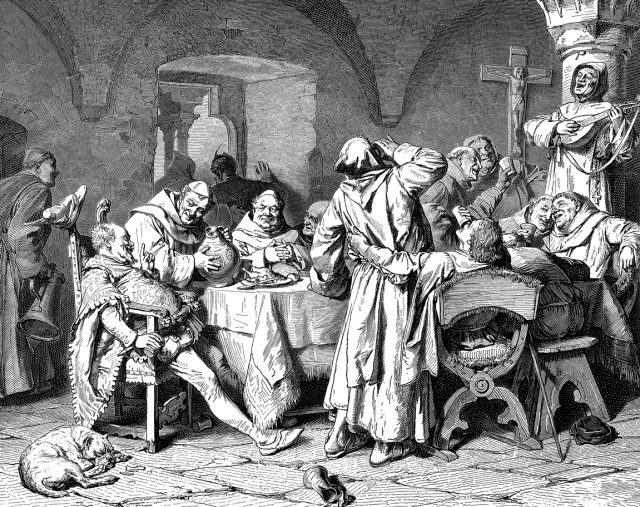
A global study of 186 traditional societies has found evidence supporting the theory that low-alcohol fermented beverages played a role in the evolution of political complexity. The research, published in Humanities and Social Sciences Communications, used advanced causal inference techniques to show that cultures with indigenous alcoholic drinks were more likely to develop hierarchical political systems with multiple layers of governance.
According to the study’s authors Václav Hrnčíř, Angela M. Chira and Russell D. Gray, alcohol’s social properties – bonding, trust-building and creativity – may have helped groups cohere, cooperate and consolidate power. “Drinking together makes people feel part of a collective,” the authors argue, “and this collective sense is critical when societies transition from localised kin-based groups to multi-tiered political entities.”
Agriculture trumps alcohol – but not entirely
While the findings lend support to the so-called “drunk hypothesis” – the idea that alcohol has helped humans live in large, cooperative groups – the researchers are careful to point out that alcohol alone cannot explain the emergence of complex societies.
When agriculture is factored in, the impact of alcohol on political complexity drops. Intensive farming remains the dominant force, enabling food surpluses, population growth and long-term settlement – all essential for building states. Alcohol’s influence, the study finds, is modest by comparison but not negligible.
“Our results suggest that alcohol may have been a supporting actor, not the protagonist, in the story of civilisation,” the authors write.
Alcohol’s political utility
The study points out the many roles alcohol played in early societies, particularly in political and ceremonial contexts. Communal drinking rituals often reinforced social cohesion, while alcohol-fuelled feasting was used by emerging elites to mobilise labour, build alliances and consolidate control.
As seen in archaeological records from Mesopotamia, China and South America, rulers invested heavily in alcohol production, distribution and consumption. “Alcohol was a tool of soft power,” the authors explain. “By supplying a valued good, leaders built loyalty and embedded their authority in everyday life.”
Partner Content




Not all societies drank
The relationship between alcohol and complexity is not universal. The study found that indigenous alcohol was notably absent in many parts of North America and Oceania, suggesting that geography, alternative intoxicants and cultural preferences shaped each society’s drinking behaviour.
The researchers caution that alcohol was not always a social lubricant. While traditional fermented beverages often promoted cohesion, there were also cases where feasting led to conflict. “It could bind or break a group, depending on how it was used,” the authors note.
Modern parallels
The findings offer a historical counterpoint to contemporary debates on alcohol policy. As recently reported by db, UK alcohol consumption is falling, yet alcohol-related deaths remain high, prompting calls for tougher taxation. However, the earlier story of alcohol is not one of harm alone, but of social bonding and cooperation.
While few would advocate for alcohol as a modern solution to societal challenges, the research adds nuance to current conversations. As the authors put it: “We should not romanticise alcohol, but neither should we forget its formative role in the human story.”
The study lends cautious support to the idea that alcohol, when culturally integrated and traditionally brewed, may have helped early societies build the scaffolding of civilisation. But it does not displace the central role of agriculture, religion and other socio-economic factors.
“Alcohol was likely one of many tools – alongside music, ritual and belief – that enabled human groups to scale up and stay together,” the authors conclude.
And if nothing else, it adds new historical resonance to that familiar image of people raising a glass together, not just to celebrate, but to build society itself.
Related news
Spanish wine drinkers favour bars and restaurants, new study reveals
Genetic study finds no overall cancer link for alcohol intake
Cabernet Sauvignon 'still remembers its parents', says UC Davis study


