



‘Easy’ 2025 vintage in Champagne follows ‘difficult’ 2024
The contrast could hardly be greater as Champagne producers benefit from an “easy” vintage this year following one of the most “difficult” ever faced in 2024, according to a leading cellar master in the region.
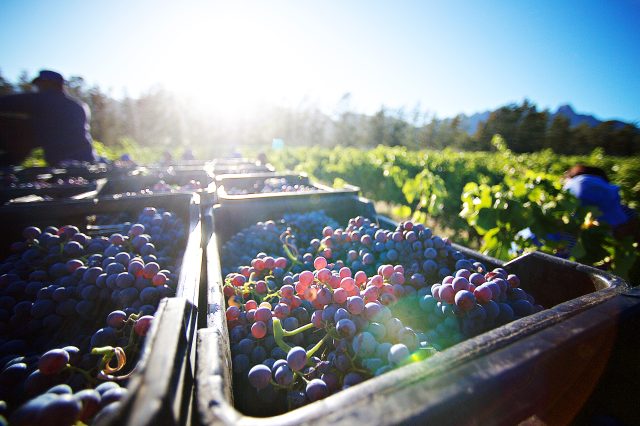
Speaking at tasting on Monday this week of Louis Roederer’s flagship cuvée Cristal – which has just unveiled its 2016 expression – the maison’s chef de cave Jean-Baptiste Lécaillon spoke of his delight at the current conditions in Champagne.
“We have difficult and easy vintages in Champagne, and this is an easy one,” he began, when db asked Lécaillon for his views on the 2025 harvest.
On the other hand, last year, he added, “Was probably the most difficult we have seen for a long time in Champagne,” before noting that 2021 was also an extremely challenging harvest.
Indeed, while last year’s vintage in Champagne was hit by springtime frost and then beset by widespread mildew following an unusually wet summer, reducing yields – if not damaging the quality of the grapes – this year has been free from such climatic hazards.
Lécaillon recorded, “This year has been easy, with no frost, a classic bud break, then a dry April, May and June, so there has been no mildew.”
Unlike last year, 2025’s conditions have ensured that practising organic farming – which sees growers eschew systemic fungicides – has not put producers at a disadvantage, something that Lécaillon also commented on due to the fact that Louis Roederer owns “the largest organically-certified vineyard in Champagne,” he said.
In numbers, its total certified area is 135 hectares, he added, which is more than half the maison’s 250ha, with the rest gradually converting to the farming philosophy.
“Organic farming is easy,” he said, adding that in 2025, “Everything is perfect.”
Furthermore, he stressed that the vines weren’t suffering from a lack of water, despite the dry conditions early on in the growing season.
“Every two weeks we have had some rainfall, so while the weather has been beautiful, there has been enough water,” he recorded. Continuing, he said, “The vines do need rainfall, and we will have more this week,” he said, admitting that a “very dry July” would have been problematic.
“So far it is the ideal year,” he stated. “The only downside is the yields: because last year was so hard – the clusters are formed in the year before – we have fewer clusters per vine,” he added, before stating, “So we have a lower crop due to the lower number of clusters, but they are very beautiful clusters.”
Partner Content


As a result, he described this year’s yield as “medium” in size, suggesting it will be somewhere between 10-11,000kg/ha on average, with some variation across Champagne’s 34,000ha, commenting that the southerly Aube area of the appellation is expected to produce fewer bunches.
According to Lécaillon, a naturally-lower yield could be viewed as a positive for Champagne at a time when the market for the product is reduced. He remarked, “Inventories are good everywhere, so we don’t need a big crop – maybe nature is going at the same speed as the economy, which is rare, because normally it is the opposite.”
Although Champagne appears to be benefitting from a slow rebound in sales, demand for the sparkling wine has been much lower than its post-Covid peak, with shipments last year totalling just over 271m bottles, almost 55m bottles below a modern high point of 325.5m in 2022.
Due to the shrinking of the global market for Champagne, the main producers in the region have been calling for lower limits on the ‘available’ yield from this year’s vintage – with some even suggesting that a cap of 8,000 kg/ha be placed on the number of grapes that can be turned into Champagne from 2025.
That would equate to around 230 million bottles, and would see the region impose the same limit on production as it did in 2020, when the early stages of the Covid pandemic saw Champagne sales decline by one third.
The growers, whose yearly income is of course based on the number of bunches produced, is pushing for a higher level, with around 10,000kg/ha being the minimum level they would like to see imposed.
The actual figure is due to be announced this week, with a compromise of 9,000kg/ha being forecast by key figures in the region.
Read more
Why have Champagne shipments dropped by almost 55m bottles in two years?
Champagne’s organic growers undeterred despite difficult vintage
Champagne’s 2024 harvest: small but mighty
Related news
New leader for Champagne Pol Roger as Laurent d’Harcourt retires
Laurent-Perrier returns to growth despite Champagne headwinds


