



Why indie beer is fighting for ‘survival’ against global breweries
The UK’s independent breweries are facing “heavy headwinds” with nearly half making “survival” their main goal. Jessica Mason reports.
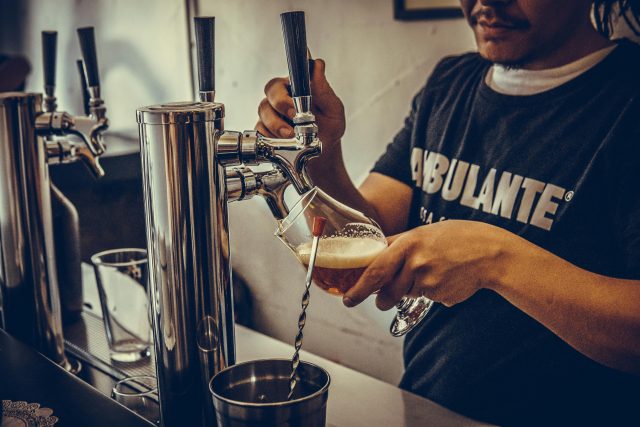
The data published by the Society of Independent Brewers and Associates (SIBA) this week shows that whilst demand for independent beer remains strong, UK brewers face challenges from increased taxation, market access restrictions and reduced alcohol consumption.
Almost a third of indie breweries expect turnover to fall
The report, which brings together industry insight and consumer polling to provide an authoritative assessment on the state of independent brewing in 2025, has shown that whilst average production climbed 10% last year, 46% of independent brewers say their main priority is survival and almost a third (29%) expect turnover to fall.
The situation is tough and brewers have been staying keenly agile, but there has been a lot of mixed messaging about craft beer now hitting its plateau. Or rather, its awkward stage of development. Some say the category still has a lot of mileage. Others claim that in a fight between quality and locality versus reduced prices, it will be the big beers being sold for less that will win the race every time. But here at db the assessment is less contrary.
Looking to SIBA for the figures, we can see how hard fought much of the journey has been. After all, the average production of independent breweries last year may have climbed 10%, compared to an overall beer sector where national beer sales are down 1% since last year but the sector still stands 6.6% below pre-pandemic levels. For independent breweries the increasing popularity of porters, stouts, craft lagers and no and low alcohol beers has, according to the research, helped to drive growth. This is why staying tuned in and recognising trends has become so fundamental. It is the difference between sink or swim.
Despite these wins, at the same time, the number of independent breweries fell by 5.5%, with around 100 closing their doors and others merging to survive, with pubs and hospitality venues continuing to close across the nation. The situation has made many a brewer downcast and in some cases completely reassess their careers.
The threat of the big global beer brands
Assessing the evidence, SIBA admitted that it was the bigger global breweries that were stopping smaller breweries gain a route to market. After all, the figures showed that beer drinkers are demanding a local product, with more than three quarters (77%) insisted that it is important for pubs to offer a range of beers from local breweries. Granted. 56% of beer drinkers say they would be more likely to choose a beer if it was locally produced. But are they? That is more the point. Routes to market are getting snapped up. Independent brewers have even been pushed to speak frankly about being unable to sell to (on average) 60% of the pubs that are local to their brewery. Eight in 10 brewers surveyed admitted that it was the lack of access to beer lines as the top barrier to sales and growth. And if the consumer can’t see it on the bar or on shelves, will they really be able to buy it beyond brewery taps and webshops.
Speaking candidly about the situation, SIBA CEO Andy Slee explained: “Current global trade anxiety and tax changes in the UK are making it a challenging market and indie brewers can’t get their foot in the door to get their beers to the customer. Our members currently have around 6% of the market and where they are allowed to compete against global breweries they could have 30% market share. This lack of access means that beer drinkers are missing out, indie breweries are facing heavy headwinds to growth meaning fewer jobs are being created.”
Slee suggested that in the end it was also the consumer who was really missing out because “time and time again, the research shows that there is high demand for the innovative, interesting and tasty beers that indie brewers are best at making” but lamented that things were still being tied up unfairly by big brewers with more market influence, money and power.
The question of whether independent breweries have enough presence in pubs was brought into focus by the drinks business last November after a series of interviews heard from voices from across the sector describing the mounting issue.
Partner Content

In response to the outcries, SIBA responded quickly and, as such,beer drinkers can now discover which beers are from independent breweries in pubs, bars, and shops, thanks to the new Indie Beer campaign which also created a brewery checker map to help people find the truly independent producers. The initiative has also seen a “phenomenal” start during the inaugeral Indie Beer Week celebrations. All of this is positive news for the industry and seems to be a step in the right direction. But is it enough?
A fight to stay relevant and invest in the sector
Looking at the recent YouGov polling on the topic, it revealed that less than half (47%) of all consumers were drinking beer and that actually as few as 28% of them were 18-24 year old beer drinkers. This has offered some crucial insight into the beer industry and its future. Essentially, it has highlighted the work the sector still needs to do to remain relevant. The statistics showed that more and more people were choosing not to drink alcohol at all, with 21% of all consumers increasing to 36% within the 18-24 year old age bracket.
The research has also shown that the volatile trading environment that beer now occupies has had a knock on effect on the sector with 80% of breweries surveyed admitting that they had been making no major investments in their business over the last year. Amid these barriers, breweries have still continued to create more than 500 jobs this year, a dip from last year’s nearly 800 jobs. A sign perhaps that if a sector is diminished, how the impact of that will be felt upon individuals working within it and, just as prudently, the economy as a result.
Responding to trends
What can be done? With average production amongst independent brewers increasing, it is stouts, lagers and no- and low-alcohol that is leading the way, with 24% on average now going into keg beers. Taking note of this can never be considered an ill-thought-out move.
The findings have also shown how quickly breweries have responded to trends with 80% of brewers now producing a stout or a porter and with further CGA data additionally showing a 121% increase in value for “craft stout” generated in pubs and bars last year. Added to this, trends for lager have continued unabated and have made second place amongst brewers this year, with 60% of independent brewers now producing lagers, suggesting that craft breweries are now making some genuine inroads into a market that is usually dominated by big global brands.
As people become more conscientious and stay flexible with their alcohol consumption there are also signs that the sector can answer new lifestyle trends too. With 14% of drinkers now opting for no- and low-alcohol products, independent brewers have started to add them to their range, with 15% now making a non-alcoholic beer compared to just 8% last year. Plus, 28% of independent breweries now produce a gluten-free beer in response to around 10% of the UK population following a gluten-free diet. One thing is certain, the industry is listening to what people want.
Reduced turnover and a drop in exports make local commuity support crucial
Looking at the findings in totality, the demand for independent beer remains strong and there is plenty to feel optimistic about. Looking at it all in balance, on average, production in 2024 was up 10% compared to 2023. However, with a 5.5% fall in the number of breweries last year, with around 100 closing and 29% also expecting turnover to decrease for the financial year to April 2025, things are still looking a little challenging and lots of breweries will need to get creative to juggle costs and beat the statistics.
Let it be remembered that most who enter the sector do it for the passion of it all and for a love of beer and the community aspect too. In terms of livelihood, the figures are galling and show how 68% of brewers have a turnover that is below £250,000 and 75% still sit below a million pounds. Looking at this through the financial lens this also reflects with perfect clarity just how trialling it has recently become to make an independent beer businesses profitable.
Looking across the water, there has also been a noted fall in demand and exports have gone from 17% last year to down to 12% of breweries now staying in the export game. Looking more closely at this, it is troubling to recognise how only 1% of beer production is being sold abroad. This is why brewers have been looking closer to home for sales opportunities. In fact, local positioning has become fundamental for most and 96% admitted that their relationship with their community is “important”, with 80% saying it is “very important” or “extremely important”. The is, of course, another interpretation of this assertion: local success is very closely linked to survival. At least until rising costs are navigated and independent beer can exist in a fair arena where it stands a chance of being sold.
Related news
Imported beer could 'disappear' from Russian retail


