



The next French revolution: how France’s wine industry is adapting
The climatic crisis engulfing the French wine industry is proving to be a catalyst for innovation in the vineyard, reports Louis Thomas.

France’s 2024 vintage is expected to be something of a reckoning for its wine industry, with it predicted to be one of the nation’s smallest harvests of the last century. According to figures from Agreste, the statistics and forecasting department of the Ministry of Agriculture and Food, 2024’s wine production in France is expected to be 18% below 2023’s, and 11% beneath the five-year average – a consequence of a less than ideal growing season.
CENTRE-LOIRE
Among the regions to have been affected is Centre-Loire, a broad region containing numerous appellations, including Sauvignon Blanc centres Sancerre and Pouilly-Fumé.
“This year has been particularly challenging, with a huge amount of rainfall. Like many other northern vineyards, we were heavily affected by downy mildew and wood diseases. Yields will inevitably be smaller as a result,” explains François Dal, head of viticulture at Service Interprofessionnel de Conseil Agronomique, de Vinification et d’Analyses du Centre (SICAVAC), the technical arm of the regional winegrowers’ association. As a result, 2024 looks set to be a vintage comparable to the similarly wet 2021.
Given the increasing frequency of these difficult growing seasons, SICAVAC is looking to expand its arsenal to deal with the troubles that come with growing grapes in a changing climate.
“Regarding the evolution of plant material in connection with environmental future challenges, we have many ongoing studies,” Dal says.
While wetter vintages such as this year might lead one to assume that CentreLoire is looking for varieties that can cope with that, the primary concern appears to be preserving the freshness of the region’s wines to cope with the overall trend of warmer growing seasons, not cooler ones.
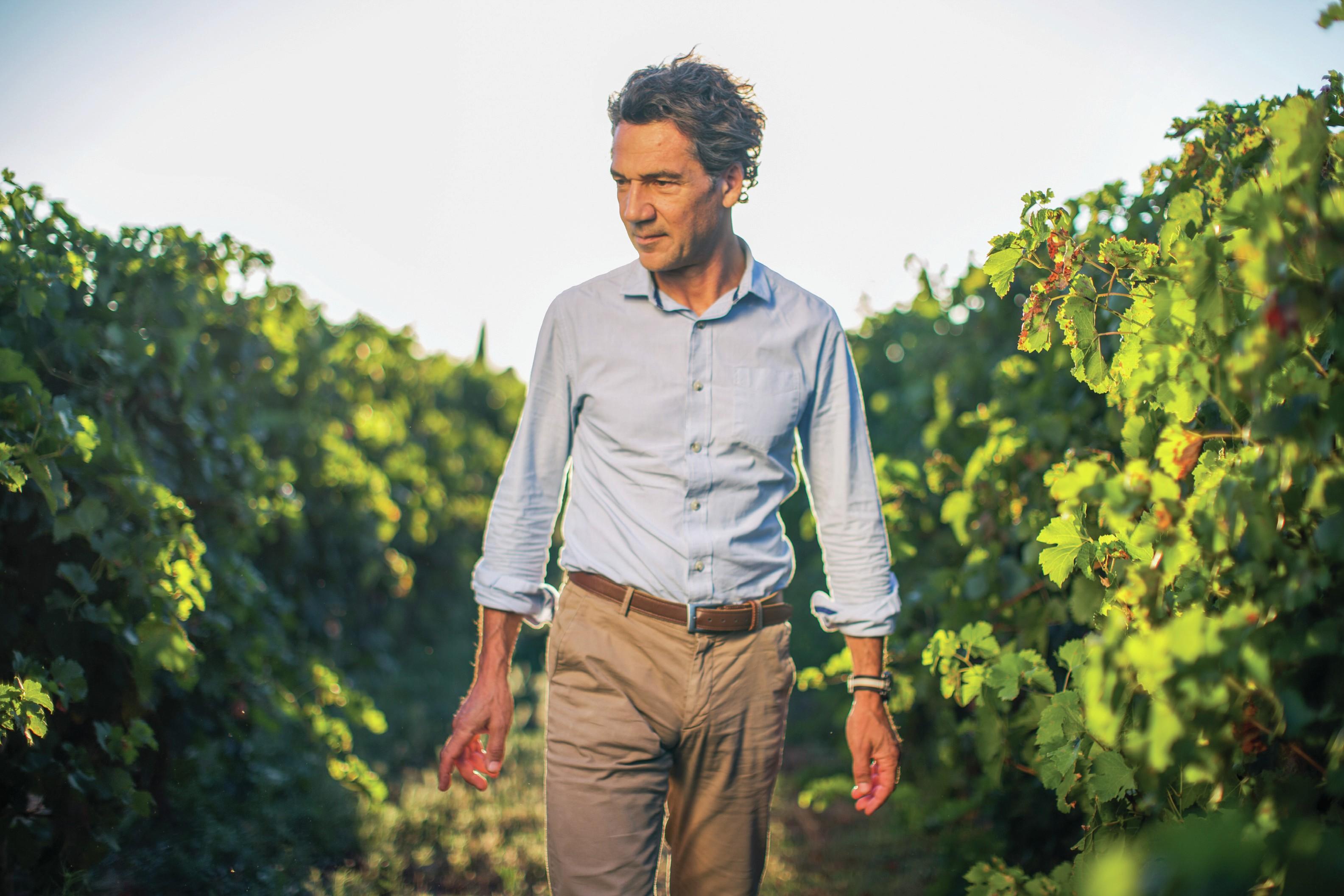
Dal explains: “We have carried out a massal selection of 17 individual vines that seem to ripen with a fresher balance – producing grapes with less sugar and more acidity. This selection is currently being assessed.
“We have also planted ancient local varieties such as Petit Meslier, Meslier Saint François, Gouais and Sacy, which were abandoned during the creation of the AOCs in 1936 because they didn’t ripen well. The idea is to test them in blends with Sauvignon Blanc to bring more freshness to the wines.”
Petit Meslier has undergone a minor but notable resurgence. According to data from Plant Grape, between 1958 and 1988, the area of France planted with vines of this early-budding white variety plummeted from 46 hectares to just 1ha – but by 2018 it had managed to climb back up to 16ha.
“Additionally, we have planted recent hybrids resistant to diseases to assess their qualities and reduce the use of phytosanitary products,” says Dal. Asked whether he sees applications for technologies such as drones and artificial intelligence in Centre-Loire vineyards, Dal is not so sure: “The new technologies mentioned (drones, satellite maps, etc) are primarily useful for very large estates, as they allow the compilation of vast amounts of information. As most of our estates are small to medium-sized and very much on a human scale, their owners are often able to name each of their vines individually and have little need for these new technologies. Some of our larger estates have begun to experiment with them, but their use will always be limited in the Centre-Loire vineyards because of their size.”
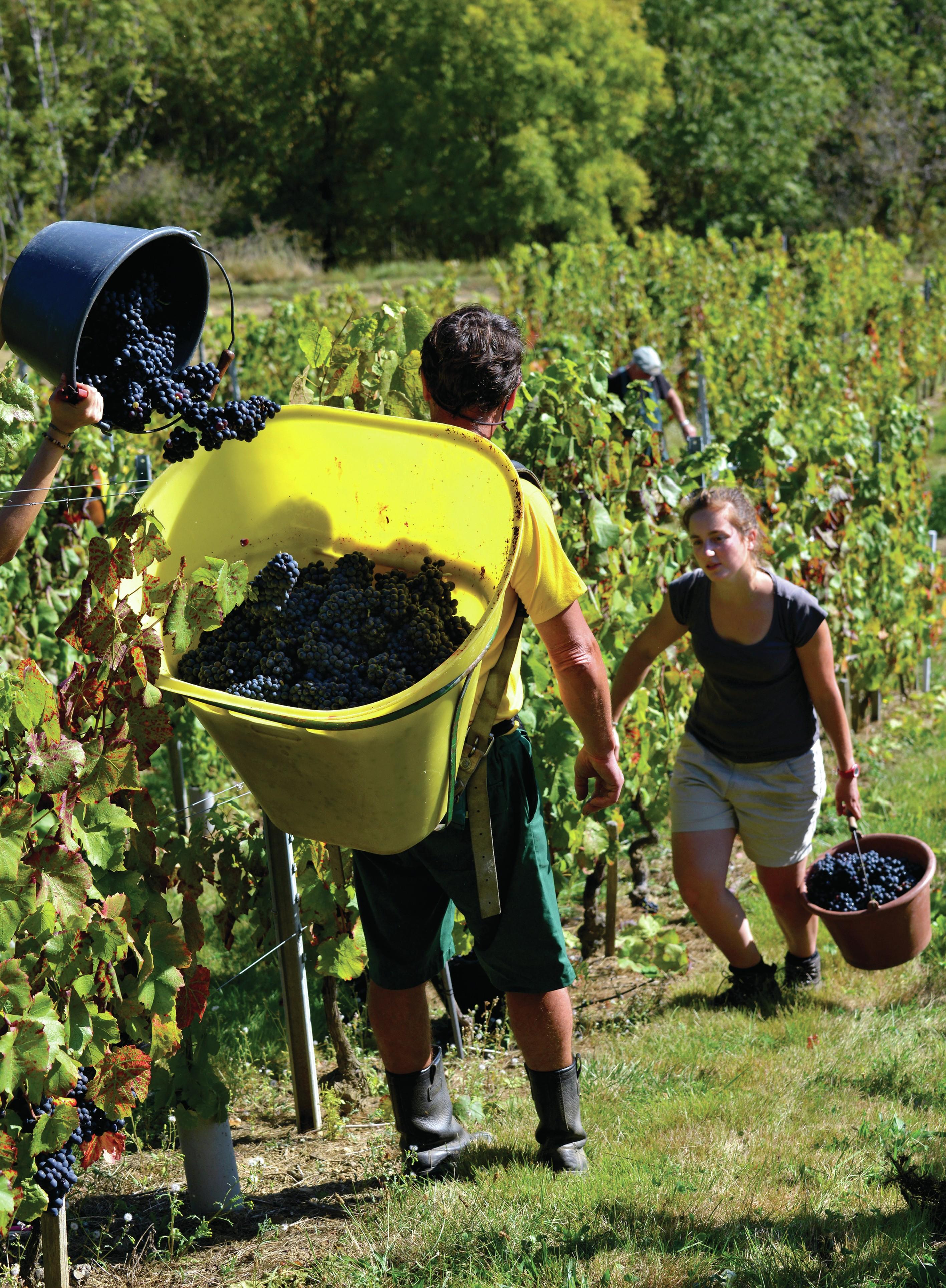
“Artificial intelligence could be very useful, particularly in developing more reliable disease models,” he continues. “However, I feel that many of the applications currently being developed have the same limitations as with drones: if you have two children, you don’t need computer assistance to know their needs,diets or sleeping schedules. But if you’re managing an orphanage with 100 children, then it becomes useful. CentreLoire vineyards are more similar to small nuclear families than to orphanages or large corporations.”
BEAUJOLAIS
Moving southeast to Beaujolais, the 2024 vintage has been similarly troublesome for producers, according to Bertrand Chatelet, technical director of Inter Beaujolais. “The summer of 2024 was marked by rain and high temperatures,increasing the vines’ susceptibility to fungal diseases,” he says The region, known for its fruit-forward Gamay red wines, is undertaking a bold study of some 178 global grape varieties in a bid to discover some which might have a future in its vineyards.
“Planted between 2021 and 2022, the Ampelographic Collection serves as research support for a project led by INRAE [Institut National de la Recherche Agronomique], which aims to study and characterise a large number of varieties, to identify genetic or metabolic markers which enable agronomic behaviours of interest in optimising varietal selection programmes,” Chatelet explains. “It will make it possible to choose potential parents for varietal creation programmes by crossing in order to obtain varieties that are both resistant to diseases and adapted to climate change. Forty-nine of these 178 varieties are wine or table grape varieties from different countries– Assyrtiko from Greece, Asmi Noir from Lebanon, Aglianico from Italy – which are very late-ripening, acidic or droughttolerant, and therefore studied for their benefits in the face of climate change.” According to Chatelet, 68 of the 178 varieties being studied “have genes for resistance to cryptogamic diseases, such as mildew”. Among these hybrids are PIWIs (an abbreviation of the German ‘Pilzwiderstandsfähige Reben’) such as Solaris, which have been specially bred for their resistance to fungal disease. They do not require the same intensity of fungicide treatment as other varieties, making them an increasingly popular option for producers who are working towards organic certification.
Of course, given that Gamay makes up approximately 98% of all plantings in Beaujolais, the region is researching the “diversity” of clones of the variety –because, after all, consumers expect their Fleurie to taste of Fleurie.
“Our job with winegrowers is to identify varieties capable of giving wines which have a family resemblance to Beaujolais, or to find the best winemaking route or the appropriate blend,” Chatelet explains.
“Considering new varieties is an important step to cross. Some motivated pioneers have already planted other varieties outside the appellation.
Collectively, producers are considering experimenting with new varieties at low percentages, as the INAO [Institut national de l’origine et de la qualité] allows today.”
BORDEAUX
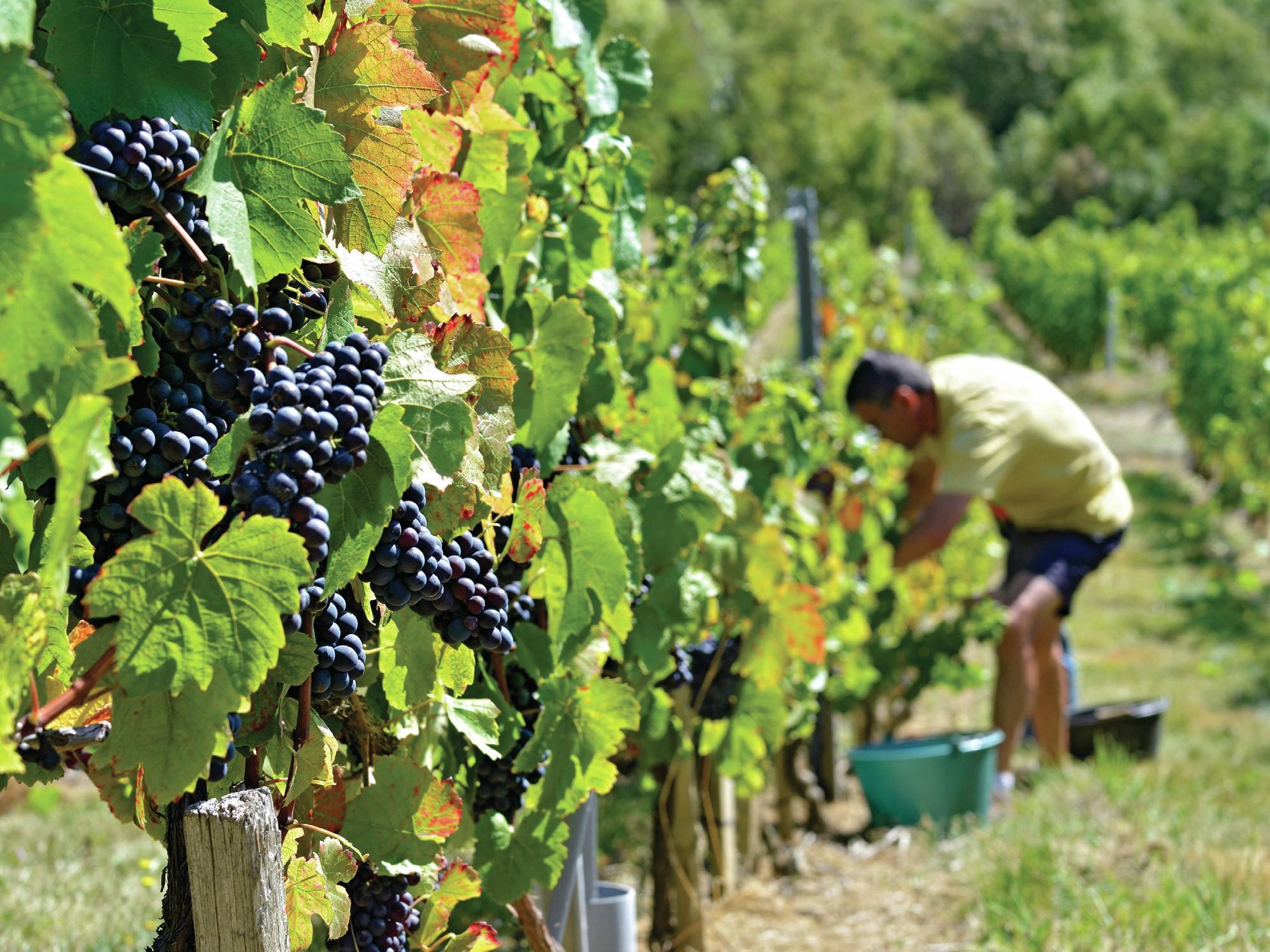
Bordeaux’s reputation for being stuffy and traditional obscures the reality that this most economically important of French wine regions, exporting around €2.3 billion-worth of wine last year, is, by hook or by crook, innovating.
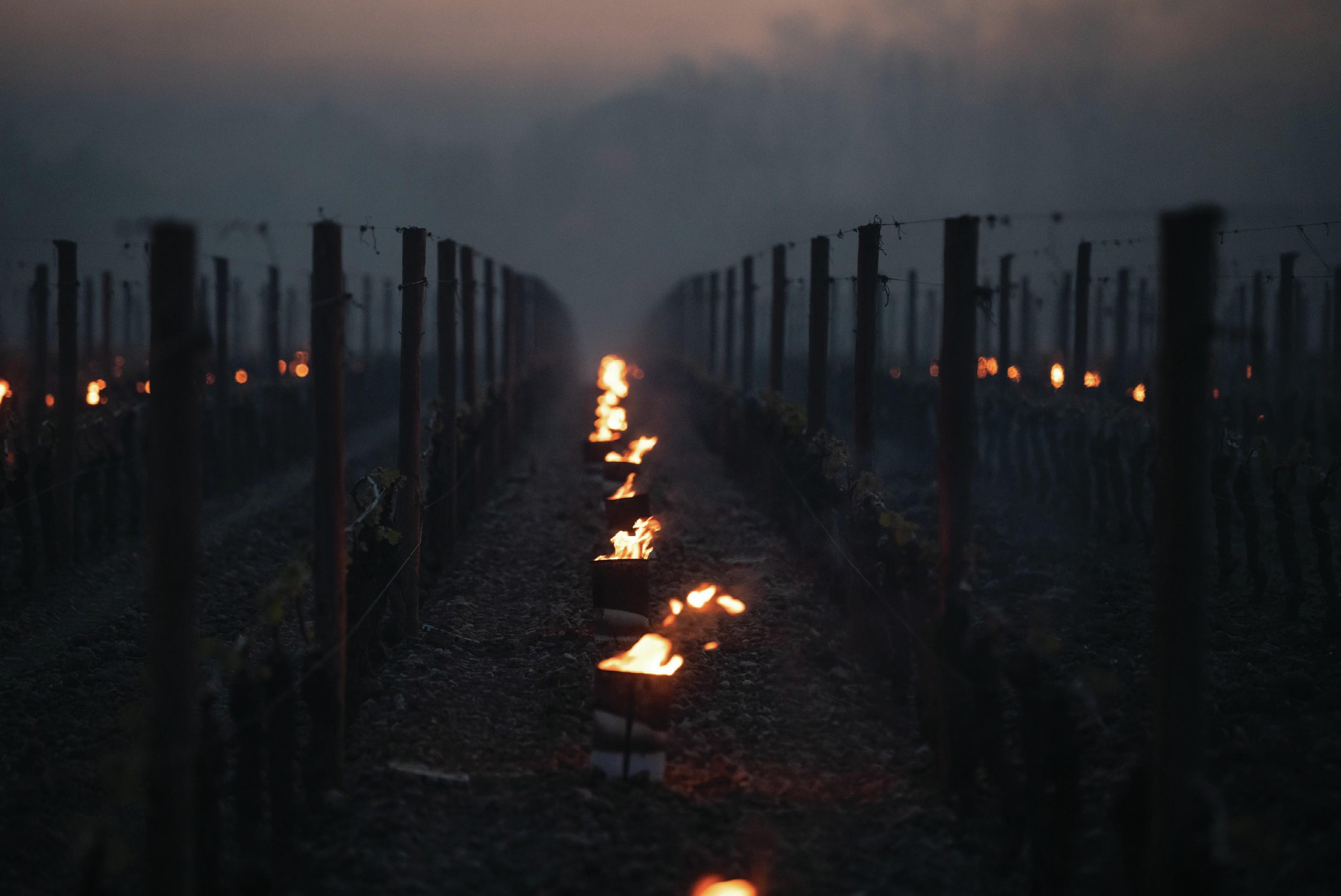
Jonathan Ducourt, sales and marketing manager at Vignobles Ducourt, one of the biggest independent family-run producers in the region, says that Bordeaux’s mounting climatic problems have prompted the installation of weather stations at each of the company’s vineyards to provide data on everything from frost risk to humidity and, of course, high summer temperatures.
Perhaps fortunately for Bordeaux vignerons, there are traditional varieties that can handle the heat. “To adapt to climate change, we are planting laterripening varieties like Petit Verdot and Cabernet Sauvignon, allowing us to better manage rising temperatures,” Ducourt says. “Our Bordeaux blend is gradually evolving in response to these changes.” White grape Colombard is also being planted for the same reason – but the Bordelais are even dabbling in hybrids to counter the steep rise in instances of fungal disease.
“We are currently trialling new grape varieties with the goal of significantly reducing the need for spraying to protect against mildew and other diseases,” says Ducourt. “By introducing diseaseresistant varieties, we aim to minimise chemical interventions, promote healthier vineyards and enhance the sustainability of our winemaking practices.”
In Vignobles Ducourt’s case, its Metissage range (designated as Vin de France) consists of singlevarietal PIWI expressions, with a red made from Cabernet Jura (Cabernet Sauvignon and ‘wild vines’), and two whites, a Muscaris (Muscat Blanc à Petits Grains and Solaris) and a Cal 6-04 (Sauvignon Blanc, Riesling and ‘wild vines’). Annual production of all three is in the region of 60,000 bottles.
“As a pioneer of new grape varieties, one of the main challenges has been starting from a blank slate, without the ability to compare notes with neighbours,” notes Ducourt. “Each vintage presents a learning curve, from understanding how the variety grows to determining the ideal harvest time, the styles of wine it can produce and its ageing potential.”
LANGUEDOC
Perhaps what is needed to drag France out of its predicament is this level of radical change – and there aren’t many French winemakers more radical than Jean-Claude Mas, of Languedoc’s Domaines Paul Mas. A pioneer of planting disease-resistant grape varieties, such as Souvignier Gris, Floreal and Prior, in the region, Mas has trodden his own path beyond the traditional local roadmap of Grenache, Syrah and Carignan.
One might assume, given the Languedoc’s southerly latitude, that the region’s biggest problem would be drought, rather than the damp conditions that fungi thrive in, but Mas points out: “Fungal diseases exist everywhere. Rain at the wrong time can cause black rot – so it’s not just a question of volume of moisture, but when it happens.”
Asked whether he expects others to bet big on PIWI grapes, Mas, who insists that he is seeing “some great results” from these varieties in spite of the reservations that some people have about their quality potential, says: “Well, of course other French regions are already well into programmes of growth of PIWIs – in Champagne they have certified the variety Voltis, for example, and in Bordeaux trials are also well advanced.”
And he points out: “It’s a competitive advantage against countries like Australia, because the trials and certification take over 10 years, so France is relatively advanced in this area.” Nonetheless, any great leap in the world of wine is destined to fail if the consumer is not on board with the changes. Some retailers clearly think that the average wine drinker will happily plump for a PIWI wine – for example, this summer, UK supermarket Tesco added a Vin de France made from white PIWI variety Floreal to its Tesco Finest range. The multiple retailer already carries some of Mas’ wines too.
Asked whether it is difficult to market wines made from such unfamiliar grapes, Mas says: “It is a challenge to communicate – it’s really up to the distributors and retailers in the various markets to explain and promote PIWI wines to consumers.”
GOING BACK TO YOUR ROOTS
The reality is that PIWIs alone are probably not the panacea for the ills that the vast majority of the country’s producers are troubled with. Even in France – where grape variety comes second to terroir of origin – tradition and expectation still constrain just how far wineries are willing to experiment. With exceptions, there’s only so much of a hybrid grape that most companies are prepared to add to a blend to make up for a shortfall in yields.
There is another revolution brewing in France that could well boost its vineyards’ resilience to climate change,but it’s one focused not on replacing grape varieties, but rather on renewing the soils in which they grow: last month, Provence’s Domaine Mirabeau became France’s first Regenerative Organic Certified (ROC) vineyard.
“In many wine regions, there’s still a monoculture mindset that champions one plant in the vineyard – the vine – and views any other plants as competitors that should be eliminated by ploughing or spraying,” argues Stephen Cronk, a Briton who, along with his wife Jeany, acquired the estate in 2019. “We have regularly applied organic compost, compost teas and probiotic treatment to kickstart microbial and fungal activity in our soil. We have planted other plants, trees and hedges around the domaine where possible, to break up the monoculture that is so common in vineyards around the world. We don’t irrigate at Mirabeau and have relied on the vineyard self-regulating, even through some very hot, dry years in Provence.”
Big things have small beginnings – Domaine Mirabeau might be the first, and Cronk acknowledges that regenerative viticulture is “a relatively new concept”, but others look set to follow. Earlier this year, the estate hosted neighbouring Provence producers for a seminar on the regenerative approach.
Cronk even suggests that regeneratively-farmed soils can lead to “more complex and nuanced flavours” in the grapes, and therefore in the resultant wines.
“More research is needed to pinpoint the science behind the almost magical effect regenerative farming seems to have on wine quality,” he concedes, “but it’s interesting that most producers who go regenerative never look back.”
The estate declined to comment on whether it was also looking into hybrid grape varieties.
PIWIS certainly seem set to play their part in preventing yields from plummeting in the short term, and they are one option for those seeking to reduce how much they spray their vines, but perhaps French producers need a more transformative change – maybe they need to start thinking from the ground up if they want to weather the coming storm. As Napoléon Bonaparte, the ultimate victor of France’s political upheaval in the late 18th century, put it: “Revolutions are like the most noxious dung heaps, which bring into life the noblest vegetables.”
Related news
Auction update: Château Léoville Barton
'Vast' gap between hors Bordeaux expectations and market reality


