



Is there a new hero grape for Port?
Alicante Bouschet, a once little-known grape in the Douro, has become a prominent contributor to one producer’s premium Ports. Will other wineries now follow suit? Roger Morris reports.
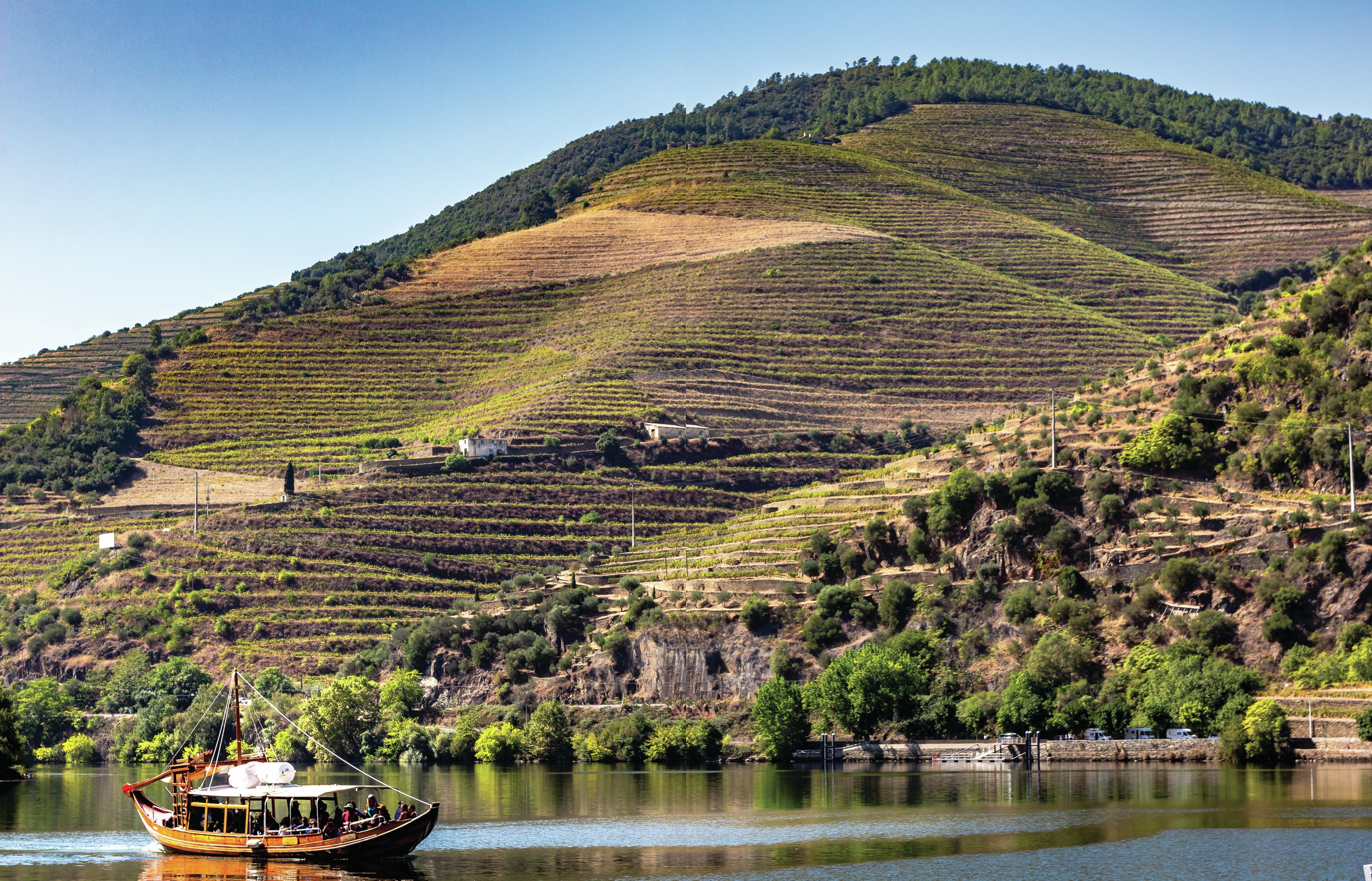
IN 2008, Portugal’s Symington family planted a half-hectare plot of Alicante Bouschet at its prized vineyard, Quinta do Vesúvio, a historic estate in the wild upper Douro where wine has been made for 200 years, and which the Symingtons have owned since 1989.
A single quinta brand, Vesúvio’s vintage Ports are routinely rated by top writers at 96 points and above. Yet, with 130 planted hectares, that half-hectare of Alicante Bouschet was merely a drop in Vesúvio’s lagar, and the grape was not listed as a contributor to the 2012 Vesuvio vintage Port.
Nevertheless, when the 2022 Vesúvio vintage was recently released, the amount of Alicante Bouschet in the final blend had suddenly leapt to 22%, the rest of the vintage coming from two better-known Douro varieties – Touriga Nacional (45%) and Touriga Franca (33%). It marks a significant step-change in a traditional region where Alicante Bouschet was barely grown 25 years ago.
What happened at Vesúvio during the past decade to engender this warm embrace of Alicante Bouschet? And what might it mean for the future make-up of other premium Ports?
“Alicante is a variety that has been present in the Douro for many years and exists in field blends of old vineyards, so it is therefore an authorised variety in the Douro,” says Charles Symington, who since 1997 has been in charge of winemaking for all the Symington Port brands – Vesúvio, Graham’s, Cockburn’s, Dow’s and Warre’s – as well as its table wines in the Douro and elsewhere in Portugal.
Quiet and unassuming, yet engaging, Symington is perhaps more experimental in his approach to winemaking than most of his Douro colleagues. While single blocks of Alicante vines have gradually been replacing traditional field blends in replants, Symington was the first to give Alicante its own, distinct vineyard spot.
“Portugal is today the country in which Alicante is most widely planted, and monovarietal [table] wines made from it are widely available,” Symington notes, especially to the south in Alentejo. “These wines raised my interest in the variety, as did the performance of Alicante in our old vineyards of field blends.”
Today, he says, the Symington family has a total of 80ha of Alicante, “which is around 8% of our vineyard area in the Douro”, and the amount of Alicante in Vesúvio vintages has increased accordingly: 12% in 2017, 18% in 2019 and 22% in 2022. In the 2018 vintage, there was a 40% co-ferment of Alicante and Touriga Franca, another Charles Symington experiment.
Raising interest
It should be noted that Vesúvio’s embrace of Alicante remains an outlier as far as most other major Port houses are concerned, although the grape has raised the interest of many of the Douro’s independent farmers who supply grapes to red Douro DOC still wine producers.
“We do have some Alicante Bouschet, but at 1ha out of our 192ha of planted vines, it is a pretty minor element for us,” says Christian Seely, managing director of AXA Millésimes, owner of Quinta do Noval. “It goes into the blends for our red [table] wines.”
David Guimaraens, technical director and head winemaker at The Fladgate Partnership, whose Ports include Taylor ’s and Fonseca, says only its Croft vineyards have any Alicante Bouschet growing in them at present – about 2% of the total.
“Currently, Sogrape does not use the Alicante Bouschet grape in its Port wines, whether ruby, vintage or tawny,” says Luís Sottomayor, head of winemaking for Sogrape Ports (Offley, Sandeman). “In the Douro region, this grape is considered residual and is not a focus for us.”
“We really haven’t planted any Sezão [Sousão] or Alicante for colour,” says Dirk Niepoort of his eponymous family of Ports, but he adds that among independent farmers there is probably “a trend for doing so”.
As Niepoort notes, Alicante Bouschet is a teinturier – a somewhat rare category of grapes that have red pigment in their pulp as well as in their skins – an attractive asset in a wine such as vintage Port, where colour is very important.
But that is only one of the characteristics that Symington and other Alicante advocates value in the grape, many of which are especially attractive in a time of global warming.
With recent advances in DNA technology, the genetic family trees of most wine grapes have now been charted, but the chronology of their origins and how and when they moved from region to region across Europe is usually lost in time. Not so with Alicante Bouschet.
First cultivated in 1866 by Henri Bouschet in Languedoc-Roussillon, Alicante is a cross between the wellknown Grenache and the lesser-known Petit Bouschet. The latter was a creation of Henri’s father, Louis Bouschet, when he crossed Teinturier du Cher with Aramon in search of more colour. No-one seems to know why Alicante was apparently named after a Spanish city when it originated in the South of France.
Alicante Bouschet quickly made its way to adjacent countries, especially Spain, and the Reynolds family, which still produces wine in the Alentejo, claims to have first brought the grape to Portugal during the late 1800s. The variety possibly then migrated from there north to the Douro, but Guimaraens, whose family has been in the Port wine business for six generations, thinks Alicante may have come to the valley by other means.
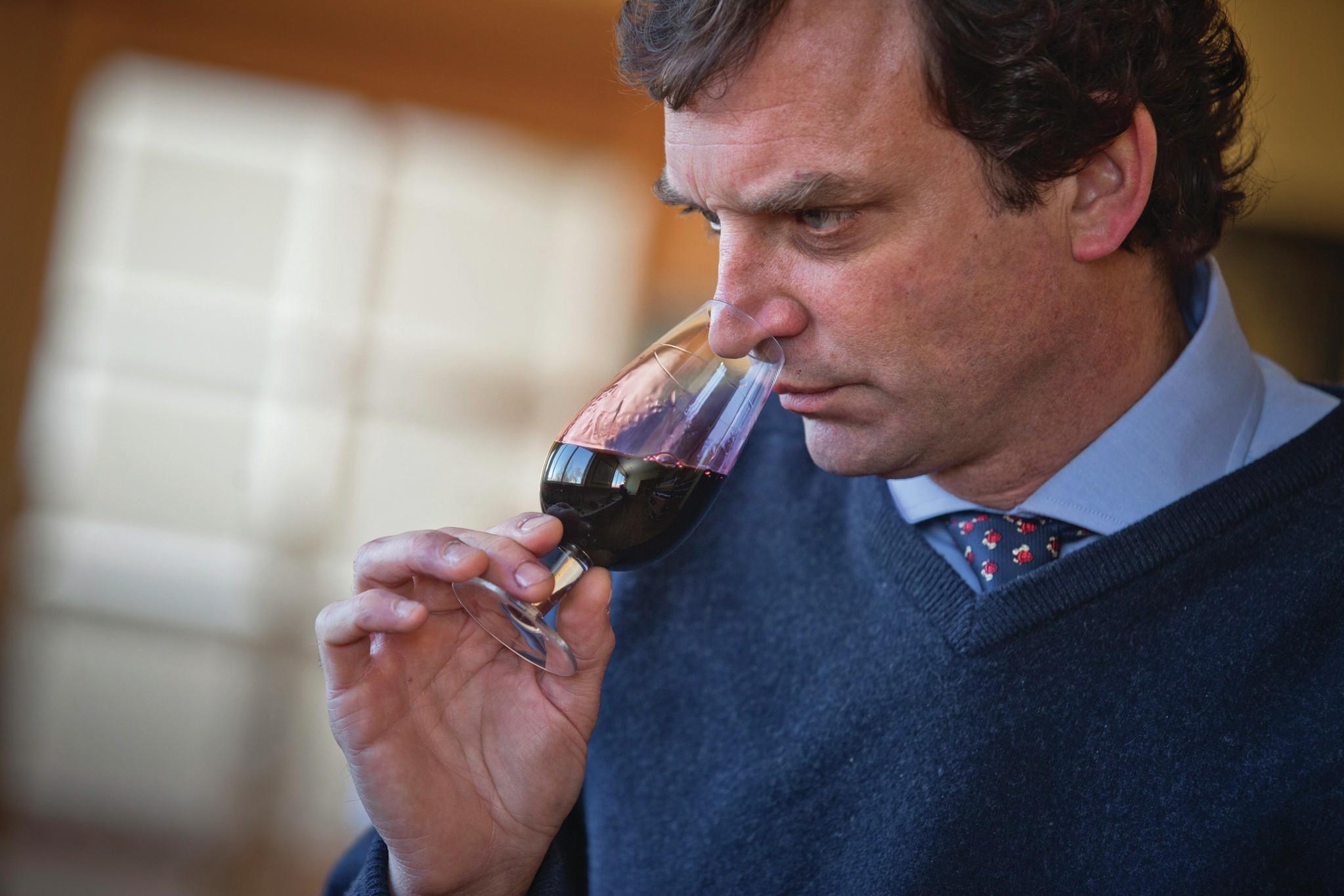
Intense hue: Charles Symington values Alicante Bouschet for its deep colour
“I believe that Alicante Bouschet entered the Douro Valley at the end of the 19th century when the vineyards were being replanted after phylloxera devastated the region,” he says. “It was used in part to replace elderberries, which had long been used to give Ports more colour.”
Alicante still has the same attraction of lending a vibrant intensity to vintage wines.
“Port winemakers are focused on colour, and our window of opportunity to extract colour in a 36-hour ferment is short,” Charles Symington points out. Alicante also has flavour appeal, says David Baverstock, chief winemaker for the Winestone Group, which recently purchased Krohn, a venerable Port house. “Because of the Grenache parentage in Alicante Bouschet, I think it adds not only colour but also fruit depth and tannin structure,” he says.
At Vesúvio, Symington adds: “The profile is normally soft but concentrated, the principal contribution from this variety being on the palate.”
Vineyard attraction
Yet perhaps the major commercial attraction of Alicante Bouschet may lie in the vineyard.
“The principal varieties in the Douro are long-cycle varieties,” Symington explains. “Alicante is a shortercycle variety, being the first variety to be picked. This characteristic alone is interesting, as from a risk perspective Alicante is ready to pick at the start of September, when it is most unlikely that the weather will have turned against us. It’s also resistant to hydric stress and heat, a quality that is ever more important in the Douro. From a logistic perspective, having an early-ripening variety is interesting.”
Baverstock agrees. “I think Alicante has huge potential in the Douro, with climate change also a factor. The teinturiers are great for resisting the increasingly hotter and drier conditions. One other thing about the attraction of Alicante Bouschet, especially for farmers, is its ability to produce quality fruit with high yields.”
In this area of low yields, even a modest increase is important.
“While Alicante Bouschet has in some places been associated with high yields and low quality,” Symington says, “in the Douro this is far from being the case, [as it is] a variety that produces no more than 5,000kg/ha due to the low organic material of our soils and low rainfall.”
Although mildew is not as prevalent a hazard in the Douro as it is in some wetter regions, Alicante Bouschet has thick skins which help discourage mould. This made it attractive to growers in California’s Central Valley when shipping Alicante clusters long distances by train to winemakers on America’s east coast.
Is there, nonetheless, an upper limit to the percentage of Alicante in vintage blends? Symington, the only one with any real experience thus far, says: “Alicante is a dominant variety, so to achieve complexity and elegance in a vintage blend Alicante would not be more than 20%. I find that 10% often works well.”
Of course, when one grape variety is increased within a vineyard or within a blend, it tends to replace something else. In the case of Vesúvio, it is Tinta Barroca, which, Symington says, “has sadly become a casualty of climate change”.
But David Guimaraens points out a major reason why some houses may be hesitant about adding or increasing Alicante.
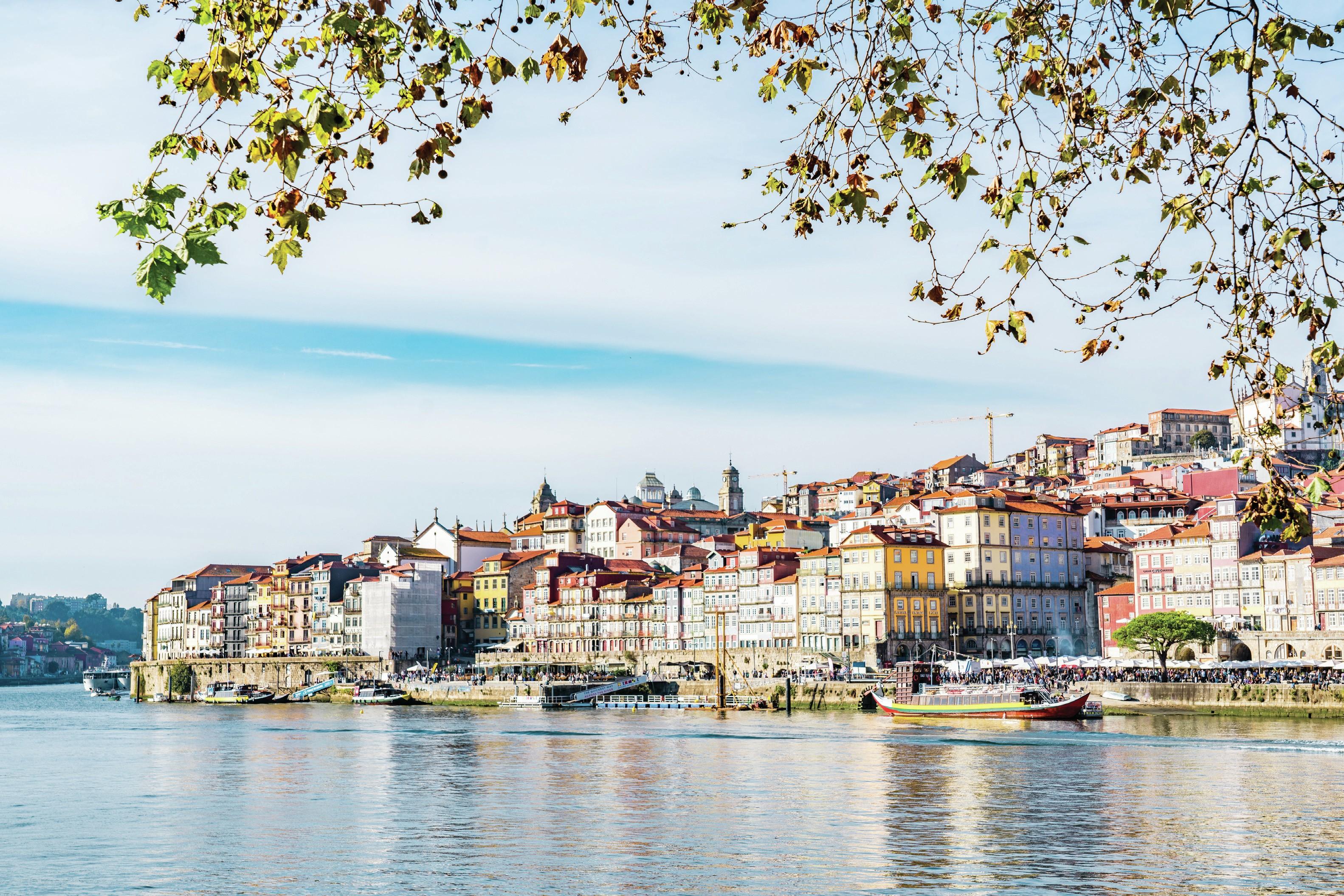
Shifting waters: might Alicante Bouschet become more prevalent in the Douro?
“Our philosophy at Fladgate is that each one of our vintage Ports is recognised by its style, by each vineyard and what is planted there, each with different varieties used in different proportions,” he says. In other words, don’t alter what consumers expect of a brand.
So, while Guimaraens wants to preserve the minor Alicante contribution to Croft’s vintage Port, there is none of it in Taylor’s or Fonseca, and he doesn’t plan to add any.
“Alicante Bouschet has always been one of the many approved grape varieties in the Douro demarcated wine region, although not one of the official ‘recommended’ ones,” says Ana Brochado Coelho, who heads communication for regional generic body the IVDP. “Over the last two decades, however, it has found favour with some Douro Port and table wine producers.”
Indeed, an additional incentive for the expansion of Alicante Bouschet into premier Ports is that it has become popular in Douro red table wines. Some producers, including Symington, use the same vineyards to supply grapes for both their Ports and their table wines.
Maéva Fonsino, international senior brand manager for Porto Cruz, says: ”We do have plantings of Alicante Bouschet, but this variety is not used in our Port wine blends. The experiments we have made with Alicante do not reveal it to be as satisfactory as the traditional Tourigas, which when perfectly ripe produce lovely LBV [late bottled vintage] wines and Vintage Ports.”
Fonsino also argues that “the essence of Port wine is not the grape varieties. Its distinctiveness is that Port will always be a blend of the traditional varieties of the Douro. It is not possible to say that one grape variety, like Alicante Bouschet, is by itself, better than others.”
Hearty embracing
That said, because Symington Family Estates is the largest producer of premium Ports, its hearty embracing of Alicante Bouschet will likely continue to influence other Douro producers and, especially, farmers. Nor is Charles Symington limiting Alicante usage to his Vesúvio wine. The most recent vintages of other Symington Ports are not far behind – there is 8% Alicante in the 2017
Cockburn’s, for example, 6% in the 2020 Graham’s and 3% in the 2017 Dow’s. In spite of the Douro considering itself a region steeped in tradition, the trade has always been quick to follow disrupters such as the Symingtons. Vertical rows and block planting in vineyards, automated treading machines in the wineries, pink Port, Portonic and Douro table wines are just a handful of examples of recent innovations readily adopted by Port houses in the region.
Perhaps in a similar fashion, as global warming continues to disrupt wine regions, Alicante Bouschet is on the verge of becoming a key beneficiary in the Douro – and the latest in a wave of big changes coming to the Port capital.
Related news
Imported beer could 'disappear' from Russian retail
Can chocolate make Port cool again?
Emmanuel Macron shows support for French and Chinese wine at Paris trade fair


