



How global travel retail is evolving in 2024 and beyond
The global travel retail sector has been met with both challenge and triumph of late. Jessica Mason looks into how the luxury arena is evolving.
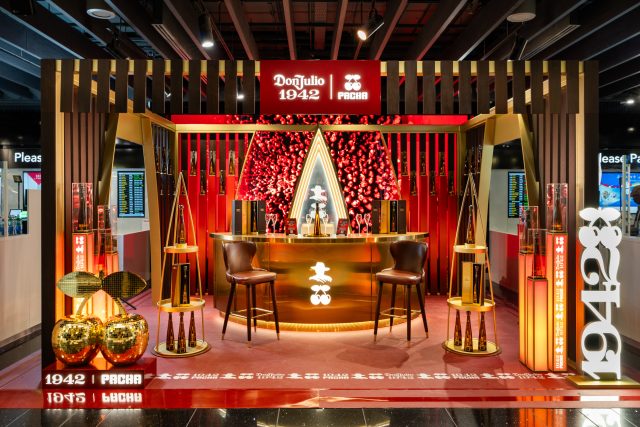
The travel retail sector is often called ‘the global stage’ because it is a place that brands can use as a launchpad to stardom, and lead with their best and most exclusive performers for all the world to see.
Diageo Global Travel managing director Andrew Cowan refers to it as a “channel that is competitive, ambitious and busy” as well as “a brand building space” which is “an important runway for brands”.
But one thing that stopped the sector’s strut was the Covid pandemic. While planes were grounded and lockdowns imposed, the bright lights dimmed and, even though we all knew that ‘the show must go on’, it was clear it would take a while to get back en pointe.
Remembering the challenges, Pernod Ricard Global Travel Retail vice president of marketing Liya Zhang explains how over the past year the business has faced the “uneven recovery of passenger traffic, particularly with delays in Asia and China, consumer concerns from the economic recession and global supply chain issues, partly due to conflicts”.
But Zhang insists that despite all of this, “travel retail fundamentals remain strong”. Why? Because there is “robust demand for travel”. People continue to want to expand their horizons and get out and see the world.
Sarah Shimmons, marketing and innovation director of Diageo Global Travel, suggests that even though people often think of the term ‘duty free’ and ‘travel retail’ as interchangeable, really, the marketplace is not just about scoring the best prices like it was once purported to be, but more to do with giving people unique experiences.
Shimmons says that what needs to be understood is that “people travelling are not just about finding a product at a certain price. Instead, travel retail brings a whole new world of creativity, exclusivity and storytelling to the consumer journey”. In fact, since the pandemic, there is a sense that consumers crave this all the more.
For instance, according to Charlotte Reid, senior insights manager GTR at the IWSR, “GTR sales value is up +5% (2019 vs 2023) with volume still to recover (down -17% vs 2019).”
Reid admits: “There are still challenges in the channel driven by allocations, stock, inventory, and recruiting brand ambassador staff, but with passenger numbers returning to 2019 levels and growing category activations, the channel is forecast to grow by +5% volume CAGR 2023-2028.”
Nick Mogford, vice president, director GTR Brown-Forman agrees and reveals how “Brown-Forman GTR looks back on a very successful fiscal year (May 2023 till April 2024), continuing its year-on-year growth on a high comparison in the same prior year period, as reported net sales increased 8% (+6% organic).”
According to IWSR data, Reid points out that “the forecast to 2028 is positive for all spirits categories, with US whiskey, Scotch whisky and agave based spirits expected to drive the category”.
At Edrington, this is all being noted. Jeremy Speirs, regional managing director, Edrington Global Travel Retail, tells db that the firm is “investing heavily in raising Highland Park’s profile within travel retail” and says that “the world debut of a Highland Park shop-in-shop concept, side-by-side with The Macallan, at Istanbul Airport earlier this year was a major milestone for the brand”. Speirs hints that
Edrington is also about to “announce a major upgrade for the brand’s travel retail range and positioning later this year”. He also admits that The Famous Grouse brand has been performing “exceedingly well in UK airports linked to a strong Six Nations rugby campaign earlier this year”, showing the whisky category is alive and well.
In terms of drinks category trends, the rise of agave spirits and the recognition premium Tequila has garnered has continued to flourish.
Cowan says that “within Diageo the global travel team have very much been given a mandate to globalise Tequila.”
Echoing this, Tequila Komos president Sean Hartnell observes how “there is more diversity on the shelves at airports than ever before” and points out that “high-end Tequila is definitely growing”. Komos launched into global travel retail across DFS outlets in July, where displays have all been supported by educational brand tasting activations to get people interested further.
Another trend being keenly observed is the popularity of whiskies from all over the world with Asian consumers – notably Japanese and American whiskey, but Scotch is having a GTR moment too.
Diageo’s Cowan draws attention to the collection named Gardens of Abundance from The Singleton and highlights how the new exclusive series focused on flavour for travellers. He explains: “The sampling bars, gifting and activations are now live in airports in Hong Kong and Australia, having launched at Singapore’s Changi with a flagship event.”
For Brown-Forman, American whiskey is leading the way, whether via Woodford Reserve or Jack Daniel’s. Mogford believes that “Jack Daniel’s American Single Malt is the new, ultra-premium expression” and reminds that the launch started in September 2023 with pop-ups at London Heathrow that continued until 22 October that year, with an estimated 1.5 million passengers flown during this period, and Changi Singapore Airport until 12 October, with an estimated three million passenger contacts during this period, gathering momentum and fans as its activations gained attention.
Mogford says: “Globally we are orchestrating more than 40 activations in the key airports around the world, reaching an estimated 13 million shoppers and offering 60,000 tastings so far. We are realising another first-time pop-up this summer for Jack Daniel’s American Single Malt at Incheon Airport in Seoul.”
Gathering pace is really what it’s all about. As Pernod Ricard’s Zhang points out, “passenger numbers are already 1% ahead of where they were in 2019 (preCovid) with growth set to continue to leap 10% ahead by the end of this year”. Things are growing steadily. IWSR figures outline how the growth is driven by the AsiaPacific region, which has a 20232028 CAGR of 10% in volume specifically as “India, Australia and China will be recovering the strongest post pandemic.”
Edrington’s Speirs notes how “one interesting dynamic we will continue to monitor closely is the number of Chinese travelling internationally” because “as one of the most influential sets of luxury shoppers in our channel, the impact of changes in their travel patterns and shopping behaviours can be significant”. IWB Italia global travel retail sales manager Esteban Garcia says: “We see a lot of potential in places like Asia and the Middle East. Cities like Hong Kong, Doha, Singapore, and Dubai are major travel hubs with increasing demand for premium wines. These regions are growing fast, with consumers looking for luxury goods.”
Diageo’s Sarah Shimmons agrees and admits: “APAC is a critical market for us, and we are seeing passenger numbers recover now in APAC. It’s where we see a lot of our future growth coming from.”
It is a similar story for Brown-Forman, as Mogford reveals how “in the last years, the presence of our single malts Benriach, The Glendronach and Glenglassaugh has increased significantly in the Chinese duty-free market.”
Now, Asia is being nurtured with the agave spirits trend, including potential in the sub-category of Tequila. As Diageo’s Cowan illustrates, seeing this done with an ultra premium halo to it is really beginning to pay off, as the category is being set on track to turn heads across APAC now too.
Cowan reveals: “The arrival of Don Julio Tequila across total travel retail, having previously only been in the Americas, led by the beacon of luxury and celebration – Don Julio 1942 – was really special.”
Cowan goes on to say that now is the time for innovation in the marketplace. For instance, he continues: “This year we had the launch of Xordinaire from Johnnie Walker Blue Label, our first Blue Label travel retail exclusive innovation in 30 years with the marque.”
IWSR analysis has also shown that there has been an upward shift in price bands with “ultra-premium and higher products now accounting for almost four in every 10 dollars spent in the channel,” according to Reid, assessing the GTR insights data.
Reid says that “spirits volume growth is forecast to grow at +5% volume CAGR 2023-2028, driven from all price tiers” but that “prestige plus is forecast to drive the most (volume CAGR 2023-2028 is forecast at +17%) with super premium plus growing ahead of the category at +7%”. Overall, it has been a good year by most drinks companies’ standards, with the latest ACI data showing that passenger numbers are up in Europe — “in the past month Europe has, for example, finally passed prepandemic levels,” says Cowan and admits that for Diageo “the numbers are good”.
He adds: “Crucially, a strong international travelling community seeking the new experiences or break with reality which travel brings, remains a reality.”
Indeed, as the sector gathers pace after so many years of resilience, it has become apparent how much people need it to exist as much as it thrives on consumer spending. In a world that can sometimes feel a little too ‘real’ following the pandemic, escapism and luxury has been key to the development of the global travel retail channel.
Low and no in travel retail
Speaking to db, Paul Beavis, CEO of Wild Idol, says there is significant opportunity for GTR players to take the low and no alcohol category seriously, and offer a wider range of alcohol-free products. “Gifting is a key driver of purchases in GTR,” he says. “But what do you buy for nondrinkers, moderators or friends and family who are abstaining for various reasons? Brands like Wild Idol offer a luxurious yet alcohol-free alternative that respects the recipients’ choice of not wanting to drink alcohol. The opportunity is clear—alcohol-free shouldn’t be seen as competition to other categories but as a way to enhance customer choice and potentially increase basket spend, as has been observed in premium markets globally. GTR companies should carefully assess how much space to allocate to alcohol-free options, but we believe the results will be rewarding once they do.”
Wild Idol has recently expanded its range to include half bottle and magnum formats for its Sparkling Rosé and Sparkling White products. Bottega has launched a low-alcohol canned Lemon Spritz into GTR.
Bottega SpA director Sandro Bottega says: “Lemon Spritz Bottega is a great success, firstly in the airlines channel and in GTR, but also in many domestic markets. Due to its low alcohol content, Lemon Spritz meets the needs of the younger generations, and the canned format evokes more informal ways of consumption.”
Liquid limits
Will the changes in airport liquid restrictions affect sales in travel retail? db asks drinks GTR leaders whether if bans are lifted at airports, travellers are likely to purchase bottles direct from drinks producers or local supermarkets in their destinations rather than make purchases at duty free. Here’s what they said:
Nick Mogford, vice president, director GTR Brown-Forman: “Under the hypothesis that the fluid restriction should be lifted, it is likely that travellers may continue to be drawn to duty-free stores due to the offer of exclusive products not available in normal supermarkets.”
Jeremy Speirs regional managing director, Edrington Global Travel Retail: “There could well be some consumers who choose to shop domestically if liquid restrictions allow, but we are confident that by offering shoppers unique experiences and products, travel retail will remain an appealing shopping destination.”
Pernod Ricard Global Travel Retail vice president of marketing Liya Zhang: “While the lifting of liquid restrictions might shift some purchasing behaviour, the appeal of duty-free shopping for its exclusive offerings and innovations, pricing, retail execution and convenience is likely to sustain sales.”
IWB Italia global travel retail sales manager Esteban Garcia: “The changing rules about liquids have been a challenge for our wine sales in travel retail and duty free. But we’ve adapted by creating new packaging that meets the rules, like gift packs. We also work on engaging our customers more by suggesting different ways to enjoy our wines. These strategies help keep our wines popular despite the regulations.”
Related news
TFWA reveals ‘food and beverage has become more important’


