



Taxing times: UK retail
It’s been a tough period for wine retailers in the UK, with duty changes adding cost and complication. But it’s not all doom and gloom, reports Arabella Mileham.
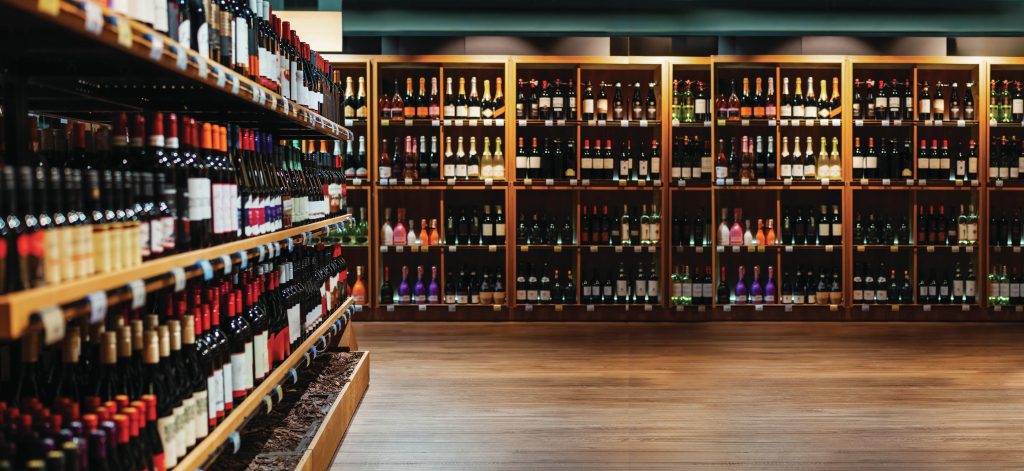
The last 18 months have proven to be a bumpy ride for wine retailers in the UK.
Rising costs, high inflation and low consumer confidence have all played a part – but by far the biggest issue on the minds of retailers big and small has been the changes to excise duty made by the previous government.
As John Colley, CEO of Majestic Wine, points out, the industry was hit by the biggest duty hike in 50 years (payable on around 85% of wines sold in the UK), “and that’s been a real challenge for everyone to manage”.
The duty increase comes on top of “fragile” consumer confidence and spending, he adds, largely due to the political and economic uncertainty in the UK and around the world. But, as things stand, there’s potentially even more upheaval to come.
The initial duty hikes were introduced in August, lauded by the Conservative Government as a “simplification” of duty post-Brexit, which saw the tax on a bottle of wine with an ABV of 11.5%–14.5% increase by 53p (44p plus VAT), taking the duty to a total of £2.67 plus VAT.
However, this is only a temporary fixed rate (set at the rate for 12.5% ABV) until February 2025, when the full banding is due to come into force, once the temporary ‘easement’ expires.
This coincides with the Department for Environment, Food & Rural Affairs (Defra) sweeping away the EU labelling rule of measuring alcohol in 0.5% ABV increments, meaning that wine can be labelled to the nearest decimal point in the UK – and duty charged accordingly.
According to industry expert Gavin Quinney, this potentially raises the number of duty bands to more than 200 across the whole spectrum, from lowalcohol wine at one end to fortified wine at the other – with 64 bands across the largest bracket (8.5%–15%). Previously, there were only two bands for wines between 8.5% and 15%: one rate for still wine, one for sparkling.
As Quinney calculates, using data from HMRC, this will see the duty on a bottle of 13% ABV wine hit £2.77, while a wine with 14% ABV will incur £3.10.
Meanwhile, the duty on Sherry is likely to rise by 98p, while Port will go up by £1.30.
Simon Cairns, the former Co-op BWS category trading manager who has been working with the WSTA as a consultant talking to independent businesses, argues that this will not only impact profitability, but will also take up retailers’ time and cost businesses even more money. It is, he argues “inflation by stealth”.
HOT TOPIC
Unsurprisingly, it was a hot topic at London Wine Fair’s aptly-titled session “What is keeping indies up at night?” – where it elicited strong feelings, both from the panellists and from the audience. Hal Wilson, owner of Cambridge Wine Merchants, described it as the “kind of change that makes you question your business model”.
He added: “The more I think about the end of duty, the more I realise we’re in a world of deep shit and it is the Government that are producing it. Duty easement ending will make costing a lot more complicated than it already is – and more expensive.”
Businesses already have to shoulder a raft of variable costs, including freight, post-Brexit Customs forms, warehousing and distribution, as well as the exchange rate but, as Wilson pointed out, retailers won’t even know, in advance, the exact ABV of any particular wine. This is due to natural variables occurring in each vintage, making retailers unable to calculate which band individual wines are in “until we have the wine physically in our warehouse”.
“We are working in a whole new world,” Wilson said. “It’s a 2.5% difference on every bottle, on average. So I’m working with an unknown change of 2.5%, which over the year is tens of thousands of pounds.”
James Paulin, manager of Edinburgh merchant Cockburns of Leith, agrees that the fluctuating alcohol levels of each vintage – particularly when considering the effects of climate change and more ‘solar’ vintages – makes it hard to respond and protect margins while remaining in line with what other retailers are doing. It’s a case of responding to constantly moving targets, he notes, “and as a smaller retailer, that’s quite hard to do”.
Majestic boss Colley also mentions that the introduction of these new tax rates is likely to result in “confusion for customers at the shelf edge”.
However, with the recent Labour victory in the General Election, the industry is hoping these measures won’t come into force in six months’ time.
“We are lobbying hard to get this policy scrapped before it’s too late,” Colley explains. “We hope that the new Government will recognise how complicated this new system will be for businesses operating in retail, hospitality and the supply base, and instead look to bring in policies that stimulate growth, rather than stifle it.”

It remains to be seen whether the new Government will heed the concerns of businesses across the UK, alongside strong lobbying from the WSTA. The King’s Speech on 17 July made no mention of excise duty, and it looks like we will have to wait until the Autumn Statement from newly appointed Chancellor of the Exchequer Rachel Reeves at the earliest to see whether the new rules will be amended.
Bearing in mind the fact that the much protested VI1 forms were hanging over the industry’s head for more than three years before being abandoned only two weeks before they were due to come into effect, there may not be any progress until as late as January next year, according to the WSTA.
In the meantime, some producers have been trying to get around the issue through reformulation to bring the ABV down: already, Concha y Toro’s Isla Negra brand has switched to a lower ABV on its leading wines to bring them under 11%. Bearing in mind the popularity of no and low options, is this indicative that a new category may be emerging in response to changes to duty banding?
Morrisons wine sourcing manager Charles Cutteridge argues that there is a role for mid-strength wines at the entry level, “where the duty breaks offer a clear value message”.
“Where we can naturally lower alcohol, then there’s definitely something,” he explains, citing Muscadet or Vinho Verde and other classic wines where you might expect the level to be around 10.5%. “But are we going to see 8% Shiraz at £10, or that sort of category of ‘sessionable’ wines? I think not.”
DIFFERENT APPROACH
There are, Cutteridge feels, clear limitations to reformulation, not least because “it requires a completely different approach in the vineyard”. Plus, with the UK the only country trying to re-engineer wines for this reason, “it doesn’t make sense to do [it] for just one market”. “For now, we’re just going to make the best wines we can. We’ve got our reformulation programme which is going well, but there are no wider plans to introduce mid-strength,” Cutteridge says.
“We need to fight for our customers to keep people in the category,” Clive Donaldson, director of beverages at Asda’s IPL International Procurement & Logistics division, told db at a recent tasting. “We’re trying to make intelligent choices around lowering ABV, where it makes sense to do it. You can create a lot of Frankenstein wines by letting ABV drive decision, but obviously if there’s a sensible decision… it’s a no-brainer.”
Waitrose buying manager James Matthewson agrees. “We have done that on a couple of our blends to reduce the alcohol – but only where we feel it doesn’t change the product so significantly that people would notice,” he says. “We’re not going through a programme of taking all of our 13% wines to that level, because we think the product would suffer, and it will not be authentic. And authenticity is really important to us.”
Despite the uncertainty around duty rates and other legislation such as extended retail responsibility due to come into force later down the line, there remains much to be optimistic about, according to Colley. With a decisive Election result and the introduction of a new government, “this will bring a degree of stability and restore some confidence,” he said.
RETAIL EXPANSION
This can be seen in the increased commitment to bricks-and-mortar retail from the likes of Majestic, which also bought Vagabond and nine of its bars out of administration in April. Amathus Drinks is adding five new stores over the next few months, and there are new highend retail ventures from Sotheby’s, Berry Bros. & Rudd and Justerini & Brooks. Furthermore, Asda is accelerating its growth strategy in convenience retail, opening 110 new outlets after acquiring stores from the Co-op Group and petrol forecourt firm EG Group.
With falling global wine consumption, the laws of supply and demand mean there is value to be found around the world, according to Asda’s Donaldson, notably in Australia and France, while Portugal “continues to offer both interesting wines and some very good value”, he says.
“There have been a few big winners for us over the past year or so,” Colley agrees. “Sparkling is performing strongly, particularly English Sparkling and wines like crémant and Cap Classique, with some customers trading out of Champagne and into other traditional method sparkling wines.”
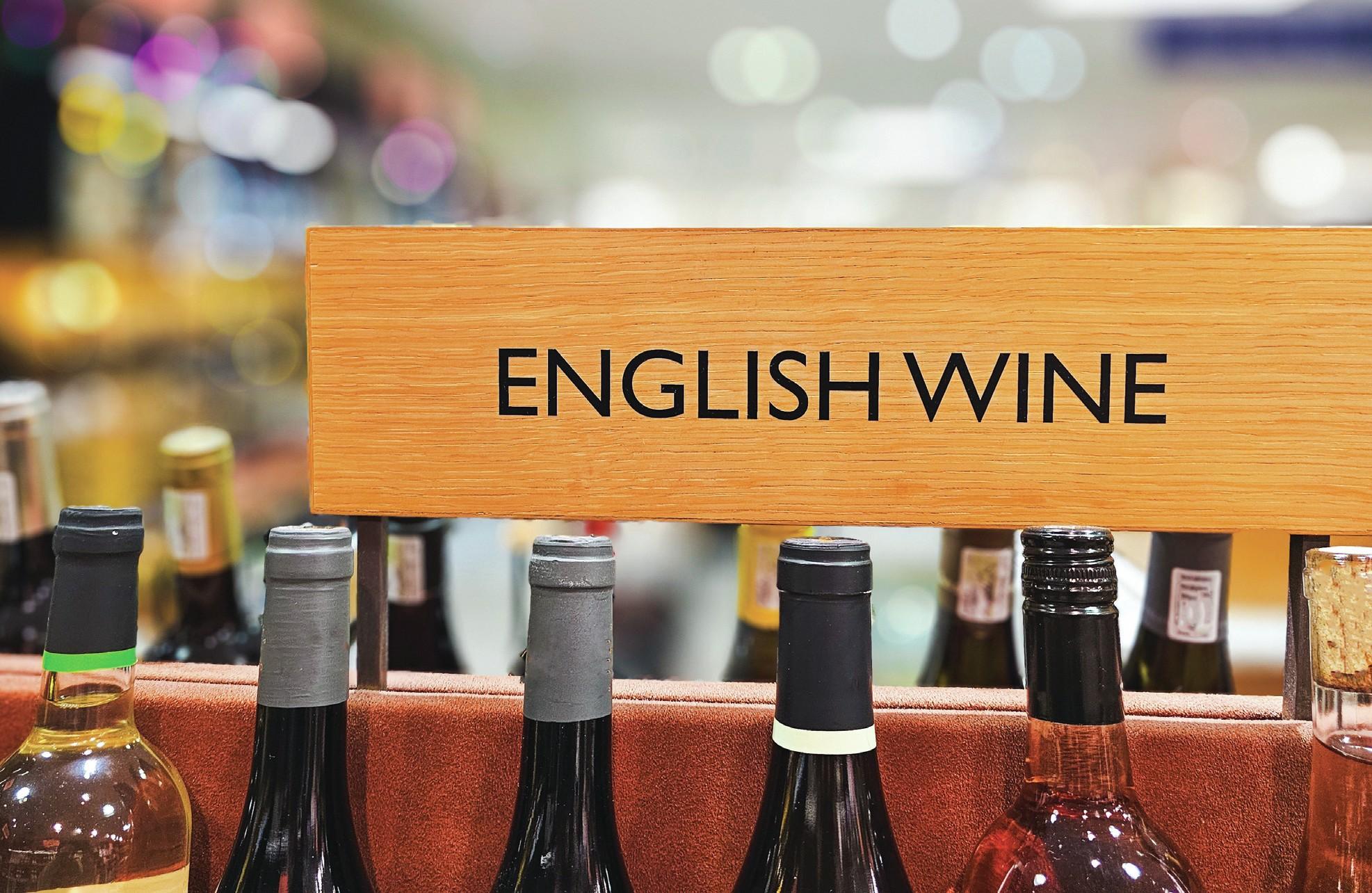
‘Sparkling is performing strongly, particularly English Sparkling and wines like crémant and Cap Classique’
Sales in Majestic’s expanded, more premium offers from the US and South Africa are up double digits, while “we’re seeing more and more customers trade up to discover new wines”, he says Meanwhile, fine wine sales at Christmas were up more than 13%, Colley adds. However, there has only been “a small trend” towards some customers buying fewer bottles, but better-quality, more distinctive wines.
“There’s not been a huge shift by any means, but it is a change in shopping patterns that we are seeing from some customers,” Colley says.
Cockburns’ Paulin notes that his customers have become more curious, providing indies with the chance to help consumers to discover and taste new styles. “Supermarkets do have a great range across the board, even in the fine wine selection, but they don’t have the specialists there to talk through the wines, or the chance to try the wines and find out about them,” he points out. But this curiosity isn’t merely confined to the specialists.
Waitrose has added a range of more esoteric wines, with five new products joining its own-label Loved & Found range, while Asda recently relaunched its Wine Atlas roster as more of “a rolling discovery range”, complete with its own hotspot on the fixture to help signpost consumers towards trying new things. Aldi reports that sales of its Specially Selected range of wines saw more than 20% sales growth in 2023, but adds that “more than ever, we’re seeing shoppers look for a bargain” – the reason it has adapted its offer by introducing a Wine of the Week promotion, rather than purely around seasonal events such as Christmas and Easter.
“This is helping shoppers try different grape varieties that price might otherwise be a barrier to,” an Aldi spokesperson explains, pointing out that the retailer’s Specially Selected Cairanne sold out in only four days after it was reduced from £8.99 to £3.49 at Christmas. “Shoppers continue to want to try wines from new and upcoming wine regions,” the spokesperson says.
Asda’s Donaldson agrees. “I don’t think there is a huge amount of confidence about, but people still want to enjoy themselves, and it’s quite a delicate balance. It’s not all doom and gloom.” db
Feature findings
• UK wine retailers are reeling from the biggest duty hikes in 50 years – but worse is to come with the scheduled introduction of full duty banding in February 2025.
• The new bands – more than 200 of them, with 64 alone in the 8.5%–15% ABV bracket – will add cost, time and complication, not least because alcohol levels vary by vintage.
• The industry and the WSTA are lobbying hard, in the hope that the recently elected Labour Government will amend the plans – but they may have to wait until the autum for further news.
• Some producers and retailers are reformulating their wines in an effort to bring them below the 11% threshold, but some are wary of creating ‘Frankenstein’ wines.
Related news
Areni Global: 'We have to find a way to make wine consumption safer' for women amid spiking fears


